
AP Photo/Cecil Stoughton/White House Photographs, John F. Kennedy Presidential Library and Museum via AP

By Anna Skinner
Associate News Editor
0
Share
Newsweek is a Trust Project member
See more of our trusted coverage when you search.Prefer Newsweek on Googleto see more of our trusted coverage when you search.
As President Donald Trump turns 80 on Sunday, his birthday celebration is poised to stand out—even by presidential standards.
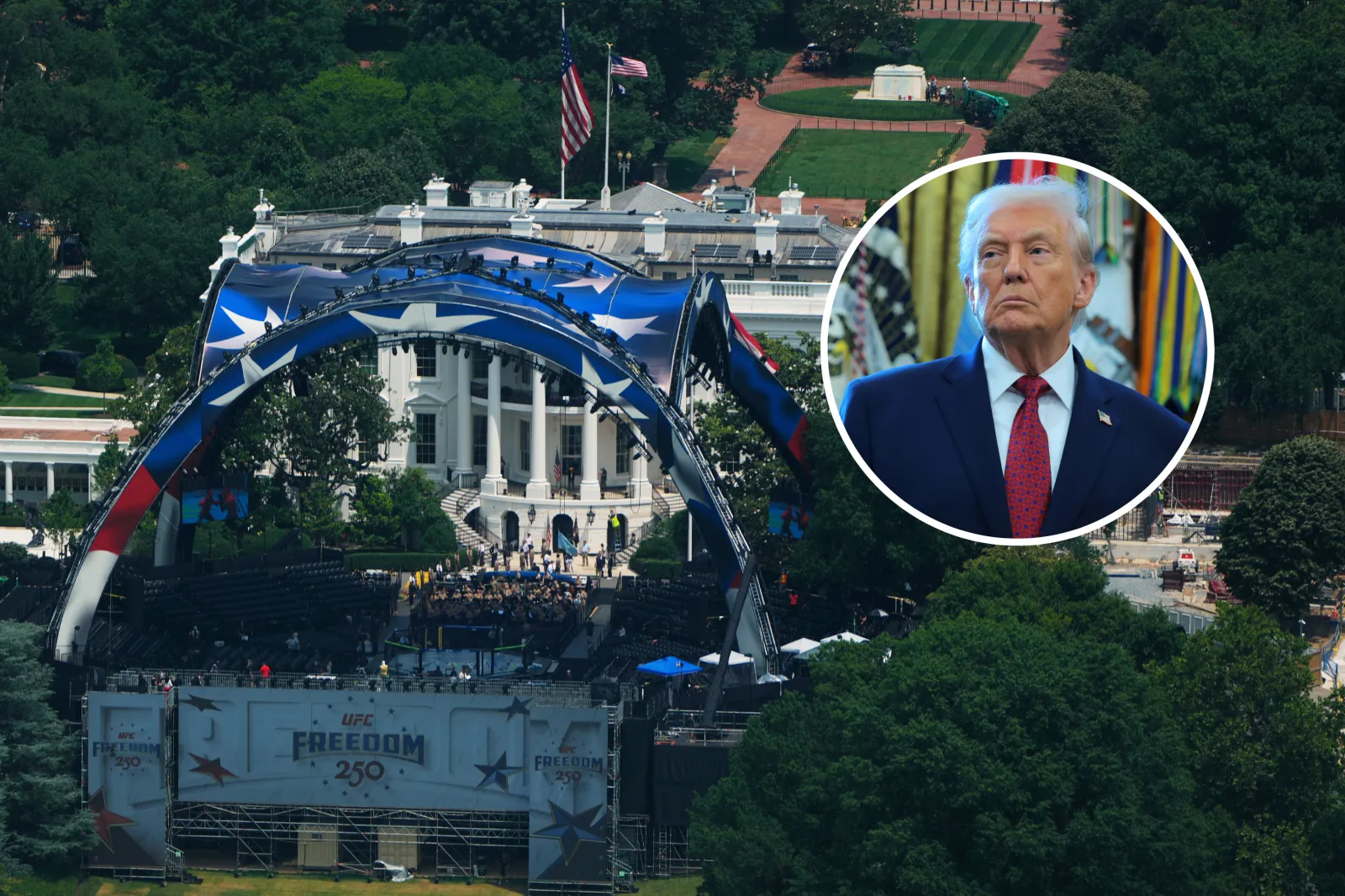
The centerpiece is a planned Ultimate Fighting Championship (UFC) event on the South Lawn of the White House, an unprecedented spectacle officially tied to the United States’ upcoming 250th anniversary but timed with Trump’s birthday, which falls on Flag Day.
Branded as “UFC Freedom 250,” the June 14 event is set to feature multiple professional fights on the White House South Lawn in a specially constructed arena, marking the first time a sporting event of this kind will take place at the presidential residence. Organizers have described it as part of celebrations ahead of America’s 250th anniversary, though its timing alongside Trump’s 80th birthday has drawn attention and scrutiny.
Read More on News
“The UFC Freedom 250 Fight on the South Lawn of the White House will be one of the most entertaining nights in American history. Having this spectacle take place at the People’s House on Flag Day during our nations’ semiquincentennial anniversary is a fitting tribute," White House spokeswoman Allison Schuster told Newsweek.
In the Oval Office on Wednesday, when asked what he wished for on his birthday, Trump said: "For my birthday. Well, I'll go a step bigger: Peace for the world. OK? Peace for the world. Middle East, yes. Peace for the whole world."
Presidents have marked their birthdays in a wide variety of ways, but rarely has the occasion been so explicitly intertwined with a public spectacle on this scale—particularly one held at the White House.
Here are some of the most famous presidential birthday celebrations:
...
President John F. Kennedy
Perhaps the most famous presidential birthday event in modern culture came not from a sitting president’s initiative, but from celebrity culture intersecting with politics. In May 1962, more than 15,000 people gathered at Madison Square Garden in New York City for a Democratic fundraising gala honoring President John F. Kennedy’s 45th birthday, where Marilyn Monroe delivered her now-iconic rendition of “Happy Birthday, Mr. President.”
That performance—glamorous, controversial and deeply embedded in American pop culture—helped redefine how presidential birthdays could intersect with entertainment and celebrity. Yet even in that case, the event was not hosted at the White House, nor was it framed as a quasi-official celebration of the nation itself.
...
President Harry S. Truman
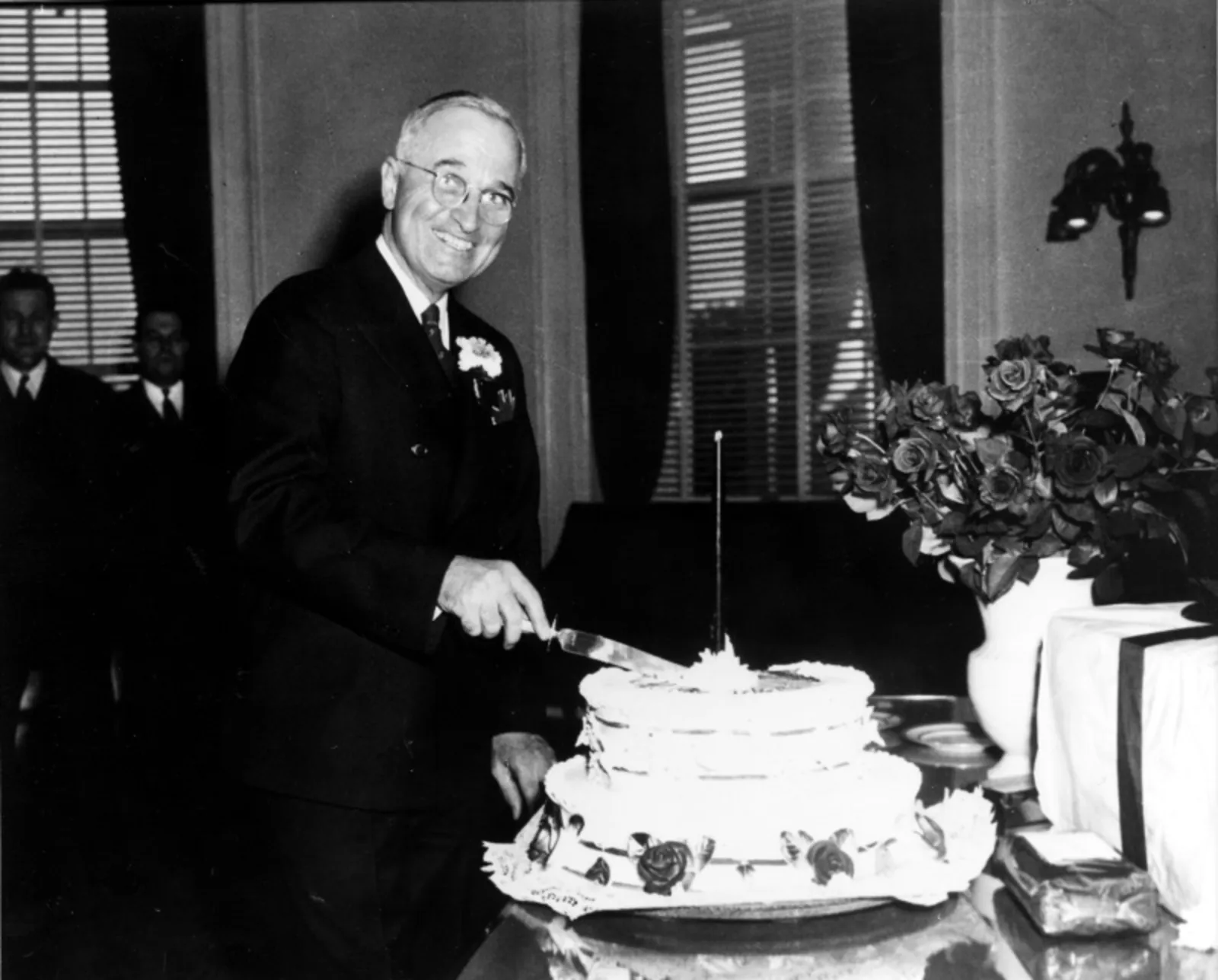
One of the earliest and most consequential examples came on May 8, 1945, when President Harry S. Truman turned 61 on the same day Nazi Germany surrendered in World War II, which also was Truman's first full day at the White House. Rather than marking the occasion personally, Truman spent the day focused on the end of the war in Europe and the nation’s response, effectively folding his own milestone into a defining moment in global history.
Two years later, in 1947, Truman received one of the more unusual presidential birthday gifts when supporters from Missouri paid to have a bowling alley installed inside the White House. While presidents often receive ceremonial or symbolic presents, the addition of a full recreational facility to the West Wing stood out—and it ultimately laid the groundwork for a long-running White House bowling tradition that has continued, in various forms, ever since.
President Franklin D. Roosevelt
President Franklin D. Roosevelt offers another contrast. Beginning in 1934, he turned his birthday into a nationwide philanthropic event with the “Birthday Balls,” fundraising efforts that supported polio treatment and research and helped lay the groundwork for the National Foundation for Infantile Paralysis, later known as the March of Dimes. The celebrations were large and public, but the focus was outward—on charity.
...
President George H.W. Bush
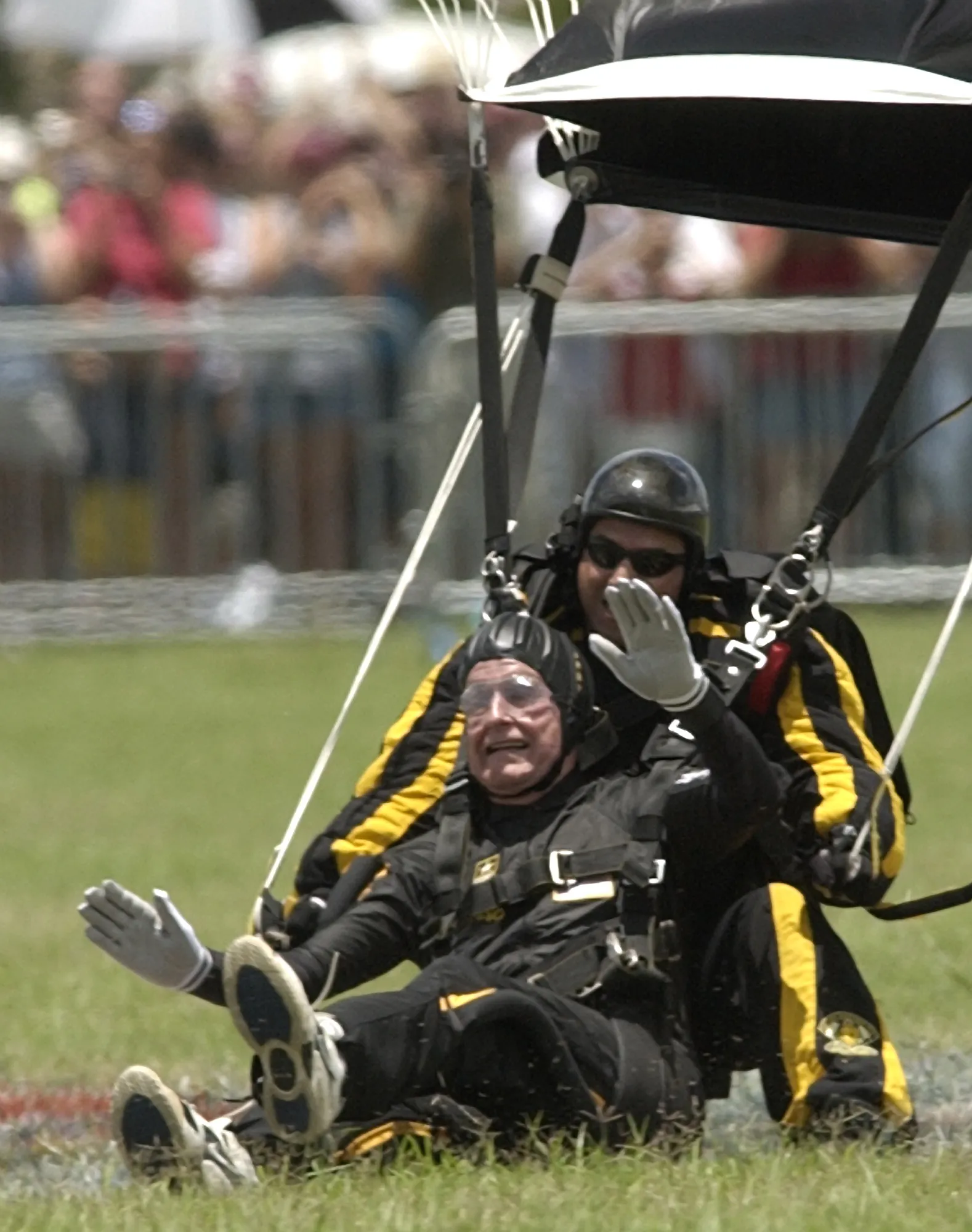
The elder President Bush turned birthday celebrations into headline-making events after leaving office, most notably by skydiving to mark major milestones. He began the tradition on his 75th birthday in 1999 and repeated it at ages 80, 85 and 90, often making tandem jumps with members of the U.S. Army’s Golden Knights. His 90th birthday skydive in June 2014—descending from a helicopter over Kennebunkport, Maine—drew particular attention, as Bush completed the jump despite using a wheelchair, underscoring his long-standing love of skydiving and his determination to mark milestone birthdays with a dramatic, high-visibility feat.
Personal versus national celebrations
A key question raised by Trump’s UFC event is whether it represents a new kind of presidential birthday—one that merges personal milestones with state symbolism more directly than in the past.
There are limited precedents. Calvin Coolidge, born on July 4, remains the only president whose birthday coincided with Independence Day, creating an inherent overlap between personal and national celebration. But the symmetry rarely translated into events centered on Coolidge himself, with the focus typically remaining on the national holiday.
Elsewhere, presidential birthdays have sometimes been leveraged for political fundraising or messaging. In 1953, for example, President Dwight D. Eisenhower’s first birthday in office was marked by a large Republican Party fundraiser in Hershey, Pennsylvania, drawing thousands of attendees.
Trump’s approach differs in both scale and setting. By hosting a marquee sporting event on the White House grounds—largely reserved for state ceremonies, public traditions and official functions—he is introducing a level of spectacle that has little precedent in the modern presidency.
...
The UFC event also fits within Trump’s broader pattern of celebrating his birthday with elaborate, high-visibility events. Past celebrations have included large rallies, themed parties and, more recently, the Washington, D.C., military parade that coincided with his 79th birthday last year.
Even before entering politics, Trump was known for hosting elaborate birthday parties featuring celebrity appearances and highly staged presentations—such as his 1988 Atlantic City celebration, which included a 15-foot spaceship, laser effects and video messages from Hollywood figures. As president, some of his birthday-related events have taken on a public dimension, reflecting a blend of personal celebration and broader political or national themes.
What Happens Next
Whether Trump’s UFC event represents a lasting shift in how presidential birthdays are marked remains to be seen. It could be viewed as the latest evolution in a long trajectory—from Roosevelt’s charitable balls to Kennedy’s celebrity gala—toward increasingly public and media-driven celebrations.
As Trump enters his 80s, the contrast with some past presidents is notable. While earlier leaders at times treated birthdays as private milestones or used them to support charitable causes, Trump has embraced more visible, large-scale events that align his personal milestone with broader political or national themes.
In that sense, the UFC event may not just mark a birthday. It could signal a further evolution in how the presidency is presented in public life, where the line between personal celebration and national event is less clearly defined.
View 0 Comments
Submit Correction
View Editorial & AI Guidelines