
...

By Jordan King
Reporter
0
Share
Newsweek is a Trust Project member
See more of our trusted coverage when you search.Prefer Newsweek on Googleto see more of our trusted coverage when you search.
Virginia voters have approved a Democratic-backed congressional map that could add up to four seats for the party, in the latest development of an ongoing national redistricting race that has seen new maps adopted in seven states since last summer.
These are Texas, California, North Carolina, Ohio, Utah, Virginia and Missouri. Most of them took up redistricting voluntarily except Ohio, which was required to by its state constitution and Utah, which did so under court order.
In total, Democrats have redrawn or secured maps that could net about 10 favorable seats, while Republicans are positioned for roughly nine, a near draw that assumes past voting patterns hold this November, according to Associated Press analysis.
Read More on News
But those estimates are projections based on recent election results in newly drawn districts and could shift by November as candidates, turnout and local factors change, analysts and election authorities have cautioned.
Voting districts typically are redrawn once a decade, after each census, but U.S. President Donald Trump triggered this mid-decade remap when he pressed Texas leaders to create additional GOP-leaning districts, which spurred counter-moves in Democratic-led states—most notably California, where voters approved a plan expected to add several Democratic-tilting seats.
Florida is up next, where Republicans have not released a plan but some in the party are eyeing as many as five additional seats during a special session, though the state constitution bars partisan gerrymandering and any plan could face court tests.
Republican frustrations also flared in Indiana, where the GOP-led Senate rejected a mid-decade map after House passage, bucking Trump’s push and leaving current lines intact.
Texas
Current map: 13 Democrats, 25 Republicans
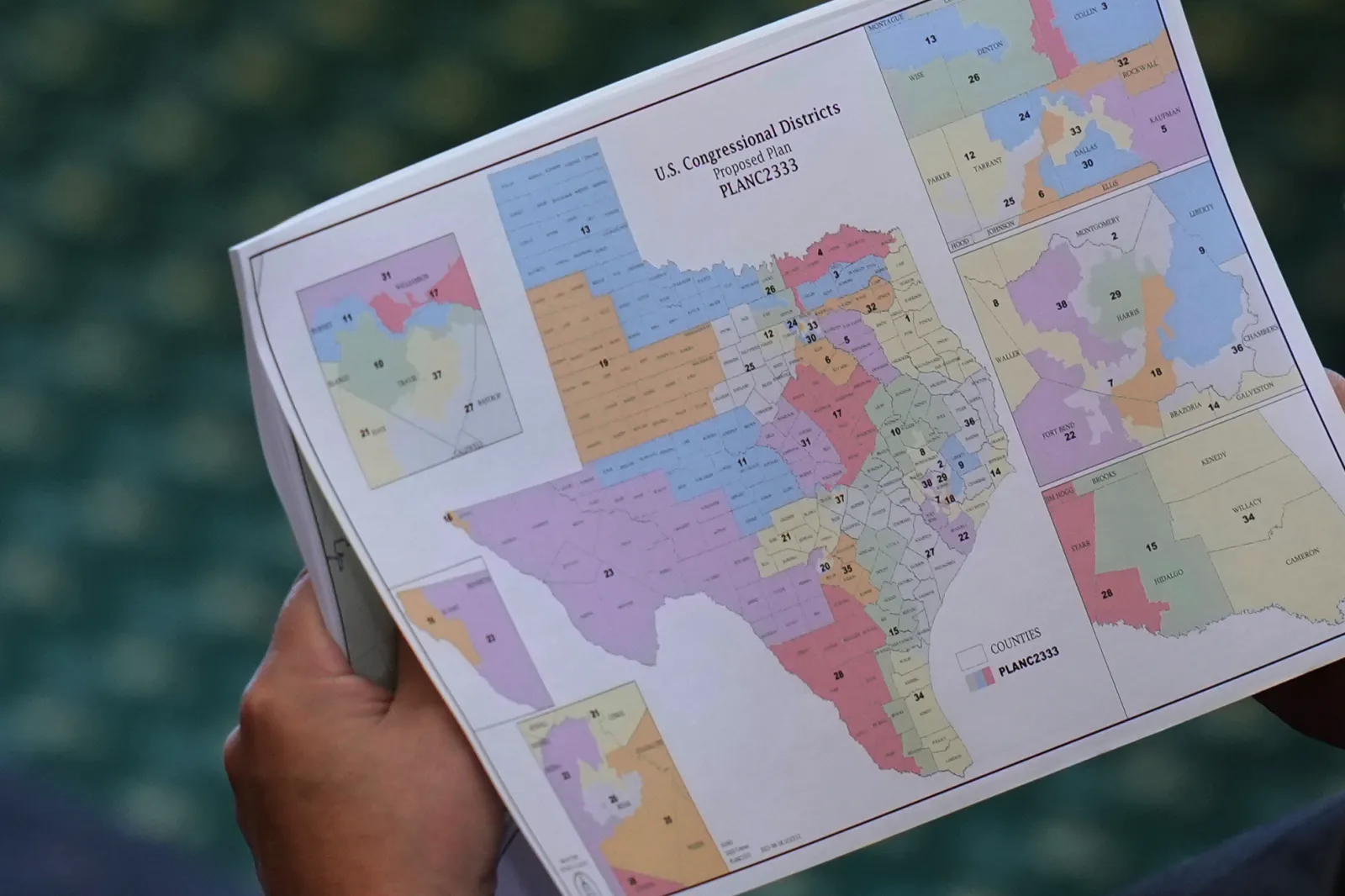
Gov. Greg Abbott signed a congressional map in August 2025 designed to yield up to five additional Republican-leaning seats after Trump urged a mid-decade redraw, and the U.S. Supreme Court later allowed the map to be used in 2026 following a lower-court block on racial gerrymandering grounds.
The Houston-area boundaries were significantly reworked: the 18th District expanded southwest and south, the 9th shifted east into Harris County and Liberty County, the 29th absorbed much of the old 18th while remaining strongly Democratic, and the 7th was adjusted to be more safely Democratic, according to Houston Chronicle mapping.
Elsewhere, the map further divided Democratic-leaning Austin, rebalanced targets in the Dallas–Fort Worth metroplex and sought gains along the Rio Grande Valley, reflecting a strategic geography centered on urban-suburban splits and South Texas shifts.
...
California
Current map: 43 Democrats, nine Republicans
Voters in November 2025 approved a Democratic-led remap projected to add about five Democratic-tilting seats, a plan that survived legal challenges when the U.S. Supreme Court declined to intervene in February 2026.
Geographically, the plan reconfigures several Southern California districts such as the 41st in Riverside County moving closer to Los Angeles and the 48th near San Diego trending more Democratic, while Northern California changes push Doug LaMalfa’s district south and make Kevin Kiley’s district more Sacramento-oriented, according to CBS News.
North Carolina
Current map: four Democrats, 10 Republicans
The Republican-led General Assembly approved new lines in October 2025 that aim to flip the 1st District by shifting its boundaries south into areas of the current 3rd District, and a federal panel allowed the map to be used.

...
Ohio
Current map: five Democrats, 10 Republicans
A bipartisan panel dominated by Republicans adopted revised congressional boundaries in October 2025 to comply with a constitutional requirement, and the plan is forecast to improve GOP chances in roughly two seats.
There are no legal challenges to this one, as the state constitution required new districts before the 2026 election: after Republicans approved a prior map after the last census.

...
Utah
Current map: no Democrats, four Republicans
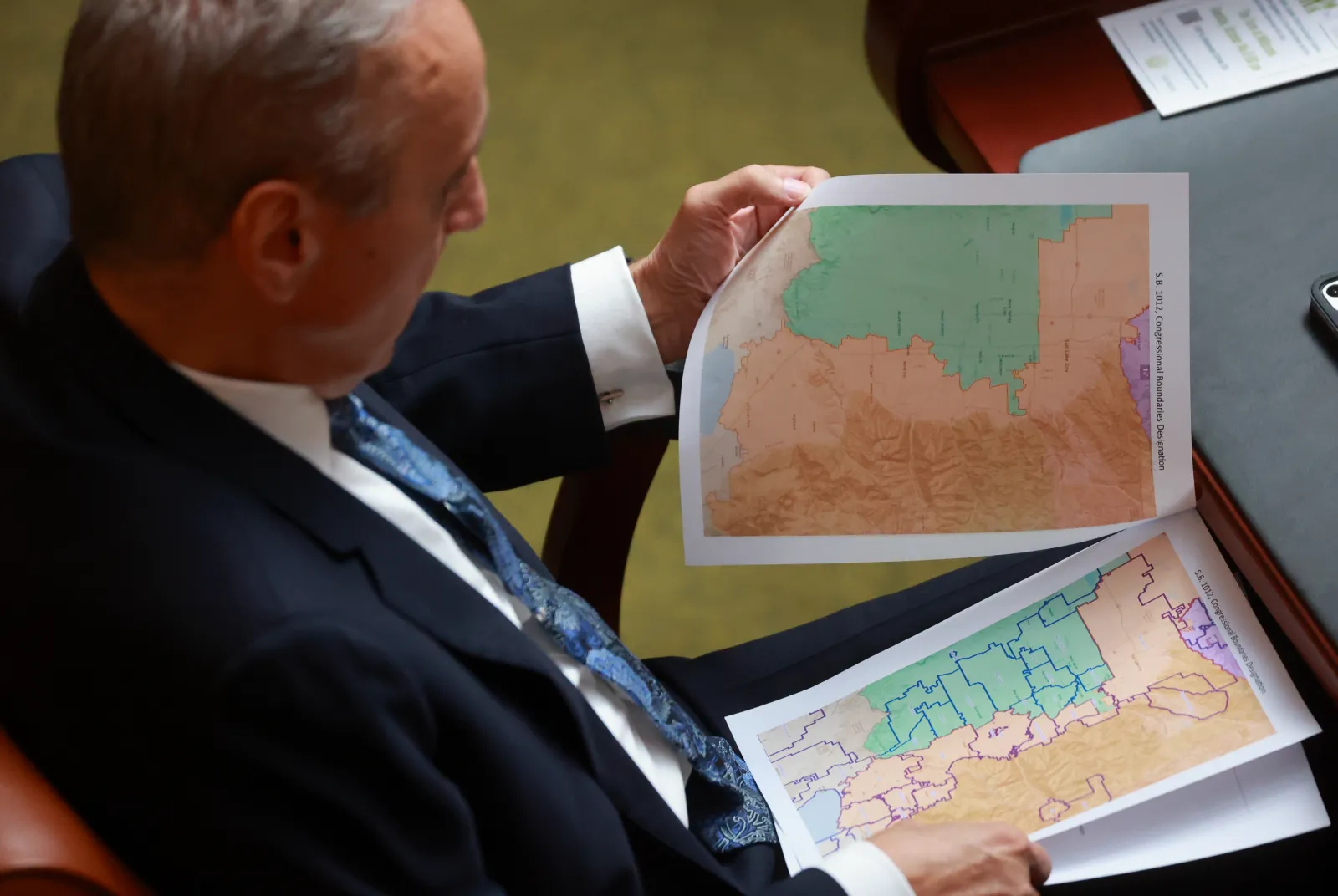
A state judge rejected the legislature’s map in November 2025 and imposed an alternative that creates a Democratic-leaning seat centered on Salt Lake City, and subsequent state and federal courts allowed the court-drawn plan to stand for 2026.
The court-approved map consolidates urban Salt Lake City into a single district modeled at about 62 percent Democratic based on 2024 results, reversing a prior configuration that split the metro across multiple seats, according to CBS News.
...
Virginia
Current map: six Democrats, five Republicans
Voters backed a constitutional amendment on Tuesday, enabling lines drawn by the Democratic-led legislature that could yield up to four more Democratic seats, though the state Supreme Court is weighing legal challenges to the process.
The new map positions Democrats to hold 10 of 11 districts by anchoring five seats in Northern Virginia, reworking Richmond, Hampton Roads, and southern districts, and crafting one elongated seat that stretches into rural areas, according to campaign and court descriptions.
Missouri
Current map: two Democrats, six Republicans
Lawmakers approved and Gov. Mike Kehoe signed a new congressional map in September 2025 aimed at adding a Republican seat, and courts are reviewing challenges as election officials verify a referendum petition on the plan.
Geographically, the plan recasts Rep. Emanuel Cleaver’s Kansas City–area district from about 62 percent Democratic to roughly 41 percent, slightly shifts the neighboring 4th and 6th districts, and expands the 2nd District south and west to become redder, according to CBS News analysis.

...
Redistricting Battles Still to Be Decided
Florida lawmakers will meet in a special session beginning April 28 to consider a Republican-led redraw, with some in the party floating a target of up to five Democratic-held seats despite state constitutional limits against partisan intent, according to the AP.
Virginia’s map still faces a state Supreme Court decision that could invalidate the referendum on procedural grounds, while Missouri’s plan is under judicial review and potential referendum scrutiny, underscoring ongoing legal uncertainty.
Courts have already weighed in elsewhere—allowing North Carolina’s and Ohio’s maps to proceed, rejecting GOP challenges to Utah’s court-ordered plan, and preserving California’s voter-approved lines—illustrating how litigation will continue to shape the 2026 battlefield.
View 0 Comments
Submit Correction
View Editorial & AI Guidelines