...

By Ryan Chan
China News Reporter
0
Share
Newsweek is a Trust Project member
See more of our trusted coverage when you search.Prefer Newsweek on Googleto see more of our trusted coverage when you search.
Washington and Moscow have launched their nuclear-capable fleets of intercontinental ballistic missile (ICBM) for tests or exercises since the war in Ukraine broke out, with differing results that indicate the United States was better at ensuring strategic deterrence's effectiveness.
The U.S. Air Force Global Strike Command told Newsweek that the Minuteman III ICBM fleet is "extremely reliable" and remains "safe, secure, effective, and credible." The Russian Defense Ministry did not immediately respond to a written request for comment.
Why It Matters
Both the U.S. and Russia have established the so-called "nuclear triad" as the backbone of their national security since nuclear weapons were introduced. Each triad consists of the land-based ICBMs, as well as the nuclear-armed ballistic missile submarines and bombers.
Read More on World
An ICBM can fly more than 3,410 miles and carry more than one warhead, also known as the reentry vehicle. The U.S. and Russia deploy 400 and 329 ICBMs, respectively. These are the most responsive leg of the nuclear triad as they can be fired and reach targets within minutes.
What To Know
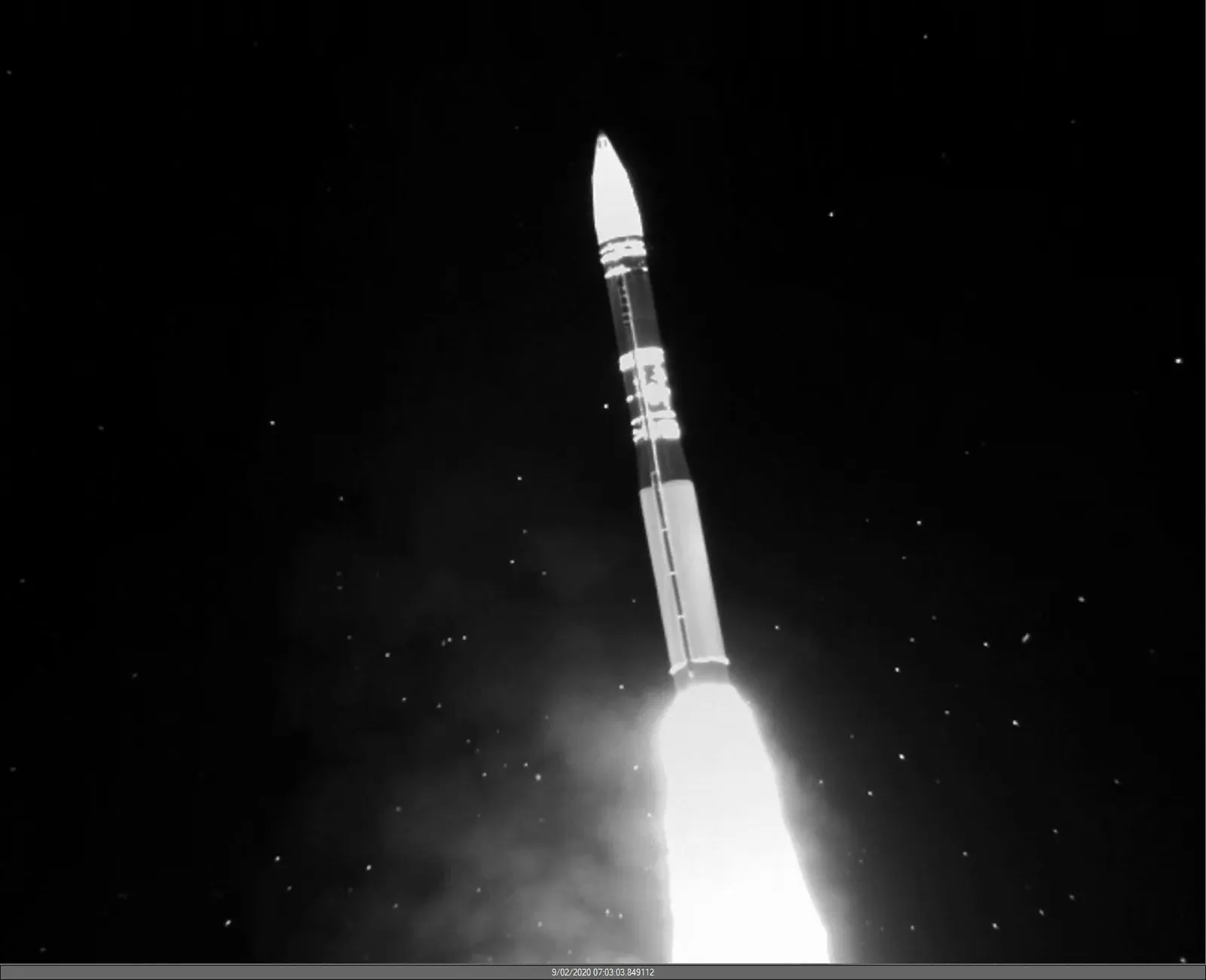
Based on the press releases put out by the U.S. Air Force Global Strike Command, which is responsible for the nation's ICBMs and bombers, ten test launches of the Minuteman III, the only U.S. land-based ICBM in service, have been carried out since February 2022.
All the tested missiles were launched from Vandenberg Space Force Base in California. Their unarmed reentry vehicle(s) would fly approximately 4,200 miles to a test site in the Central Pacific Ocean, located within the Marshall Islands at the Kwajalein Atoll.
The Ronald Reagan Ballistic Missile Defense Test Site is a range and test facility located 2,300 miles southwest of Hawaii. While the Marshall Islands is a sovereign nation, the U.S. has authority and responsibility for the Pacific island nation's security and defense.
Only one of the tested missiles, launched on November 1, 2023, was terminated over the Pacific Ocean due to an anomaly, referring to an "unexpected event" during the test. The most recent test was conducted on February 19, when the single reentry vehicle reached its destination.
...
The Minuteman III ICBM test launches "test and evaluate the weapon system in as near to an operational environment as possible during peacetime," providing reliability and accuracy information, the U.S. Air Force Global Strike Command told Newsweek.
The test launch is the "most visible demonstration" of the Minuteman III ICBM's capability, it added, which attracts public and media attention at the local, national, and international levels.
Russia has carried out the same number of ICBM launches since its full-scale invasion of Ukraine, but not all of them were done as tests, including three Yars ICBM launches during the country's annual Strategic Deterrence Forces exercises from 2022 to 2024, presided over by President Vladimir Putin, according to the Kremlin.
These exercises, which also involved launches of unarmed ballistic missiles and cruise missiles from submarines and bombers, respectively, practiced conducting "a massive nuclear strike," according to Reuters, in response to the enemy's nuclear strike, according to the Russian military.
Since 2022, Russia has test-launched its newest ICBM, the Sarmat, at least four times, but only one, conducted on April 20, 2022, was a success. The Russian military did not acknowledge the other tests or confirm they failed, which included one that reportedly damaged the Plesetsk Cosmodrome, located in the northwestern region of Arkhangelsk.
The Sarmat is estimated to be armed with 10 to 14 nuclear warheads, the Bulletin of the Atomic Scientists said. The nuclear missile is reported to have a "significantly longer range" than other Russian ICBMs, which would travel as far as 15,000 km (9,320 miles).

...
On April 11, 2023, Russia executed an unusual ICBM test launch. While the missile was launched from the country's southern region of Astrakhan, its training warhead reached its target outside the territory of Russia, located at the Sary-Shagan test site in Kazakhstan.
Kazakhstan, which leased the Soviet-built site to Russia, drew criticism from the arms control community as it is a state party to the 2017 Treaty on the Prohibition of Nuclear Weapons, which bans it from assisting anyone in any way in a treaty prohibited activity.
The Central Asian country maintained that it had remained in full compliance with the treaty because no nuclear weapons were being "placed, tested, or utilized" on its territory.
What People Are Saying
The U.S. Air Force Global Strike Command told Newsweek via email on Friday: "These [Minuteman III ICBM] test launches demonstrate the readiness of U.S. nuclear forces and provide confidence in the lethality and effectiveness of the nation's nuclear deterrent."
Russian President Vladimir Putin said of the Strategic Deterrence Forces exercise on October 29, 2024: "In light of escalating geopolitical tensions and the emergence of new external threats and risks, it is imperative for us to have modern strategic forces that are in a state of constant combat readiness."
What Happens Next
The U.S. and Russia will continue to test and modernize their ICBM forces. It remains to be seen whether Moscow will negotiate a new arms control agreement with Washington as the New START nuclear arms reduction agreement will expire in February 2026.
View 0 Comments
Submit Correction
View Editorial & AI Guidelines