...

By Alice Gibbs
Senior Reporter
0
Share
Newsweek is a Trust Project member
See more of our trusted coverage when you search.Prefer Newsweek on Googleto see more of our trusted coverage when you search.
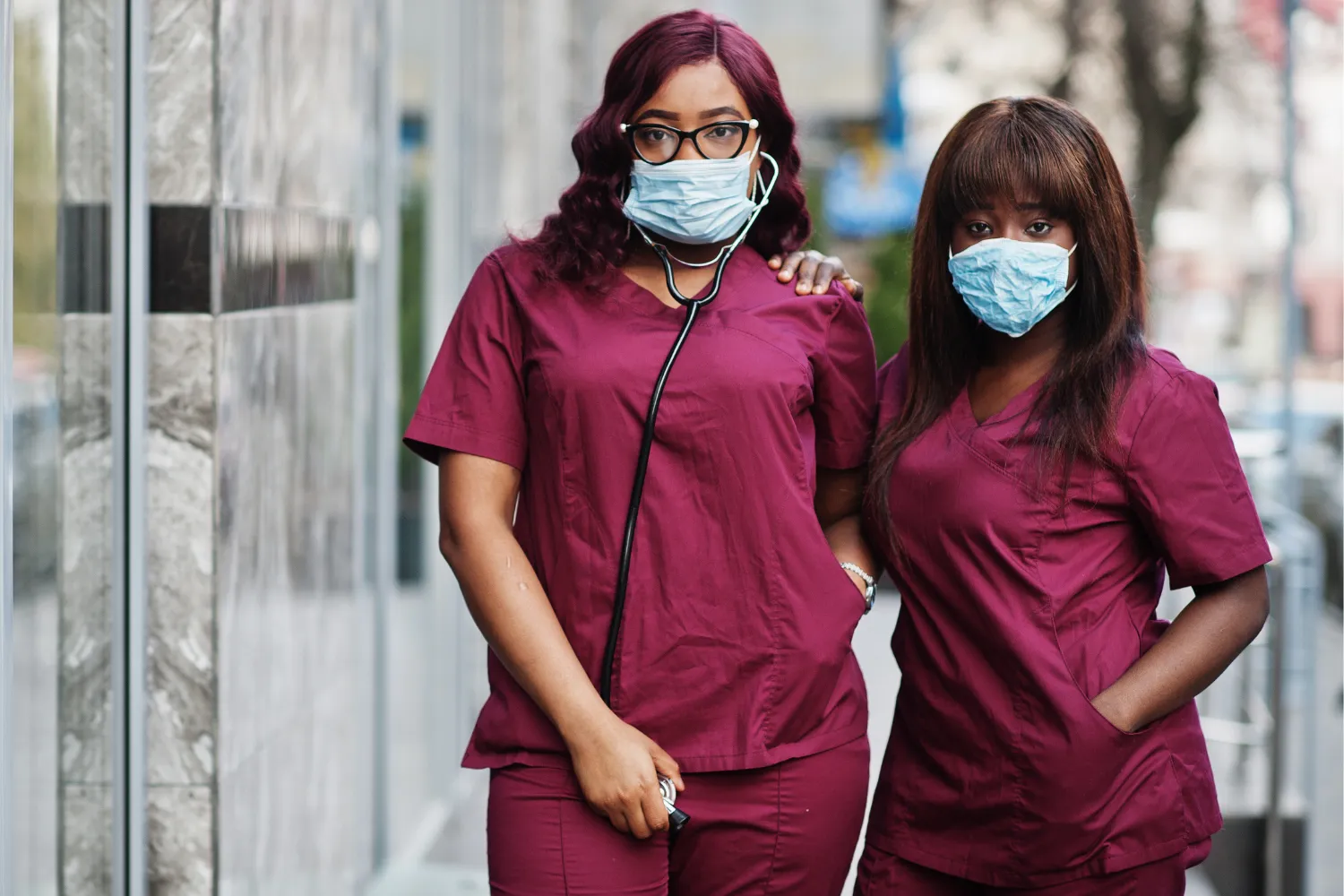
Women are voicing concerns online that the Trump administration’s move to narrow which degrees qualify as "professional" could disproportionately constrain access to female-dominated professions—particularly in health care, education and social services.
Under new guidance from the Department of Education, degrees in nursing, physician assistant studies, physical therapy, audiology, architecture, accounting, teaching and social work will not be considered "professional" degrees, despite preparing students for licensed or advanced professional practice.
The move will dictate federal student-loan limits under the administration’s upcoming "One Big Beautiful Bill" repayment structure, which offers higher annual loan caps for students in "professional" programs.
Read More
What Degrees Not Being Classified as ‘Professional’ Means for Student Loans4 min read

Gen Z Woman Posts PhD, Says ‘You Can Call Me Doctor,’ Men Aren’t Happy5 min read

Nursing Is No Longer Counted as a ‘Professional Degree’ by Trump Admin7 min read

The Department of Education previously rejected criticism leveled at the changes, and told Newsweek: "'Professional degree' terminology is not a value judgment about the importance of programs inside or outside this phrase. It is simply a federal classification used for Direct Loan eligibility purposes."
...
Why It Matters
The cost of earning a college degree is rising—over the last 30 years the average tuition for both public and private colleges has doubled after adjusting for inflation, according to a report by NPR.
As degrees that are not deemed "professional" will have lower loans caps, students in these programs will face steeper financing hurdles—and could be deterred from pursuing high-demand careers.
Critics of the policy argue it effectively places higher financial burdens on some of the most essential but often lower-paid professions, many of which are staffed largely by women.
What to Know
The rules would set different borrowing limits for "professional" and "non-professional" programs. Graduate students would be capped at $20,500 a year and $100,000 total, while students in designated professional programs could borrow up to $50,000 a year and $200,000 total.
Using the Bureau of Labor Statistics' (BLS) Labor Force Statistics from the Current Population Survey for 2024, Newsweek analyzed how many women work in fields that will be excluded from the list of "professional" degrees.
Broadly, the data shows that millions of women work in fields that will no longer be treated as "professional" for loan-limit purposes.
Nursing is the most female-dominated of all the affected fields. The American Nurses Association has warned that excluding nursing programs may limit access to advanced practice degrees and worsen existing shortages.
Alongside nursing, teaching is also one of the most female-dominated major professions in the U.S. (73 percent female).
Similarly, physician assistants (73 percent), physical therapists (64 percent), accountants and auditors (57 percent) and social workers (83 percent) are all roles primarily taken on by female workers, according to the BLS data.
The only affected field area not shown to be predominantly occupied by females was architecture.
Audiology programs are widely recognized as majority-female, although sex-breakdown data was not available for this group. In 2022, the BLS reported that health care occupations with particularly high concentrations of women included speech-language pathologists (98 percent), dental hygienists (96 percent), dental assistants (94 percent), and nursing assistants (90 percent).
What People Are Saying
Department of Education press secretary for higher education Ellen Keast told Newsweek: “Misinformation on TikTok has caused confusion about the Trump Administration’s ongoing actions to implement student loan caps for graduate students. While still in development, the Trump Administration is implementing long-needed loan limits on graduate loans to drive down the cost of programs, and under the new limits, graduate nursing students will still be eligible to borrow up to $100,000 in federal student loans for their graduate programs.
"According to Department data, 95 percent of nursing students are studying in programs that won’t be affected by the new caps. As for the most expensive outlying 5 percent, enrolled students are grandfathered into current lending limits to ensure there are no barriers to completion. We expect that institutions charging tuition rates well above market prices will consider lowering tuition thanks to these historic reforms.”
TikToker @annacamillec posted a video about the change that has gained more than 3.2 million views, in which she said: "This makes these degrees financially unattainable for a lot of students most of which are women. This weakens the future female workforce pipeline."
@miafarrowthatqueen wrote on social media platform Threads: "It’s almost like they’re saying women have no value as they rip away our roles and authority."
Threads user @cowcerdar likened the move to the plot of a Margaret Atwood novel: "In The Handmaid’s Tale, women are deliberately stripped of access to professions like nursing and teaching. The regime of Gilead is built on rigid gender roles and the suppression of female autonomy."
What Happens Next
The new rules are set to take effect in July 2026.
Update 11/25/25, 02:50 a.m. ET: This article was updated with new comment from the Department of Education.
View 0 Comments
Submit Correction
View Editorial & AI Guidelines