...

By Hannah Millington
Health Reporter
0
Share
Newsweek is a Trust Project member
See more of our trusted coverage when you search.Prefer Newsweek on Googleto see more of our trusted coverage when you search.
Humans are not well adapted to live in modern cities—and this may be having a big impact on our health and wellbeing.
This is the claim of evolutionary scientists from Loughborough University, England and the University of Zurich, Switzerland who say “rapid industrialization” has reshaped human habits so dramatically that our biology may no longer be able to keep up.
Living in unsuitable environments like populated and polluted cities—along with our disconnection from nature—could be having a knock-on effect on our core essential biological functions that form our so-called “evolutionary fitness.”
Read More on Science
These include reproductive impacts like infertility and sperm decline and immune effects such as allergies and autoimmune disease. It may also impact cognitive function, leading to problems like slower development and faster decline; and physical function declines such as reduced strength and endurance.
...
With global fertility declining and chronic disease rising, coupled with the fact 68 percent of the world’s population is projected to live in cities by 2050, the implications of the findings could be huge.
“For most of human history, our biology was shaped by natural environments, but industrialization has rapidly transformed the world around us—faster than our bodies can adapt,” Danny Longman, senior lecturer in human evolutionary physiology at Loughborough, told Newsweek.
“Emerging evidence of impaired biological function in the environments we now inhabit led us to propose the Environmental Mismatch Hypothesis: that our nature-adapted biology is poorly aligned with our modern urban environments.”
Longman explained that the research involved a synthesis of lab, field and population studies, including on the short-term physiological effects of exposure to natural versus industrialized environments.
Rather than collecting new data, they integrated evidence from anthropology, ecology, physiology and public health to evaluate how modern environments affect human biology.
Their findings have revealed both short-term and long-term impacts on us.

...
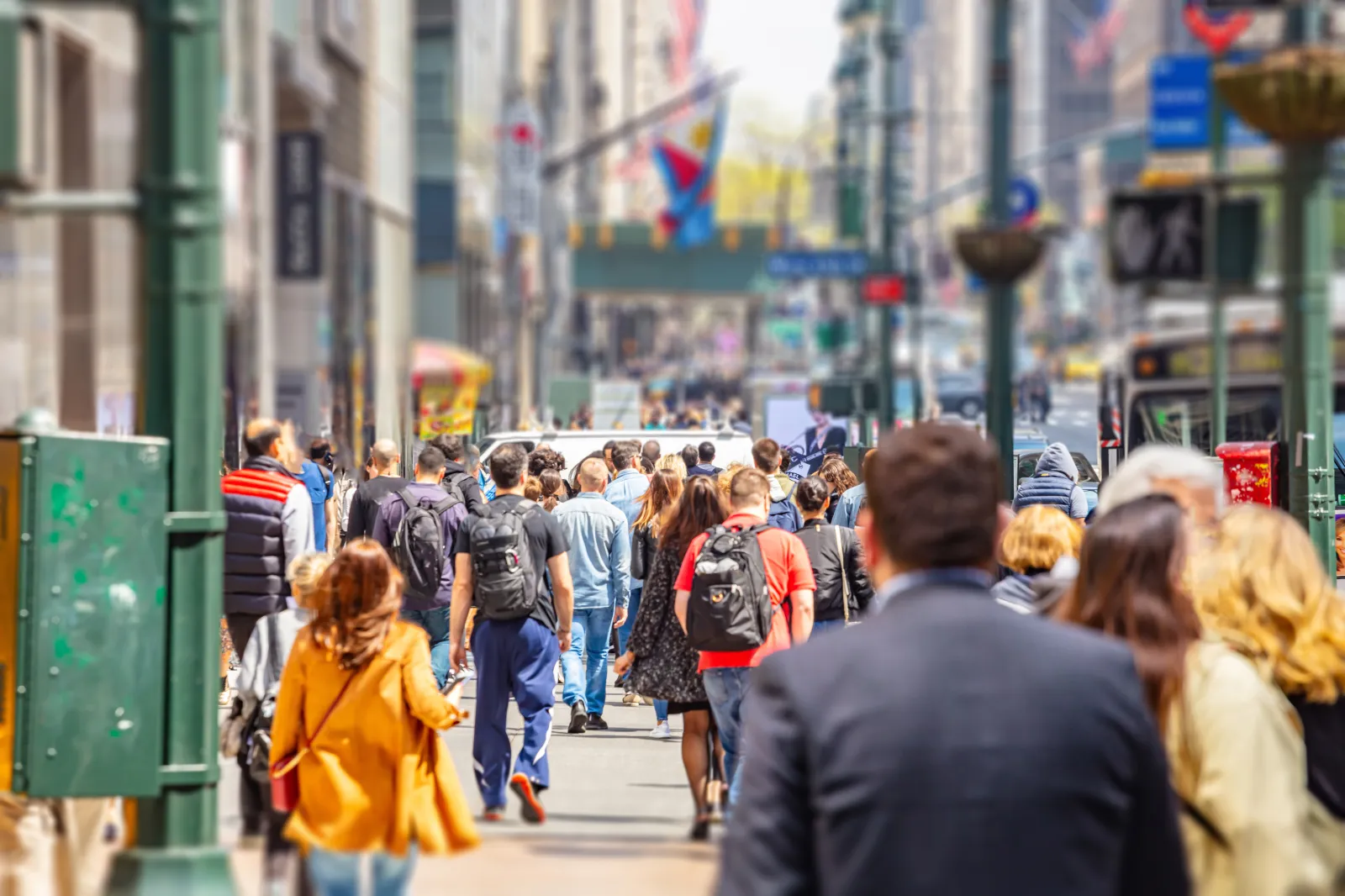
“Day-to-day, chronic background noise, crowds, traffic, digital overstimulation and limited access to natural spaces keep the stress response system switched on. This elevates anxiety, worsens sleep and impairs concentration. Over time, these constant stressors contribute to mental-health problems, cardiovascular strain, cognitive impairment, immune dysregulation and reduced reproductive health,” Longman explained.
“We’re also seeing evidence that polluted, noisy and crowded environments can reduce physical performance, especially in endurance tasks. In other words, commuting through noisy, polluted streets isn’t just unpleasant—these daily stressors accumulate and have real biological consequences.”
Longman acknowledged we are not going back to natural habitats any time soon with current population growth and the continued expansion of cities.
“Urban living is our future. The challenge is to design cities that work with human biology, not against it,” he added.
Do you have a tip on a science story that Newsweek should be covering? Do you have a question about human evolution? Let us know via science@newsweek.com.
Reference
Longman, D. P., & Shaw, C. N. (2025). Homo sapiens, industrialisation and the environmental mismatch hypothesis. Biological Reviews. https://doi.org/10.1111/brv.70094
View 0 Comments
Submit Correction
View Editorial & AI Guidelines