10
Loading video...

By Balázs Tárnok
Director of research at the John Lukacs Institute for Strategy and Politics, Ludovika University of Public Service, Budapest
0
Share
Newsweek is a Trust Project member
See more of our trusted coverage when you search.Prefer Newsweek on Googleto see more of our trusted coverage when you search.
Hungary’s foreign policy may be changing in a way Washington should not miss.
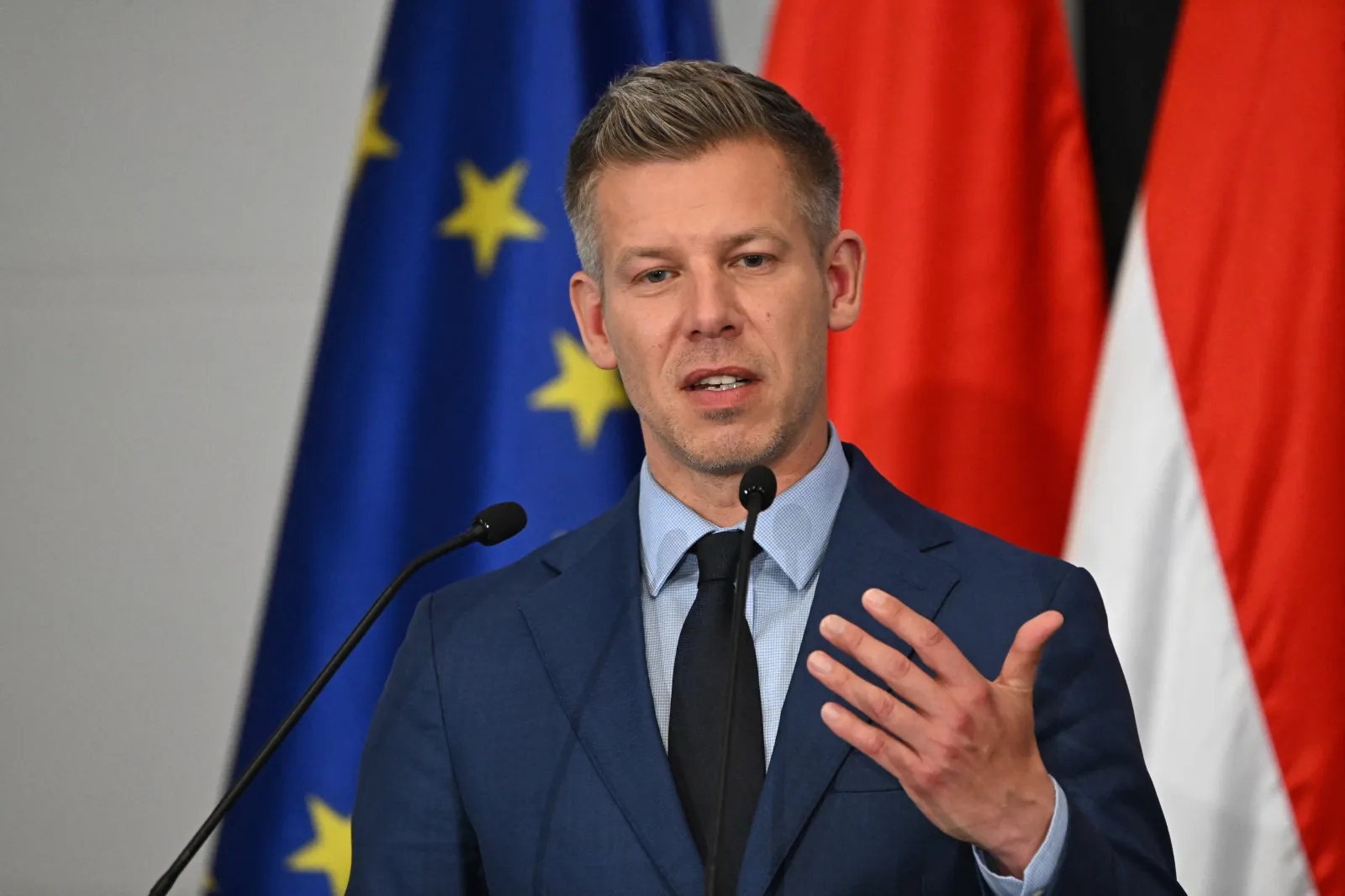
After his election victory in April, Péter Magyar—whom Hungary’s parliament is electing prime minister today—had his first exchange with Slovak Prime Minister Robert Fico. It was not about pipelines, trade, or the usual choreography of Central European pragmatism. It was about the rights of ethnic Hungarians in Slovakia.
...
Read More on Opinion
Magyar made clear that resolving the issue of the Beneš Decrees—the postwar Czechoslovak measures based on collective guilt against ethnic Germans and Hungarians—is a precondition for future cooperation between Budapest and Bratislava, including ending legal threats against those who challenge them and halting land confiscations rooted in collective guilt.
That message matters beyond one bilateral dispute. It suggests that Hungary may be returning to an older understanding of foreign policy: interests matter, but values define the limits within which interests can be pursued.
For years, Hungarian-Slovak relations were described as historically good. In practice, that meant avoiding sensitive questions. Budapest and Bratislava cooperated on energy, infrastructure, and EU politics while pushing aside the grievances of Slovakia’s Hungarian minority: language rights, property rights, and collective dignity.
The logic was understandable, but flawed. Hungary needed regional allies in Brussels. Orbán’s government found common cause with Fico on sovereignty, migration, energy, and resistance to EU pressure. But the price of that alignment was silence on issues that should have remained non-negotiable.
The Beneš Decrees are not merely a historical wound. Adopted after World War II, they deprived ethnic Germans and Hungarians in Czechoslovakia of property and citizenship on the basis of collective guilt. In Slovakia, their legacy still matters. Recent land confiscation controversies and efforts to criminalize criticism of the decrees have turned history into a living rule-of-law problem.
For Hungary, this cuts to the core of national responsibility. Since the democratic transition, Hungarian foreign policy has rested on three pillars: Euro-Atlantic integration, regional cooperation, and support for Hungarian communities beyond the country’s borders. József Antall, Hungary’s first freely elected post-communist prime minister, understood that these pillars reinforced one another.
That balance was gradually lost. Orbán’s later foreign policy became increasingly transactional, often treating alliances with populist or “sovereigntist” leaders as more important than defending Hungarian communities abroad. Slovakia was the clearest example, but the pattern extended further. Orbán’s public support for George Simion in Romania, despite Simion’s anti-Hungarian nationalist record, signaled to many Hungarians that tactical alignment had begun to outweigh national principle.
Magyar recognized the opening. As opposition leader, he argued that abandoning Hungarian communities abroad was not realism but a surrender of orientation. Now, as prime minister, his first moves suggest this was not merely campaign rhetoric.
This does not mean Hungary should abandon pragmatism. Geography is unforgiving. Hungary must cooperate with Slovakia on energy, trade, infrastructure, and regional security. It must also manage relations with Russia where geography and energy dependence make full disengagement impossible in the short term.
But there is a crucial difference between pragmatism and cynicism. Pragmatism advances interests within a framework of national purpose. Cynicism discards that framework whenever it becomes inconvenient. The former is statecraft. The latter leaves a country without a compass.
This is why Magyar’s message to Fico matters for the United States, too. Washington has often struggled to understand Central Europe beyond clichés: pro-American or anti-American, liberal or illiberal, Brussels-aligned or sovereigntist. Hungary’s emerging debate is more important: whether a small allied nation can pursue its interests while restoring predictability, constitutional responsibility, and Western orientation.
For American policymakers, Central Europe remains strategically vital. Russia’s war against Ukraine, energy insecurity, Chinese influence, and the future of NATO all run through the region. The United States does not need allies that merely repeat Washington’s talking points. It needs allies that are reliable and anchored in principles that make their behavior intelligible.
A Hungary that returns to its post-1989 foreign policy foundations could become such an ally again: pro-European without being naive about Brussels, regionally cooperative without being silent about minority rights, and pragmatic without confusing every short-term deal with national interest.
There are risks. Magyar will soon face the pressures that turned earlier principles into bargaining chips: energy dependence, EU disputes, regional resentment, and the temptation to declare every hard question secondary to stability.
Still, first moves matter. By putting the rights of Hungarians in Slovakia at the center of his message, Magyar signaled that Hungarian foreign policy may once again have red lines rooted in national responsibility and democratic values.
That is not nostalgia. It is strategic discipline.
And after years in which Hungary’s foreign policy too often traded principles for tactical friendships, a return to first principles may be exactly what Budapest—and its Western partners—need.
Balázs Tárnok is director of research at the John Lukacs Institute for Strategy and Politics, Ludovika University of Public Service, Budapest.
The views expressed in this article are the writer's own.
View 0 Comments
Submit Correction
View Editorial & AI Guidelines