10
Loading video...


By Billal Rahman and Dan Gooding
0
Share
Newsweek is a Trust Project member
See more of our trusted coverage when you search.Prefer Newsweek on Googleto see more of our trusted coverage when you search.
ICE personnel have been instructed not to take enforcement action against Haitians with expired TPS for now, two sources familiar with Immigration and Customs Enforcement (ICE) operations told Newsweek on Thursday.
It's a move that suggests the agency is, for now, holding off on enforcement actions against that group.
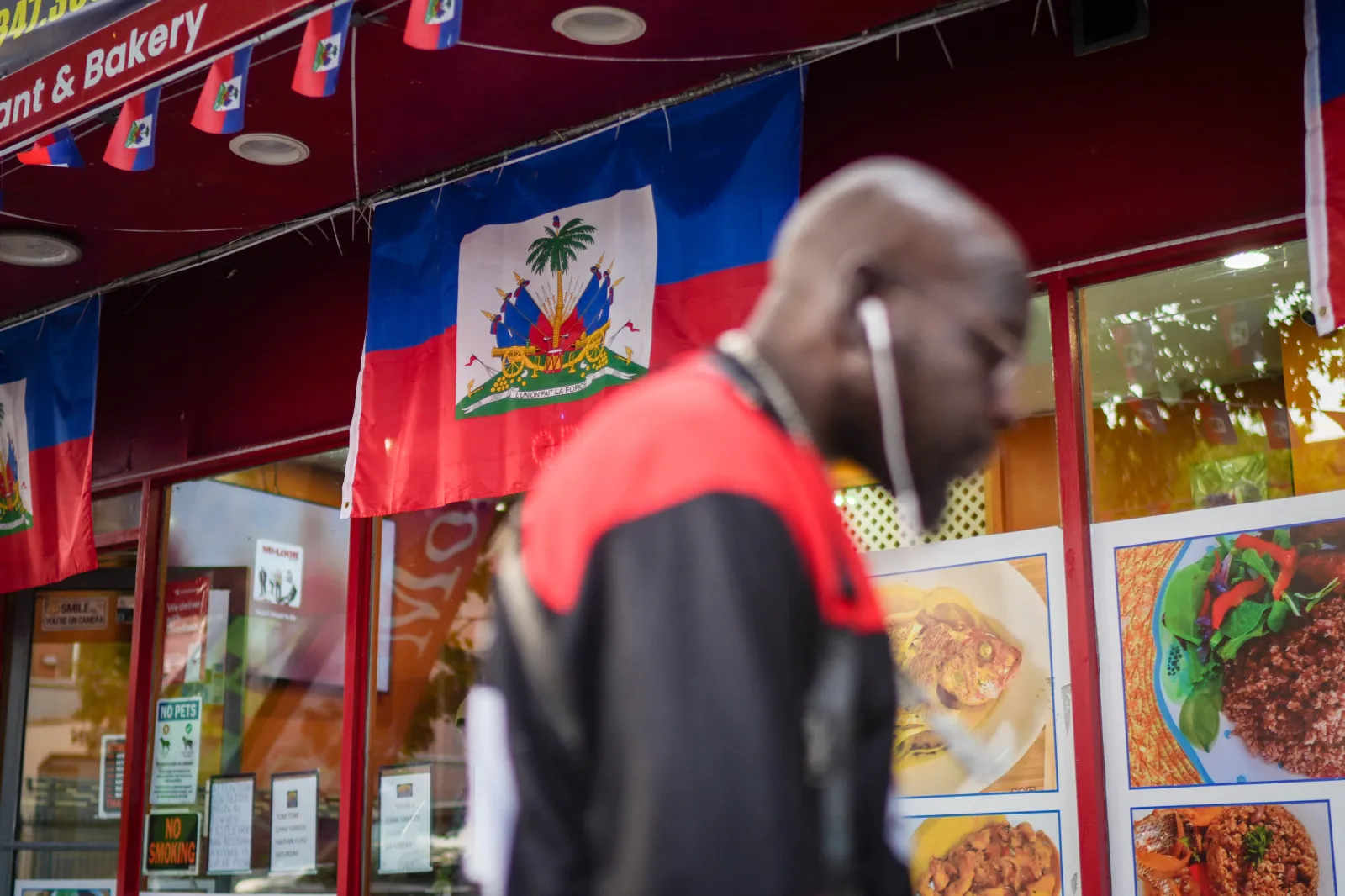
The guidance comes as Haitian communities and immigrant advocates have raised concerns that the end of TPS could expose hundreds of thousands of Haitians to detention and deportation.
Read More on U.S.
Newsweek confirmed the guidance with a current ICE official and a former agency official familiar with the matter. Both spoke on condition of anonymity because they were not authorized to discuss internal ICE guidance. One source said Haitians with final orders of removal may still be subject to arrest as part of routine enforcement operations.
It remains unclear how long the guidance will remain in place or whether it applies nationwide.
DHS told Newsweek it could not comment on ongoing or future operations.
Geoff Pipoly, the lead counsel for the Haitians on the Supreme Court case, told Newsweek following the news that he believed ICE should not be detaining his clients at all.
"They have followed all of the rules, and they made a deal with the government, which is that they turned their information over to the government by registering for TPS, gave them [their] names, addresses, family members names, submitted biometrics, done background checks, all that stuff, and in exchange for which the government was supposed to do a reasoned evaluation of whether it's safe for them to go back," Pipoly said.
"The TPS holders were all told essentially, 'don't worry, we have a deal,' the government and them, that they will only be sent back if and when it's safe to do so, and it's just clearly not the case in Haiti right now. They feel very betrayed in addition to afraid and, I don't blame them, but they're terrified."
What the Supreme Court Case Was About
The Supreme Court's June decision in Mullin v. Doe, a major immigration case involving Haitian and Syrian TPS holders, cleared the way for the Trump administration to end TPS protections for hundreds of thousands of migrants.
In a 6-3 ruling, the court held that federal judges generally lack authority to review Homeland Security Department decisions terminating TPS designations, a finding that immigration advocates warned could have consequences far beyond Haiti and Syria.
...
The lawsuit was brought by TPS beneficiaries and advocates challenging the administration's effort to end protections for Haitians, arguing that conditions in the Caribbean nation remained dangerous and that the government had failed to follow statutory requirements.
While lower courts had temporarily blocked the termination, the Supreme Court's ruling allowed the administration to proceed, ultimately affecting roughly 350,000 Haitian TPS holders. A lower court judge confirmed the protections were no longer in place Wednesday.
The reported ICE guidance comes as immigration officials implement the ruling and face questions about how enforcement will be carried out against Haitians who were part of the class action litigation that led to the Supreme Court case.
“If ICE is holding off, it hopefully signals that uprooting 350,000 law-abiding people from their families, employers, and communities was never sensible," Krish O'Mara Vignarajah, president and CEO of Global Refuge, told Newsweek in a statement. "But a temporary reprieve doesn’t undo the harm of stripping legal status from people who followed every rule we asked of them.
"This isn’t how we should treat people who coach Little League, run small businesses, staff our hospitals, care for our parents, and sit in the pews of our churches.”
Related Story

Map Shows States With Most Haitian Migrants as TPS Ends
What DHS Has Been Saying
DHS has maintained that Haiti no longer qualifies for TPS and has welcomed the Supreme Court's decision.
In official guidance issued after the ruling, the agency originally said Haiti's TPS designation would be terminated July 27 and that associated work authorization documents were no longer valid. That deadline was then partially extended through early August.
“Every day, DHS is conducting law enforcement activities across the country to keep Americans safe. DHS does not discuss ongoing or future operations," a DHS spokesperson told Newsweek Thursday.
“Temporary Protected Status is exactly that—temporary. For too long, TPS has been allowed to function as a de facto amnesty program despite Congress never intending it to be permanent."
What Happens Next
Pipoly told Newsweek that legal teams were still litigating the Haiti TPS case, saying that while the Supreme Court answered one question, it had opened up 350,000 new questions about each immigrant's personal status.
Contact Newsweek editors on this story: Jason Lemon, Sam Wilson, Gray R. Thomas
View 0 Comments
Submit Correction
View Editorial & AI Guidelines