
Getty Images

By Anna Skinner
Associate News Editor
0
Share
Newsweek is a Trust Project member
See more of our trusted coverage when you search.Prefer Newsweek on Googleto see more of our trusted coverage when you search.
Illinois has emerged as the nation’s most active tornado state so far this year, an unexpected and striking shift that has pushed the Midwest to the center of America’s severe weather map and raised fresh questions about how changing atmospheric patterns are reshaping traditional “Tornado Alley.”
Illinois’ sudden emergence as a tornado hotspot reflects a broader shift in where the nation’s most dangerous storms are forming. Meteorologists say the traditional Tornado Alley centered in the Great Plains has been creeping eastward, placing states like Illinois more frequently in the path of conditions that fuel severe storms, including warm, moist air from the Gulf of Mexico colliding with strong wind shear over the Midwest.
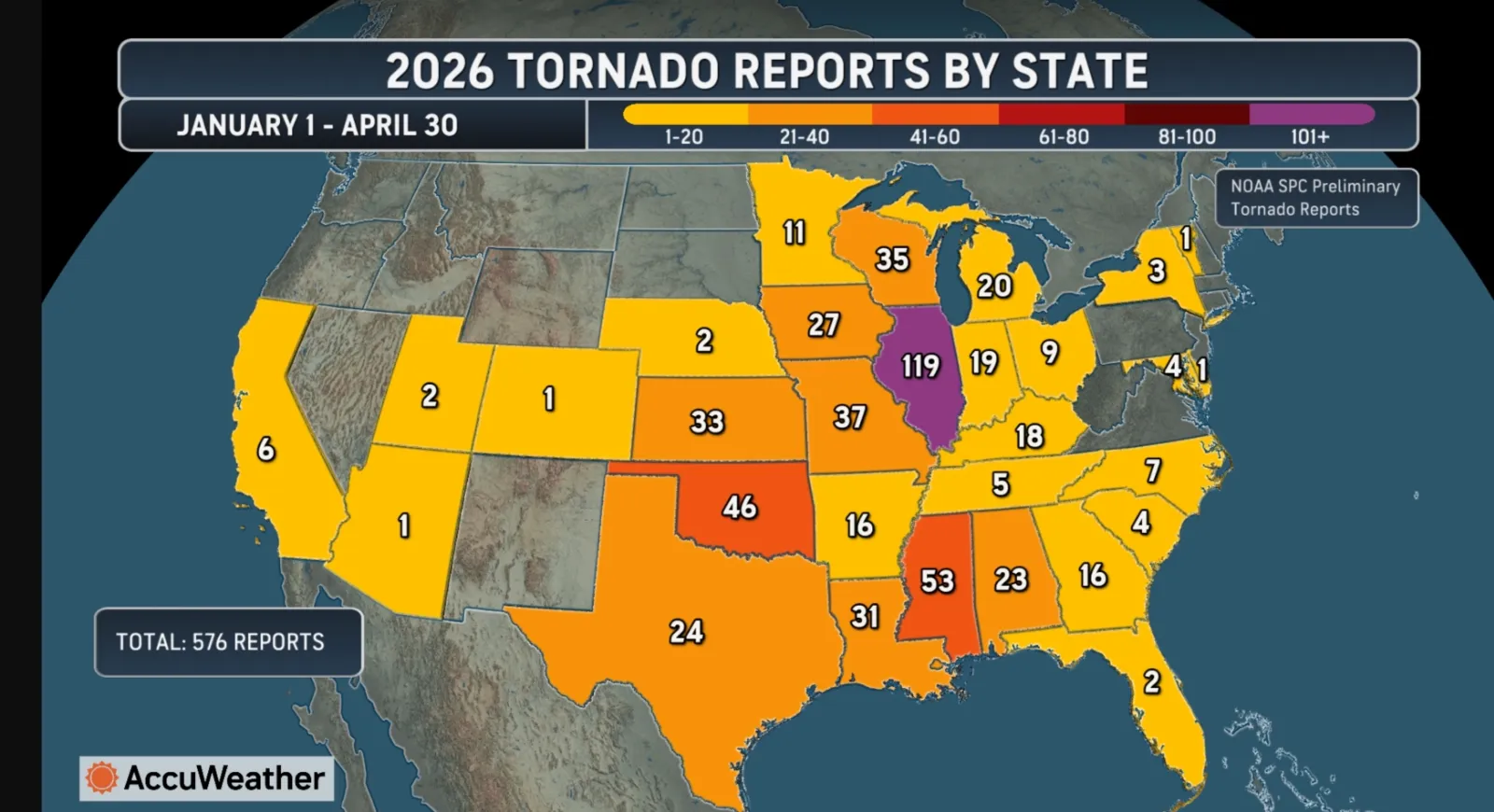
Illinois leads the United States in preliminary tornado reports so far this year, outpacing states that typically dominate tornado statistics such as Texas, Oklahoma and Mississippi, according to AccuWeather and data from the National Weather Service's (NWS) Storm Prediction Center.
Read More on Weather
Tornado Map Reveals Illinois Impacts
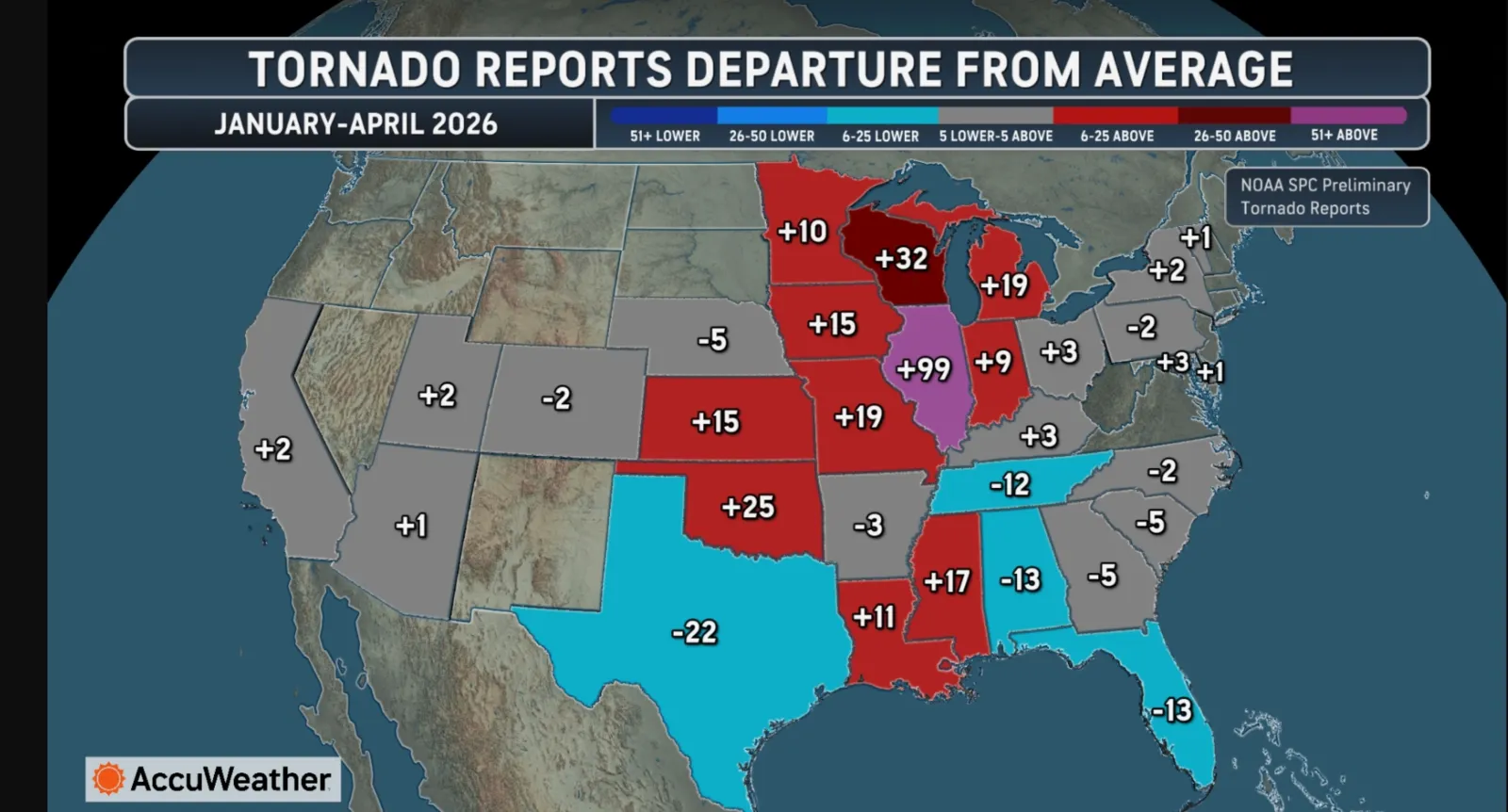
Through the end of April, Illinois recorded 119 tornado reports—more than double the totals reported in Mississippi and Oklahoma during the same period. That figure also puts Illinois far above its own long-term average for the first four months of the year, marking an unusually active start to the 2026 severe weather season.
...
Meteorologists say the surge is not the result of a single outbreak, but rather a persistent pattern of storm systems that repeatedly tracked across the Midwest this spring. Multiple rounds of severe thunderstorms produced repeated tornado touchdowns across central and northern Illinois, including a multiday outbreak in early April that spawned numerous confirmed twisters.
“The jet stream plays a large role in organizing severe weather in the spring," AccuWeather meteorologist Alex Duffus told Newsweek. "This year, its average position through March and April has been centered more over the Midwest, bringing more tornadoes, instead of being positioned over the southern Plains."
How Many Tornadoes Hit Illinois in a Year
On average, Illinois sees about 50 tornadoes annually, with most occurring between April and June. But in 2026, the state reached more than twice its typical early-year total before peak tornado season even arrived, according to historical Storm Prediction Center data cited by AccuWeather.
By contrast, Texas, often the national leader in yearly tornado counts because of its size and geography, has lagged behind its historical pace so far this year, while several Southern states have also reported below-average activity through April.
...
Is Tornado Alley Moving?
For decades, “Tornado Alley” referred to a relatively well-defined stretch of the central Plains, including much of Texas, Oklahoma and Kansas. But a growing body of research suggests that picture is changing. Studies analyzing stronger tornadoes over multiple decades have found a geographic shift in where tornadoes most frequently form, with activity declining in parts of the traditional Plains corridor and increasing farther east, particularly across the Midwest and Southeast.
Scientists say the change has been unfolding since at least the mid-20th century, challenging the long-standing idea that tornado risk is concentrated mainly in the Great Plains.
What Happens Next With Illinois Tornado Threat
Meteorologists caution that tornado counts early in the season remain preliminary and subject to verification as NWS survey teams continue to assess storm damage across the region.
With tornado season typically peaking in late spring and early summer, officials say Illinois’ experience this year highlights how severe weather risks are shifting and why residents far outside the traditional boundaries of Tornado Alley must remain prepared for increasingly volatile conditions.
View 0 Comments
Submit Correction
View Editorial & AI Guidelines