...

By Billal Rahman
Immigration Reporter
0
Share
Newsweek is a Trust Project member
See more of our trusted coverage when you search.Prefer Newsweek on Googleto see more of our trusted coverage when you search.
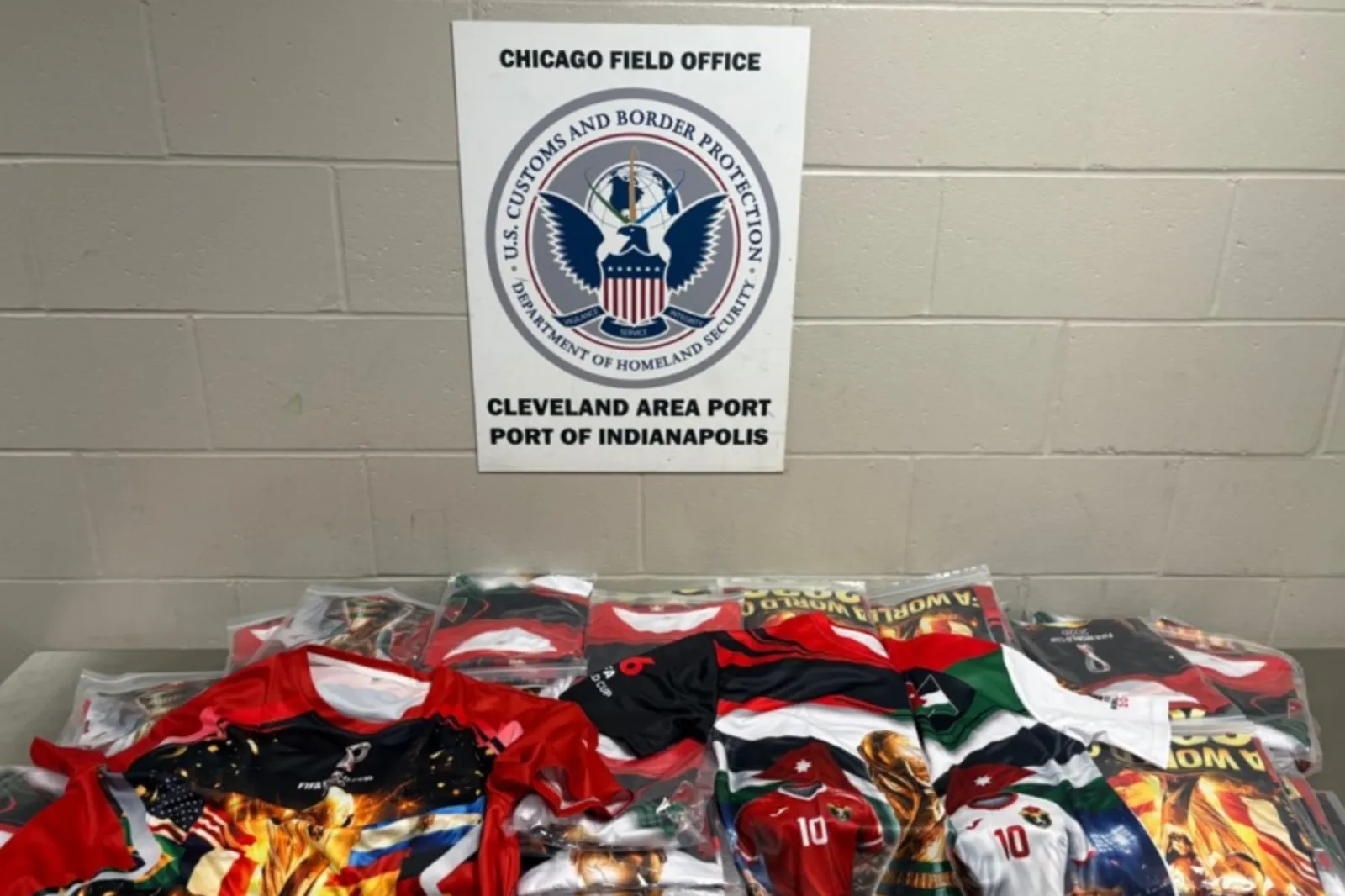
U.S. Customs and Border Protection (CBP) officers in Indianapolis seized counterfeit FIFA World Cup 2026 merchandise worth more than $134,000 during a recent enforcement operation, federal officials said Monday.
The seizures took place during an enforcement effort known as “Operation Winner’s Circle,” conducted from June 1 through June 5, in which officers intercepted 18 shipments that they say contained fake jerseys, shirts, beanies and other items tied to the highly anticipated tournament.
In total, authorities confiscated 1,578 counterfeit goods that, if they had been genuine, would have had an estimated retail value of $134,594, according to the agency.
Read More on News
The shipments included 530 jerseys, 380 beanies, and hundreds of shirts branded with top names linked to the tournament, such as Puma, Adidas, and Nike, along with additional World Cup-related merchandise.
...
Most of the goods originated in Hong Kong and were destined for locations both inside and outside the United States, CBP said.
“Sports fans often pay big money for sports memorabilia,” Indianapolis Port Director, Brett Mueller said in a press release on June 15. “Counterfeit sports memorabilia de-funds our sports organizations, funds criminal networks, and scams the fans. Officers in Indianapolis work hard each day to protect our domestic businesses and American consumers.”
Officials said the growth of e-commerce has made it easier for counterfeit goods to enter the U.S. through small shipments sent directly to consumers, complicating enforcement efforts. CBP said counterfeit goods are often linked to wider criminal networks and can mislead consumers into purchasing substandard products.
The enforcement action comes as authorities anticipate a rise in counterfeit goods linked to the FIFA World Cup, which is being held across the United States, Canada, and Mexico.
Homeland Security Investigations (HSI), a division of Immigration and Customs Enforcement, is assisting the Department of Homeland Security (DHS) and other federal partners in efforts to detect, investigate, and disrupt the trafficking of counterfeit goods tied to major events such as the FIFA World Cup, including through coordination with CBP and other agencies targeting illicit international shipments and intellectual property violations. At major sporting events, HSI agents are generally deployed to support security and investigative operations
CBP is responsible for enforcing U.S. trade and customs laws, including protections against intellectual property rights violations, as well as securing the nation’s borders at land crossings, airports, and seaports. The agency screens travelers and cargo entering the country, enforces immigration laws at and between ports of entry, and works to prevent the illegal entry of people, drugs, and other contraband. The agency falls under the authority of DHS.
Ahead of the FIFA World Cup, DHS told Newsweek it would coordinate with federal and local partners to secure the tournament while upholding U.S. law and ensuring a safe experience for fans. The agency said international visitors traveling legally to attend the event “have nothing to worry about,” adding that immigration enforcement is focused solely on individuals in the country unlawfully, while urging visitors to arrange travel documents well in advance to avoid disruptions.
A soccer fan, however, previously told Newsweek he was “devastated” after losing the ability to travel to the United States for the 2026 FIFA World Cup days before his planned departure. Kenny Smith, a musician and business owner from Inverness, Scotland, said his Electronic System for Travel Authorization (ESTA) status changed from approved to “Travel Not Authorized,” forcing him to miss what he described as a “once-in-a-lifetime opportunity” to watch Scotland play in the tournament for the first time since 1998.
View 0 Comments
Submit Correction
View Editorial & AI Guidelines