10
Loading video...

By Jason Lemon
Deputy News Director
0
Share
Newsweek is a Trust Project member
See more of our trusted coverage when you search.Prefer Newsweek on Googleto see more of our trusted coverage when you search.
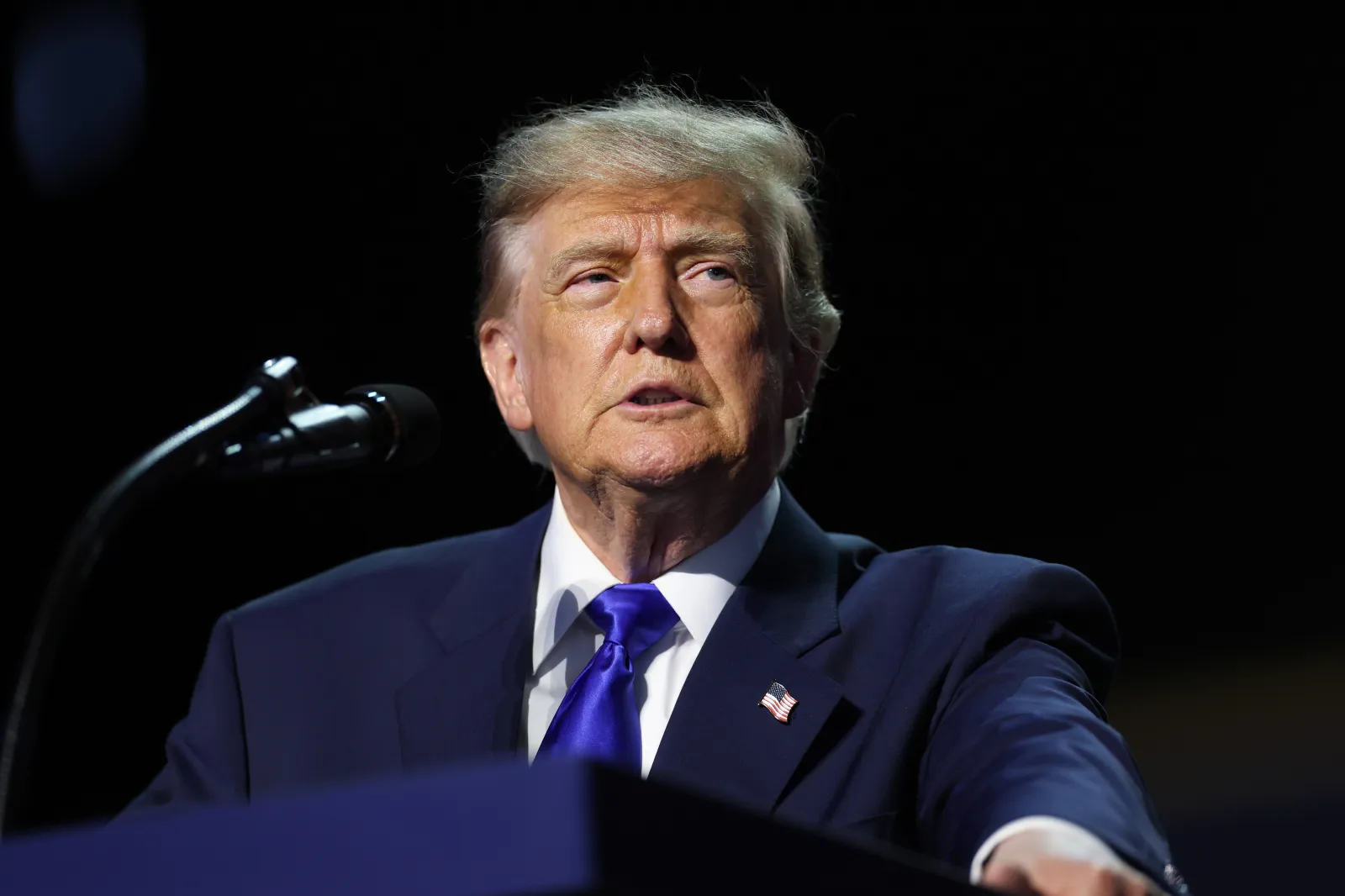
As the midterm elections approach, Democrats are increasingly optimistic about retaking Congress. Even some Republicans have all but conceded that the House and perhaps the Senate could slip from their grasp. If that happens, Democrats would face an immediate and politically fraught question: whether to impeach President Donald Trump for a third time.
The possibility is already dividing the party. Some Democrats argue Trump’s conduct demands constitutional accountability; others fear another impeachment fight would consume a new majority, distract from voters’ concerns about affordability and ultimately end in another Senate acquittal.
House Minority Leader Hakeem Jeffries, a New York Democrat, has avoided committing either way.
Read More on Politics
“We certainly haven’t ruled anything in and we haven’t ruled anything out,” Jeffries told PBS in a late September interview. Democrats, he said, would investigate potential wrongdoing, “follow the facts, apply the law, be guided by the Constitution” and “let the chips fall where they may.”

...
The Math Problem
A Democratic House could impeach Trump by a simple majority vote. Conviction and removal from office, however, require two-thirds of senators present at a Senate trial, making substantial Republican support almost certainly necessary regardless of November’s outcome.
Former Democratic Representative Joe Cunningham, who represented a Republican-leaning South Carolina district, told Newsweek that many of the lawmakers needed to build a majority face different pressures from colleagues in safely Democratic seats.
“Front-line members have to win over independents and, in many cases, Republicans,” Cunningham said. “That cannot be done by constantly serving up partisan red meat like impeachment.”
He urged Democrats to address corporate practices and economic pressures making everyday life more expensive.
“If Democrats initiate an impeachment process, it will consume the oxygen in Washington and overshadow virtually everything else they are trying to accomplish for Americans,” he said.
Cunningham does not rule out taking such action when warranted. Serious misconduct creates a “constitutional responsibility to follow the facts wherever they lead,” he said. But impeachment should not become “the centerpiece of a political strategy.”
“The Democratic Party needs to be known for what it is fighting for, not simply what it is fighting against.”
Former Obama White House Chief of Staff Rahm Emanuel is among the most prominent Democrats explicitly opposing another impeachment.
Asked on NBC News’ Meet the Press on October 4 whether Democrats should pursue it after retaking the House, he answered: “Short answer: No.”
“It’s not going anywhere, and it’s going to be a food fight,” Emanuel said. He instead urged investigations into alleged corruption followed by a broader ethics package.

...
Senator Tammy Duckworth of Illinois recently offered similarly blunt advice: “Don’t be impeaching anybody...let’s just get back to work.” Representative Raja Krishnamoorthi, another Illinois Democrat, told CNN in early October he had “yet to talk to a Democrat” who believed impeachment should be the party’s first priority after winning the House.
For these skeptics, the risk is straightforward: Democrats could win back power on voters’ economic frustrations, only to shift attention straight back to Trump. Yet supporters argue that abandoning impeachment simply because Republicans would block conviction risks neutralizing a constitutional safeguard.
David Froomkin, University of Houston assistant law professor, told Newsweek that the Framers envisioned presidents and lawmakers being constrained by their constitutional oaths, with Congress holding presidents accountable.
“The Constitution’s high threshold for impeachment failed to contend with partisan politics,” he said. The mechanism is broken, he argued, because lawmakers “place their partisan loyalty above their oaths.”
Supporters of the action point to a range of alleged misconduct, including foreign policy decisions they say bypassed congressional authority, the administration’s treatment of federal employees and other actions they argue exceeded constitutional limits.
Representative Alexandria Ocasio-Cortez, a New York Democrat, is among the most prominent advocates. “If you are asking me if I’d support impeachment, I do,” she said in March, citing “very objective grounds of following the law or not.” She has pointed to Trump’s military action involving Iran and allegations of corruption.
Similarly, Representative Ro Khanna, a California Democrat, has said impeachment can establish constitutional standards without removal and coexist with a cost-of-living agenda. Speaking on Meet the Press in September, he said the measure would be a stand against getting involved in the “illegal war in Iran” and firing federal employees “in defiance of what Congress says.”
Representative Jamie Raskin of Maryland, the Judiciary Committee’s top Democrat, would be central to any proceedings. He told the show that Trump had “undoubtedly” committed impeachable offenses, and that impeachment is neither a “fetish” nor a “taboo” for Democrats, distinguishing constitutional grounds from political strategy.
Related Story
List of Democrats Who Voted To Stop Trump Impeachment Effort
In a more tactical approach, Congressional Progressive Caucus Chair Greg Casar of Texas opposed shelving Representative Al Green’s September resolution but previously criticized a separate effort as a “doomed impeachment vote,” questioning whether symbolic votes advance accountability.
Green, of Texas, has been the most persistent advocate, repeatedly forcing floor votes. His September resolution targeted the administration’s immigration enforcement policies. The House tabled it 232–147, with 46 Democrats voting present and 18 supporting dismissal.
Green lost his Democratic primary earlier this year and will leave Congress in January.
History Lessons
Another Trump impeachment would cement the president’s legacy as the most impeached president in U.S. history, with a new effort bringing him to three out of five impeachments ever approved.
Four impeachments, four acquittals
House: for–against impeachment. Senate: guilty–not guilty.
President House vote Senate vote Outcome Andrew Johnson
1868 126–47 35–19
Each of 3 articles tried Acquitted Bill Clinton
1998–1999 228–206 Perjury
221–212 Obstruction 45–55 Perjury
50–50 Obstruction Acquitted Donald Trump
2019–2020 230–197 Abuse of power
229–198 Obstruction 48–52 Abuse of power
47–53 Obstruction Acquitted Donald Trump
2021 232–197 57–43 Acquitted
Conviction requires two-thirds of senators present. Johnson’s House tally is the initial impeachment vote.
Sources: U.S. House / U.S. Senate.
The House has impeached three leaders: Andrew Johnson in 1868, Bill Clinton in 1998 and Trump twice, in 2019 and 2021. All ended in Senate acquittals. Richard Nixon resigned in 1974 after the Judiciary Committee approved impeachment articles, before a full House vote.
Clinton’s case illustrates the risk of backlash. A Gallup telephone poll of 852 adults conducted December 19–20, 1998, found 63 percent disapproved of his impeachment and 35 percent approved. His approval reached 73 percent, although Gallup noted contemporaneous airstrikes against Iraq likely contributed.
Trump’s first impeachment barely shifted his approval. A Pew online survey of 12,638 adults conducted January 6–19, 2020, found 51 percent favored removal and 46 percent opposed it. His approval remained at 40 percent, unchanged from before the inquiry.
After his second acquittal, a Pew online survey of 12,055 adults conducted March 1–7, 2021, found 52 percent believed he should have been convicted. Seven Republican senators voted to convict, but the 57–43 tally fell short. That trial occurred after Trump left office.
A third Trump acquittal could reinforce perceptions of the process as a recurring partisan fight with little practical consequence. But that would not automatically cheapen the process.
Public opinion on impeachment
Clinton · December 1998
Approved impeachment 35%
Disapproved impeachment 63%
Trump’s first impeachment · January 2020
Wanted removal 51%
Wanted Trump to remain 46%
Trump’s second impeachment · March 2021
Wrong conduct; favored conviction 52%
Wrong conduct; opposed conviction 15%
No wrongdoing; opposed impeachment 31%
All bars use a 0–100% scale. Selected polls of adults; questions differ. Other/no-answer responses omitted.
Sources: Gallup, 1998; Pew, 2020; Pew, 2021.
Froomkin’s argument raises the opposite concern: declining to act because conviction is unlikely could make partisan protection more powerful than constitutional accountability. The distinction would rest on the seriousness of documented misconduct and whether Democrats could explain the case beyond their existing supporters.
Either way, Trump is already using the prospect of impeachment to mobilize Republicans for the midterms.
“Pretend I’m running, please,” the president told an October 1 rally in Durant, Oklahoma. “If we don’t win, they’ll end up impeaching me.”
House Majority Leader Steve Scalise, a Louisiana Republican, has warned Democrats would “impeach the president day one.” House Speaker Mike Johnson, also a Louisiana Republican, has also highlighted investigations and impeachment as election stakes.
“If we lose the House majority, the radical left, as you’ve already heard, is going to impeach President Trump. They’re going to create absolute chaos. We cannot let that happen,” Johnson said last year at Turning Point USA’s AmericaFest conference.
For Emanuel and Cunningham, that presents a danger: Trump could rally Republicans, portray investigations as persecution and redirect attention from affordability.
For impeachment supporters, the danger is allowing serious misconduct to go unanswered.
Democrats first have to win the House. If they do, Jeffries’ promise to follow the evidence may force a choice between constitutional duty and political calculation.
View 0 Comments
Submit Correction
View Editorial & AI Guidelines