
By Jess Thomson
Science Reporter
0
Share
Newsweek is a Trust Project member
See more of our trusted coverage when you search.Prefer Newsweek on Googleto see more of our trusted coverage when you search.
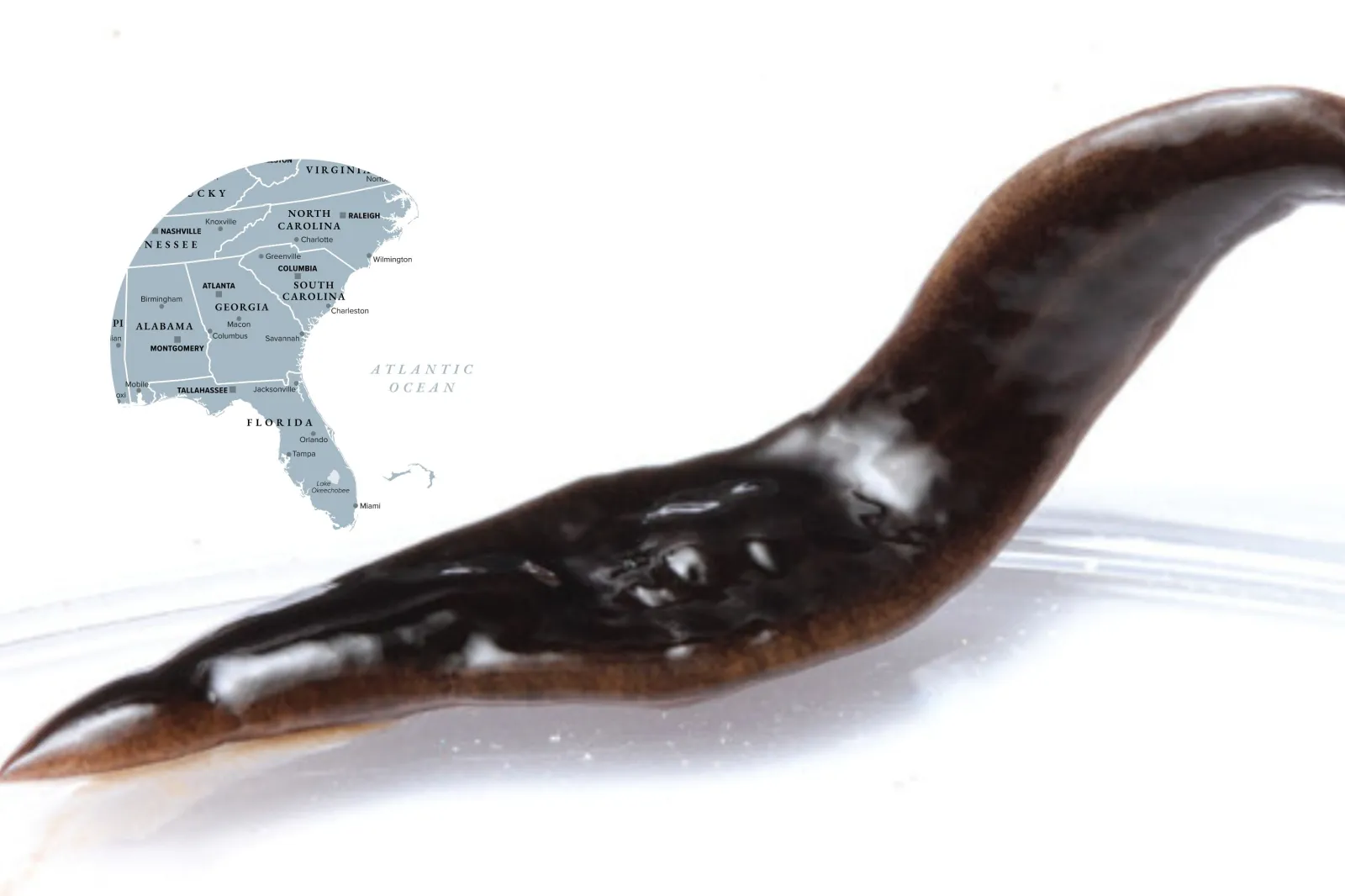
A new species of flatworm has been found invading the U.S., having already spread across Florida, Georgia and North Carolina.
The species, named Amaga pseudobama, was discovered in North Carolina in 2020, according to a new paper in the journal PeerJ.
The worm, which is native to South America and invasive to the U.S., was named because of its similarity to another invasive flatworm named Obama nungara. Initially, the specimens of the new species were thought to belong to Obama nungara, which is native to Brazil and Argentina, and has invaded much of Europe. However, upon analysis of its DNA, the researchers discovered that it was a completely different species, and not even from the same Obama genus.
Read More on Science
...
"Specimens of land planarians were found in a plant nursery in North Carolina, USA in July 2020," the researchers wrote in the paper. "On the basis of examination of photographs of the live specimens only, the specimens were identified as Obama nungara. To our surprise, a molecular analysis showed that the species was very different."
The specimen was then identified as a brand new species of flatworm, Amaga pseudobama.
Also known as land planaria, terrestrial flatworms are flat, ribbon-like creatures that live in moist soils. Most of these flatworms are carnivorous and feed on small invertebrates, especially earthworms, snails and slugs. Some species of land planaria have become invasive in the U.S. and other regions, often as a result of human activity. This can disrupt local ecosystems, as the invasive species prey on native invertebrates like earthworms.
"All land flatworms are predators of other animals living on or in the soil. Some of these soil animals are important to the ecology of soils, and thus the addition of a predator can alter the balance of the ecosystem," study co-author Jean-Lou Justine, a parasitologist and professor at Muséum National d'Histoire Naturelle in Paris, told Newsweek.
"How much this particular flatworm species will do that, however, is something we don't know yet."
Amaga pseudobama is thought to be native to South America, but has never been recorded there by science.
"The species has been found in three locations in North Carolina and some infested plants were from Georgia," the researchers wrote. "We reinvestigated specimens collected in Florida in 2015 and found that they also belong to this species. Citizen science observations suggest its presence in other states. Therefore, it is likely that A. pseudobama has already invaded a part of south-east USA and that the invasion took place more than ten years ago."
This places A. pseudobama among the ranks of other invasive flatworm species in the U.S., including hammerhead flatworms and New Guinea flatworms.
"[A. pseudobama's route into the U.S. was] most likely from the transport of potted plants from an unknown country in South America. Land flatworms can survive in the soil of a potted plant, even for weeks," Justine said.
Hammerhead flatworms are named for their distinctive, hammerhead-shaped heads. These flatworms feast on native earthworms, disrupting local soil ecosystems, as earthworms play a crucial role in soil health by aerating the soil and facilitating the decomposition of organic matter.
Controlling populations of hammerhead flatworms is challenging. Because they reproduce asexually and can regenerate from small pieces of their body, simply cutting them in half is ineffective and can lead to more worms.
The new species, while being nearly indistinguishable from Obama nungara, also resembles another species of flatworm named Geoplana arkalabamensis, meaning that the three are very hard to tell apart.
"Many new species are discovered every year. What makes this one special is that it is an invasive species. We have probably detected it during the first stages of its invasion and we do not know yet if it will invade large parts of the Southern U.S. in the next years," Justine said.
"In 2014, we published, for the first time, the presence of the invasive flatworm species Platydemus manokwari in continental U.S., in only a few localities in Florida. This species has now invaded most of Florida and is also present in Texas and Louisiana—all this in 10 years," he said.
Do you have a tip on a science story that Newsweek should be covering? Do you have a question about flatworms? Let us know via science@newsweek.com.
References
Justine, J.-L., Gastineau, R., Gey, D., Robinson, D. G., Bertone, M. A. & Winsor, L. (2024) A new species of alien flatworm in the Southern United States. PeerJ, 12, e17904. http://doi.org/10.7717/peerj.17904
Update 9/24/2024 13:17 ET: This article has been updated with comment from Jean-Lou Justine.
View 0 Comments
Submit Correction
View Editorial & AI Guidelines