...

By Amir Daftari
News Reporter
0
Share
Newsweek is a Trust Project member
See more of our trusted coverage when you search.Prefer Newsweek on Googleto see more of our trusted coverage when you search.
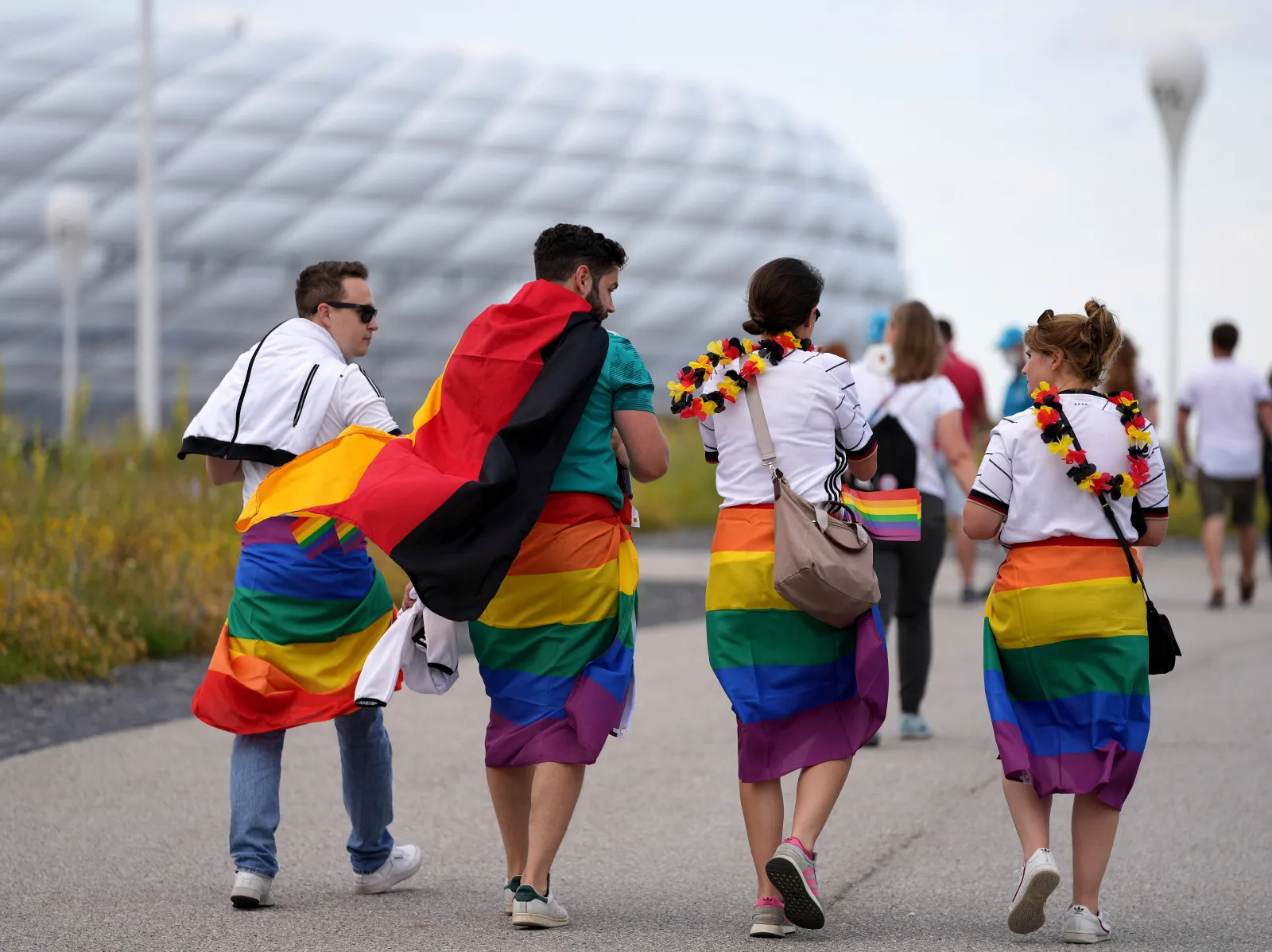
FIFA is facing pressure from Iran and Egypt after Seattle designated their 2026 World Cup match as a “Pride Match,” aligning it with the city’s annual Pride Weekend.
The fixture, set for June 26 at Lumen Field, falls on the Friday before Seattle’s LGBTQ+ celebrations, and has prompted protests from both governments and their soccer federations.
The dispute has broadened into a politically and culturally charged controversy, touching on player visa issues, historical tensions between Iran and the U.S., and questions over FIFA’s role in balancing host-city initiatives with participating nations’ values.
Read More on News
Newsweek has contacted FIFA and the foreign ministries of Egypt and Iran for comment via email.
Why It Matters
The situation places FIFA at the intersection of cultural diplomacy and global sports management. Seattle’s Pride Weekend celebrations, announced by the city’s organizing committee months before matches were assigned, have collided with the legal and societal norms of Iran and Egypt, countries that criminalize or severely penalize LGBTQ+ identities. For FIFA, the dispute underscores the challenge of hosting an international tournament in nations with differing social standards while respecting host cities’ programming.
The issue also compounds existing logistical challenges. Iranian players may face visa denials because of mandatory military service, particularly for those associated with the Islamic Revolutionary Guard Corps (IRGC), which the U.S. designated a terrorist organization in 2019. These layers of tension make the Iran-Egypt fixture one of the most geopolitically sensitive games of the 2026 tournament.
...
What to Know
Seattle’s organizing committee had long planned to host a Pride-themed match to coincide with the city’s late-June Pride Weekend. Although the initiative was announced well before FIFA assigned match dates and venues, the June 26 placement of Iran versus Egypt directly during Pride programming sparked immediate backlash from both governments.
Iranian Football Federation President Mehdi Taj told local media that Tehran and Cairo had raised “objections against the issue,” calling the designation an “irrational move that supports a certain group.” Iranian state television also reported that Tehran would formally “appeal” to FIFA over the matter.
At the same time, Egypt’s Football Federation took formal steps to register its concerns, sending a letter to FIFA Secretary-General Mattias Grafstrom rejecting “in absolute terms” any LGBTQ-related activities surrounding the game. Egyptian officials emphasized that the initiative conflicted with the “cultural and religious norms” of both nations and urged FIFA to ensure the match remained focused solely on sport rather than local celebrations.
Legal and Cultural Context
The objections are reinforced by the countries’ legal frameworks. Homosexuality is illegal in Iran and can carry the death penalty, while in Egypt, same-sex relations, though not expressly outlawed, are frequently prosecuted under broadly defined anti-“debauchery” laws. These cultural and legal realities underpin both nations’ insistence that Pride-themed programming not be linked to their World Cup fixture.
Historical Tensions
The broader geopolitical context also shapes the dispute. Iran and the U.S. have had no diplomatic relations since the 1980 hostage crisis following the Iranian revolution. The 2026 World Cup, co-hosted by the U.S., Canada and Mexico, will mark Iran’s seventh appearance in the tournament and Egypt’s fourth, highlighting the stakes for both teams.
Iran and Egypt are drawn in Group G with Belgium and New Zealand for the 39-day competition.
...
What People Are Saying
Egyptian Football Association statement: "In order to maintain the spirit of unity and peace, it is necessary to avoid including activities that could provoke cultural and religious norms between fans present from both countries, Egypt and Iran."
President of the Iranian Football Federation Mehdi Taj: "Both we and Egypt objected. It was an unreasonable move that seemed to support a particular group. We will definitely address this matter."
What Happens Next
FIFA has yet to confirm whether Seattle’s Pride branding will remain. The dispute is expected to intensify as the match approaches, positioning the Iran-Egypt fixture as one of the most politically and culturally sensitive of the 2026 World Cup.
View 0 Comments
Submit Correction
View Editorial & AI Guidelines