...

By Hugh Cameron
Reporter
0
Share
Newsweek is a Trust Project member
See more of our trusted coverage when you search.Prefer Newsweek on Googleto see more of our trusted coverage when you search.
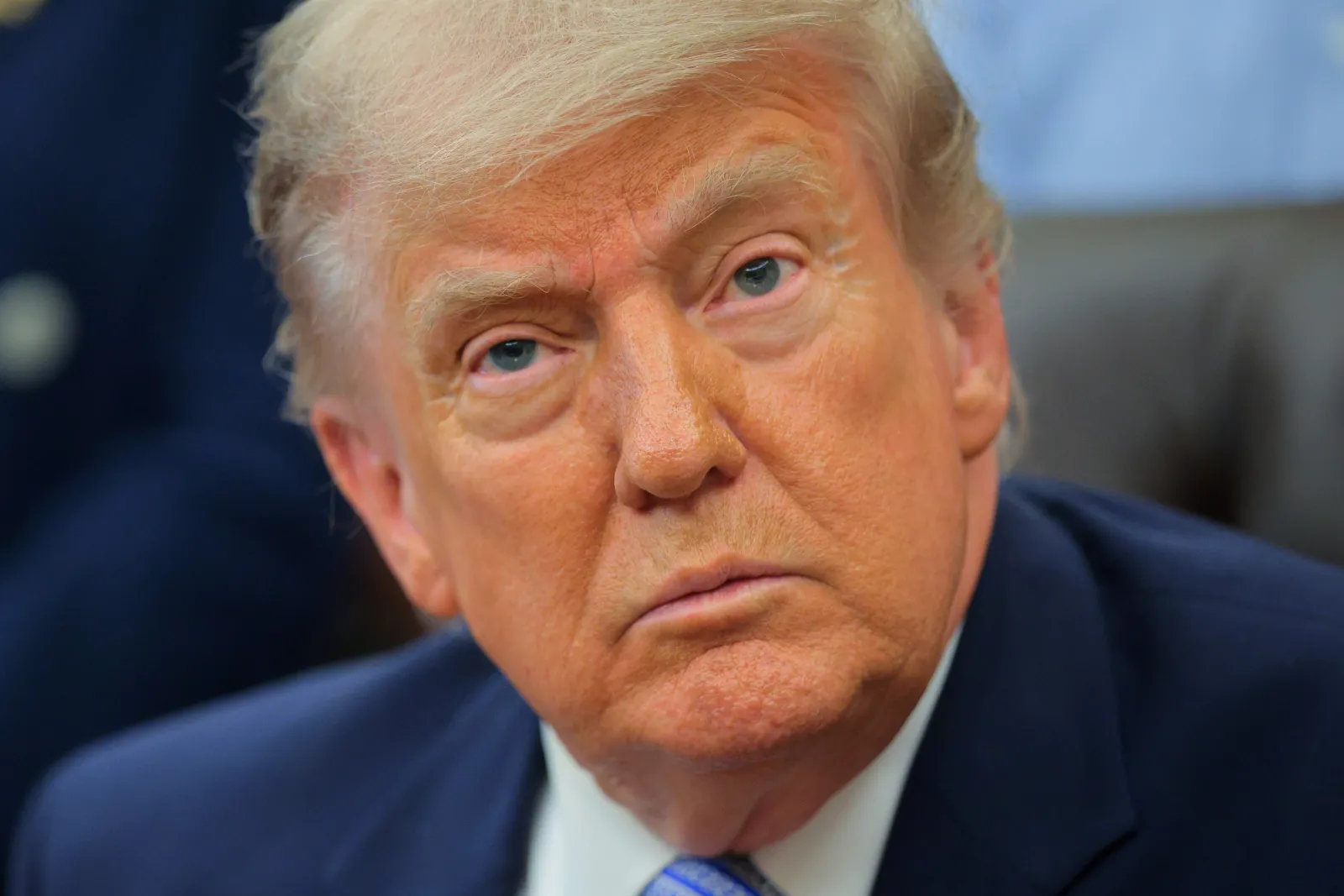
President Donald Trump has defended the peace deal he says the U.S. is nearing with Iran following backlash from hardliner Republican lawmakers saying the agreement would appear to be weaker than what was established before the war.
Reported elements of the draft agreement suggest the U.S. and Iran may agree to end the war without immediately addressing Tehran’s nuclear capabilities. This omission has drawn intense scrutiny, as containing Iran's nuclear program was among the primary justifications cited by the White House when it launched military operations in February.
Critics, including former Secretary of State Mike Pompeo, have condemned the reported parameters. Opponents argue the framework fails to align with an "America First" foreign policy, claiming it mirrors the 2015 Obama-era nuclear accord—the Joint Comprehensive Plan of Action (JCPOA)—from which Trump withdrew during his first term in office.
Read More on World
Trump bristled at those comparisons on Sunday, rejecting the notion his current diplomatic efforts resemble past strategies. Taking to Truth Social, the president asserted that the deal currently under negotiation is "the exact opposite" of the 2015 agreement.
He argued that the Obama administration's deal had provided "a direct path to Iran developing a Nuclear Weapon. Not so with the transaction currently being negotiated with Iran by the Trump Administration - THE EXACT OPPOSITE, in fact!"
He also said negotiations were "proceeding in an orderly and constructive manner" and "time is on our side."
In a notable shift in rhetoric, the president also remarked that the relationship between Washington and Tehran is transitioning into "a much more professional and productive one." However, he reiterated a strict red line, vowing that the U.S. will never allow Iran to develop nuclear weapons. Tehran has consistently maintained that its uranium enrichment program is strictly intended for civilian energy and medical research, denying any ambitions to construct a nuclear arsenal.
In a subsequent Truth Social post on Sunday, Trump doubled down on his negotiation strategy, contrasting his approach with that of his predecessors.
"If I make a deal with Iran, it will be a good and proper one, not like the one made by Obama, which gave Iran massive amounts of CASH, and a clear and open path to a Nuclear Weapon," he wrote.
Trump continued: "Our deal is the exact opposite, but nobody has seen it, or knows what it is. It isn’t even fully negotiated yet. So don’t listen to the losers, who are critical about something they know nothing about. Unlike those before me who should have solved this problem many years ago, I don’t make bad deals!"
Why the Deal Alarmed Some Republicans
Trump's comments on Sunday morning come after he posted on Saturday night saying that a peace deal had been "largely negotiated" following talks with several Gulf leaders and other U.S. allies in the Middle East.
Pakistani mediators have also been meeting with Iranian officials in Tehran on the weekend.
The details of the deal have not been disclosed but reported elements include a lengthy ceasefire window to further negotiate the terms for the Strait of Hormuz re-opening and to reach a consensus on nuclear concerns - an extension which sparked alarm among some senior Republicans.
According to Iranian and U.S. media reports, the draft deal includes a 30-day negotiating period to address the currently blockaded Hormuz Strait, and a 60-day ceasefire window which Iranian state outlet Tasnim said was for dealing with the "nuclear issue" post agreement.
“The rumored 60-day ceasefire — with the belief that Iran will ever engage in good faith — would be a disaster," Senator Roger Wicker, chair of the Senate Armed Services Committee, posted to X on Saturday.
"Everything accomplished by Operation Epic Fury would be for naught!”
South Carolina Senator Lindsey Graham, one of the war’s most vocal advocates, likewise warned that such an agreement could lead to a “major shift of the balance of power in the region and over time will be a nightmare for Israel.”
And former CIA Director and Secretary of State Mike Pompeo compared it to the JCPOA negotiated under Barack Obama in 2015, which was also signed by several U.S. allies.
That had limited Iran's uranium enrichment and allowed the regulator monitoring visits in exchange for some sanctions relief. Trump withdrew the U.S. from the JCPOA during his first term if office, arguing it was a bad deal.
But Pompeo on Saturday said the current agreement appeared lifted from his predecessor’s “playbook.”
“Not remotely America First. It’s straightforward: Open the damned strait. Deny Iran access to money. Take out enough Iranian capability so it cannot threaten our allies in the region,” he posted to X.
However, others within the party have been more supportive of Trump’s efforts, with House Speaker Mike Johnson saying he was “greatly encouraged to learn a PEACE DEAL in Iran is underway.”
Newsweek has contacted the White House via email for comment.
What Iran Has Said About Trump's Peace Plan
Meanwhile Iranian media has denied Trump's assertion that a deal between the warring nations is close to being finalized and says Tehran will still be managing the Strait of Hormuz**—**a key sticking point in negotiations to end the war.
Iranian officials have yet to respond. However, the country's Fars news agency, which is closely associated with the Islamic Revolutionary Guard Corps (IRGC) controlling the waterway, said Tehran’s official position was that the strait would remain “the monopoly and discretion of the Islamic Republic of Iran.”
It went on to contradict Trump’s assertion that an agreement was close, calling it “incomplete and inconsistent with reality,” according to the Middle East Eye.
Despite the president’s apparent optimism that a deal will be reached to end the nearly three-month conflict, there remain several areas of fundamental disagreement between Tehran and Washington.
...
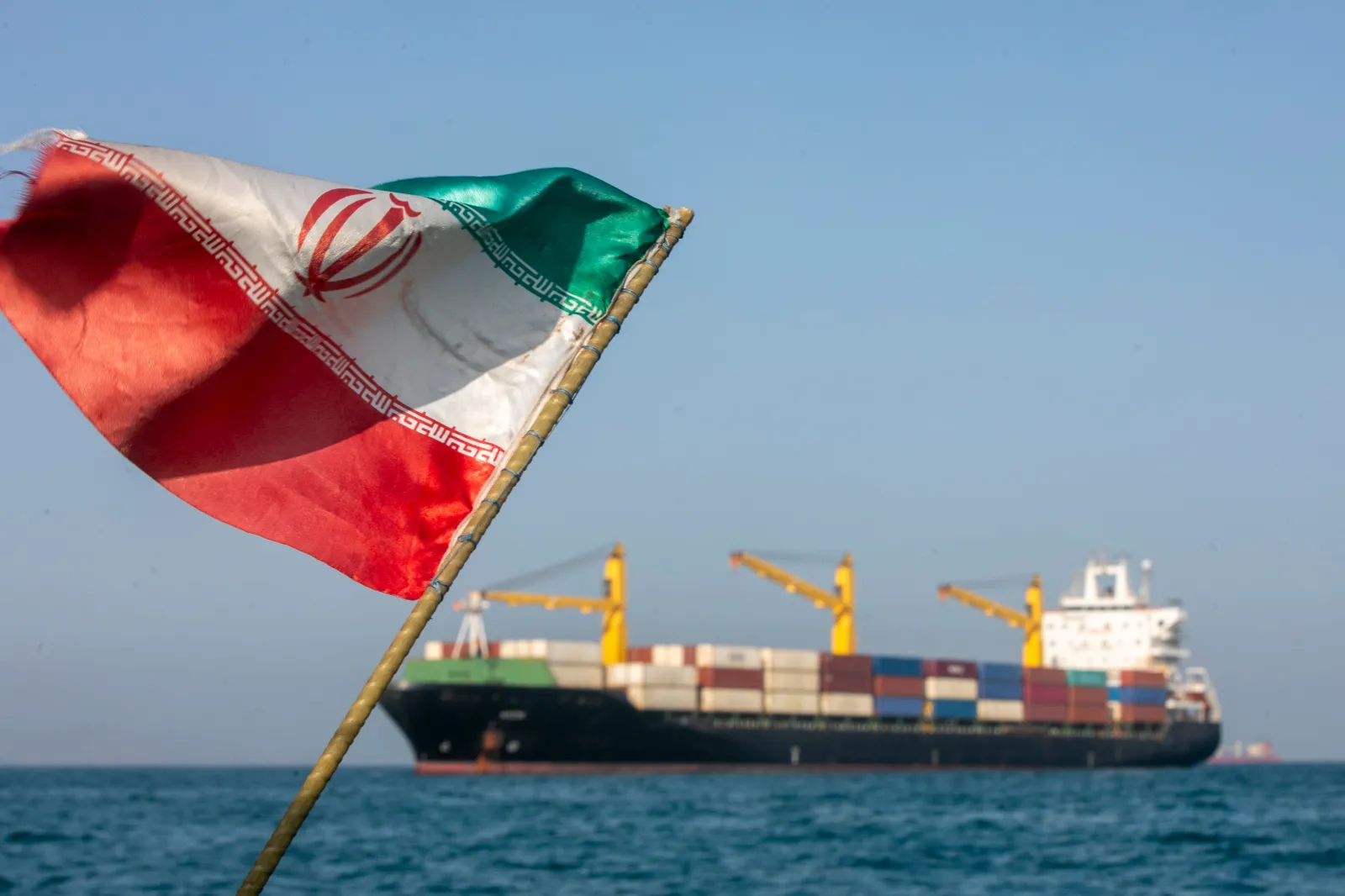
A full reopening of the Hormuz Strait—through which around a fifth of the world’s oil typically flows—is a key U.S. demand but Iran has so far maintained its position of absolute sovereignty over the vital passage.
Tehran has choked the flow of traffic through the strait by threatening and attacking ships transporting oil, gas and other goods. As a result, that has deterred most vessels from attempting the passage and shipping flows have plunged 90 percent from volumes before the war.
'Progress' in Negotiations
The U.S. side has struck an optimistic tone when discussing negotiations, which have taken place in a stop-start fashion since a fragile ceasefire came into place on April 8.
Secretary of State Marco Rubio said "significant progress" had been made, but told reporters on Sunday there was still "work to do" during a press conference on a state visit in India.
Rubio said there was “the possibility that over the next few hours the world will get some good news" regarding the Strait of Hormuz reopening.
Pakistan’s prime minister, Shehbaz Sharif, also congratulated President Trump on Sunday for “his extraordinary efforts to pursue peace,” and said he hoped the country could host another round of negotiations between Iran and the U.S. “very soon.”
Pakistan is leading a regional mediation effort, with the country’s top military commander, Field Marshal Asim Munir, currently in Tehran for talks with Iranian leadership.
But Iranian media's response raises questions over the Strait's re-opening. Earlier this week too, Iran had appeared to shore up its control of the key shipping lane, formalizing a system which requires vessels to pay a toll and be granted permission to pass through the strait.
Iran has also not strayed from its core demands for an end to the U.S.'s blockade on its ports and the lifting of sanctions on its exports.
It also asserts its right to maintain its nuclear program which it says is for civilian energy purposes. Iran's uranium enrichment has been a red line for Trump, who launched the war citing concerns that Iran was on the verge of developing a nuclear weapon.
However a swift resolution would prove beneficial for the U.S. president, whose economic approval rating has been sliding as the war continues to drive global oil and domestic gas prices to multi-year highs.
The price of Brent crude, the international standard, has soared from $60 per barrel at the start of the year to over $120 peaks during escalations in the war.
Oil prices “could spike next week” if a deal failed to come through, GasBuddy analyst Patrick De Haan wrote on X. He said if Trump’s promises of an imminent agreement did not materialize, “prices will likely surge again.”
What Is in the Deal?
The Trump administration has not revealed any details of a proposal yet but some have been leaked to U.S. media from unnamed sources reportedly familiar with the plans.
Reuters reported that the framework would proceed in three stages, beginning with a formal end to the war, a de-escalation in the Hormuz Strait, and a 30-day negotiating period aimed at securing a more lasting agreement.
The deal would also be supported by a 60-day extension of the current ceasefire, during which Iran would be allowed to sell oil without restrictions, Axios reported, citing a U.S. official.
...
According to the New York Times, the deal includes an "apparent commitment" from Iran to surrender its highly enriched uranium. However, on Sunday, an anonymous “senior Iranian source” told Reuters Tehran had made no such commitment.
"The nuclear issue will be addressed in negotiations for a final agreement and are therefore not part of the current deal,” the source said.
Iran’s Response
In public comments, Iranian officials have been cautious in their assessments of the agreement being touted by Trump.
Deputy Foreign Minister for Legal and International Affairs Kazem Gharibabadi said on Sunday Iran was “seeking peace with strength, pursuing diplomacy with dignity, and firmly defending the territorial integrity, independence and rights of our beloved Iran.”
And Iran’s foreign ministry spokesperson said that any perceived alignment between the two sides should not be taken as an indication that an agreement can be reached on the core issues.
“The trend this week has been towards a reduction in disputes, but there are still issues that need to be discussed through mediators. We will have to wait and see where the situation ends in the next three or four days,” said Esmail Baghaei, as quoted by Reuters.
Baghaei said the draft framework includes 14 clauses relating to “the essential points for ending the imposed war” as well as “fundamental issues” for Tehran.
“Within a reasonable period of 30 to 60 days, the details of these points will be discussed, and a final agreement will ultimately be concluded,” he told the media on Saturday.
View 0 Comments
Submit Correction
View Editorial & AI Guidelines