...

By Ellie Cook
Senior Defense Reporter
0
Share
Newsweek is a Trust Project member
See more of our trusted coverage when you search.Prefer Newsweek on Googleto see more of our trusted coverage when you search.
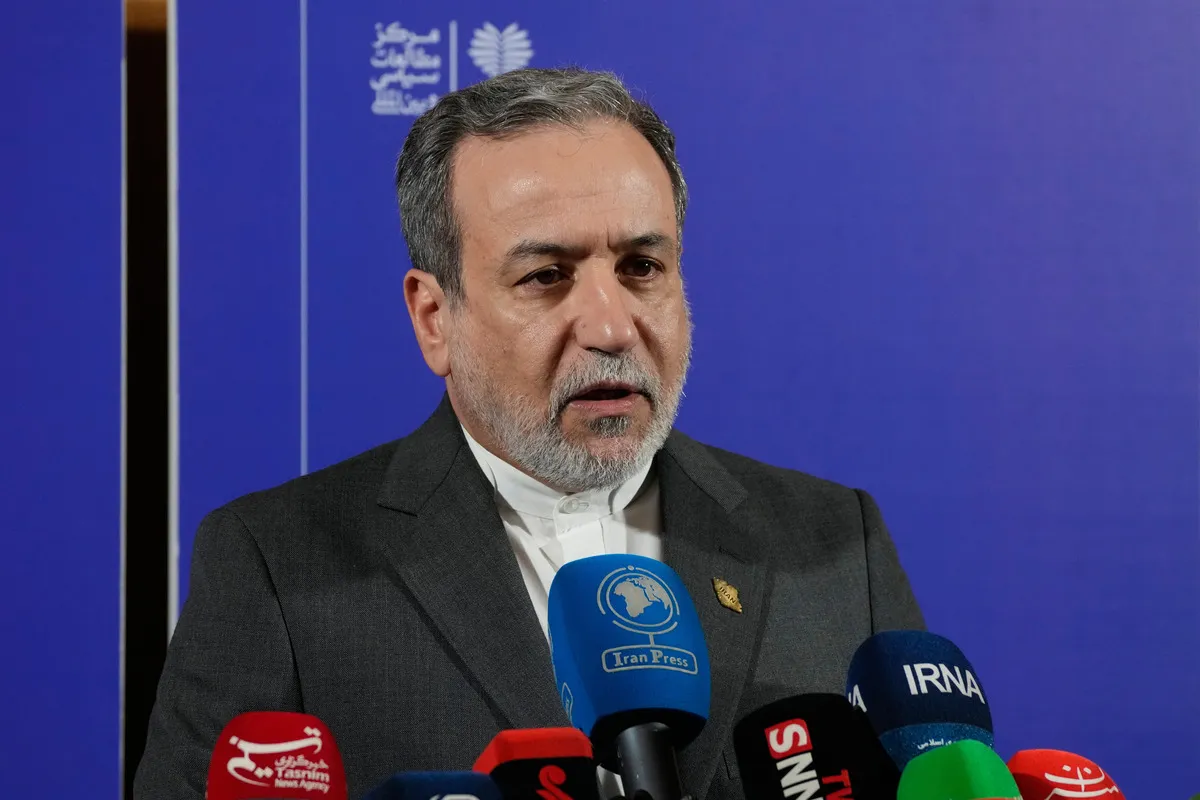
Iran has not enriched any uranium in the country since the U.S. struck several of its nuclear sites earlier this year, Foreign Minister Abbas Araghchi has said, as Tehran once again batted away the possibility of nuclear talks with Washington.
Why It Matters
Washington carried out strikes on several Iranian nuclear sites in June, which the administration hailed as having "obliterated" Tehran's ability to make the leap toward an operational nuclear weapon. Other assessments have been more cautious on how much damage the U.S. strikes managed to do to deeply buried underground sites and where Iran may still store highly enriched uranium.
Read More on World
Tehran has always said its nuclear program is peaceful and it does not intend making a nuclear bomb, but international observers believe the country has enriched uranium far beyond what is needed for non-military use.
...
What To Know
“There is no undeclared nuclear enrichment in Iran," Araghchi said on Sunday, according to The Associated Press. "There is no enrichment right now because our facilities—our enrichment facilities—have been attacked.”
The U.S. targeted the Fordow, Natanz and Isfahan nuclear facilities in an operation dubbed Midnight Hammer. B-2 bombers dropping "bunker buster" bombs were among the collection of aircraft involved in attacking the sites after Israeli attacks took out much of Iran's air defense systems. Israel had previously struck part of the sites.
Rafael Grossi, the head of the U.N.'s nuclear watchdog, the International Atomic Energy Agency (IAEA), said earlier in November the country is "no longer enriching uranium," but the country still retained expert knowledge and highly enriched nuclear material. But the three sites were "severely damaged" and there is "very little" activity in the country's nuclear program, Grossi told France24.
Grossi has previously said it is "very, very important" for international investigators to work out how Iran is using its highly enriched uranium. Tehran could build as many as 10 nuclear bombs with its stockpile, should it take the step to weaponize the material, he said.
The so-called 12-day war between Israel and Iran in June began shortly after the IAEA's board of directors said Iran had violated its obligations under the Nuclear Non-Proliferation Treaty (NPT). Iranian officials have said the June attacks undermined the credibility of the IAEA, which has in turn urged Tehran to cooperate more closely with its experts.
The IAEA has not been able to verify Iran's stockpile of highly enriched uranium since June, The Associated Press reported on Wednesday. The watchdog said it had "lost continuity of knowledge in relation to the previously declared inventories of nuclear material in Iran” at sites impacted by the war and a verification of the nuclear material was "long overdue," according to a confidential report first seen by the news agency.
Araghchi said "all" Iranian nuclear facilities were being monitored by the IAEA. An unnamed senior Western diplomat told Bloomberg earlier this week the IAEA wants to resume immediately inspections of Iran's nuclear sites but said Tehran insisted the sites impacted by U.S. and Israeli attacks are still too dangerous.
Iran's Foreign Ministry had said on Monday that IAEA inspectors had visited nuclear sites. A September agreement between the watchdog and Iran was designed to restart inspections of nuclear facilities, including those bombed by the U.S and Israel.
Satellite imagery published by the Center for Strategic and International Studies think tank last month showed renewed activity at Iranian nuclear facilities. A State Department spokesperson told Newsweek earlier this month that the White House "will continue to monitor any attempt by Iran to rebuild its nuclear program."
The U.S. is not ready for "equal and fair negotiations" on a nuclear deal, Araghchi said on Sunday. Several rounds of talks took place before June, but movement toward fresh negotiations has been inconsistent.
What People Are Saying
Iranian Foreign Minister Abbas Araghchi said on Sunday: “Iran’s right for enrichment, for peaceful use of nuclear technology, including enrichment, is undeniable."
What Happens Next
The IAEA's board of governors will meet in Vienna, Austria, later this week after the Iranian mission there said the U.S., France, Germany, and the United Kingdom intended to table a resolution against Tehran.
"Should this draft resolution be adopted, it will unavoidably and adversely affect the positive course of cooperation between Iran and the IAEA," the Iranian delegation said.
View 0 Comments
Submit Correction
View Editorial & AI Guidelines