...


By Dan Gooding and Gabe Whisnant
0
Share
Newsweek is a Trust Project member
See more of our trusted coverage when you search.Prefer Newsweek on Googleto see more of our trusted coverage when you search.
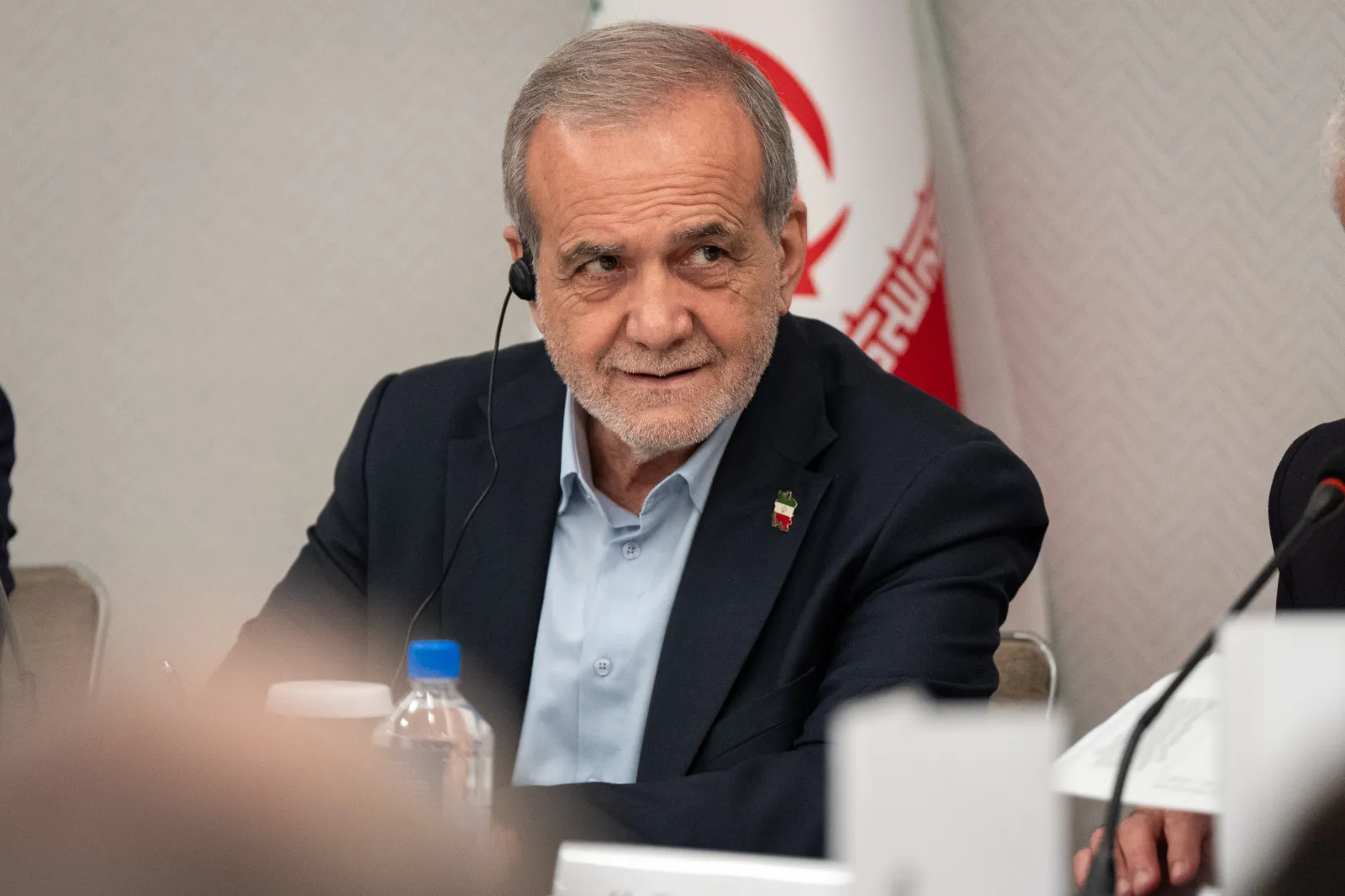
Iranian President Masoud Pezeshkian warned Tuesday that his country would respond forcefully to any attack, following comments by President Donald Trump suggesting the United States could strike if Iran rebuilds its nuclear program.
Pezeshkian said on social media that any “cruel aggression” against Iran would be met with a harsh and discouraging response.
“Answer of Islamic Republic of Iran to any cruel aggression will be harsh and discouraging,” Pezeshkian said on X.
Read More on World
Why It Matters
Tensions between the U.S. and Iran remain high, despite Trump promising to maintain peace in the Middle East during his briefings with Israeli Prime Minister Benjamin Netanyahu on Monday. Much of the concern around Iran relates to its nuclear potential, which the Trump administration sought to hinder with strikes in June. Since then, concerns have grown in the region that Iran is regrouping.
...
What To Know
Pezeshkian's remarks came a day after Trump raised the prospect of renewed military action during talks with Netanyahu in Florida.
“Now I hear that Iran is trying to build up again,” Trump said during a news conference with Netanyahu after their meeting. “And if they are, we’re going to have to knock them down. We’ll knock them down. We’ll knock the hell out of them. But hopefully that’s not happening.”
Trump and Netanyahu discussed the possibility of renewed military action against Tehran, around six months on from a 12-day air war in June that killed nearly 1,100 Iranians and 28 people in Israel.
Those discussions came after Iran's president and other officials suggested over the weekend that any action by the U.S. and its allies would be met with force.
Iran has insisted it is not enriching uranium, with U.S. intelligence showing the country last had an organized nuclear weapons program over 20 years ago.
The country is also continuing to experience unrest, with protests in Tehran and elsewhere in recent days, and the head of the Central Bank resigned Monday after Iran's currency dropped dramatically against the dollar. Despite this, the U.S. and Israel still view Iran as a potential threat.
What People Are Saying
Thomas Pigott, U.S. State Department principal deputy spokesperson, said in a statement on new sanctions against Iran and Venezuela Tuesday: "As President Trump has made clear in National Security Presidential Memorandum 2 (NSPM-2), the United States will take action to curtail Iran’s ballistic missile program, counter Iran’s development of other asymmetric and conventional weapons capabilities, deny Iran a nuclear weapon, and deny the Islamic Revolutionary Guard Corps (IRGC) access to assets and resources that sustain their destabilizing activities. We will not hesitate to hold accountable anyone who supports Tehran’s proliferation activities."
Iranian Parliament Speaker Mohammad Bagher Ghalibaf said on Tuesday: "Iran does not ask anyone for permission to defend itself...The Iranian people's response to any widespread adventurism and evil is unapologetic and unexpected."
What Happens Next
The back-and-forth between the U.S. and Iran will likely continue. While Iran has suggested it is already at war with the U.S., Trump has not made a similar claim.
This article includes reporting by the Associated Press.
Update 12/30/29, 1:10 p.m. ET: This article was updated with additional information.
View 0 Comments
Submit Correction
View Editorial & AI Guidelines