...

By Brendan Cole
Senior Reporter
0
Share
Newsweek is a Trust Project member
See more of our trusted coverage when you search.Prefer Newsweek on Googleto see more of our trusted coverage when you search.
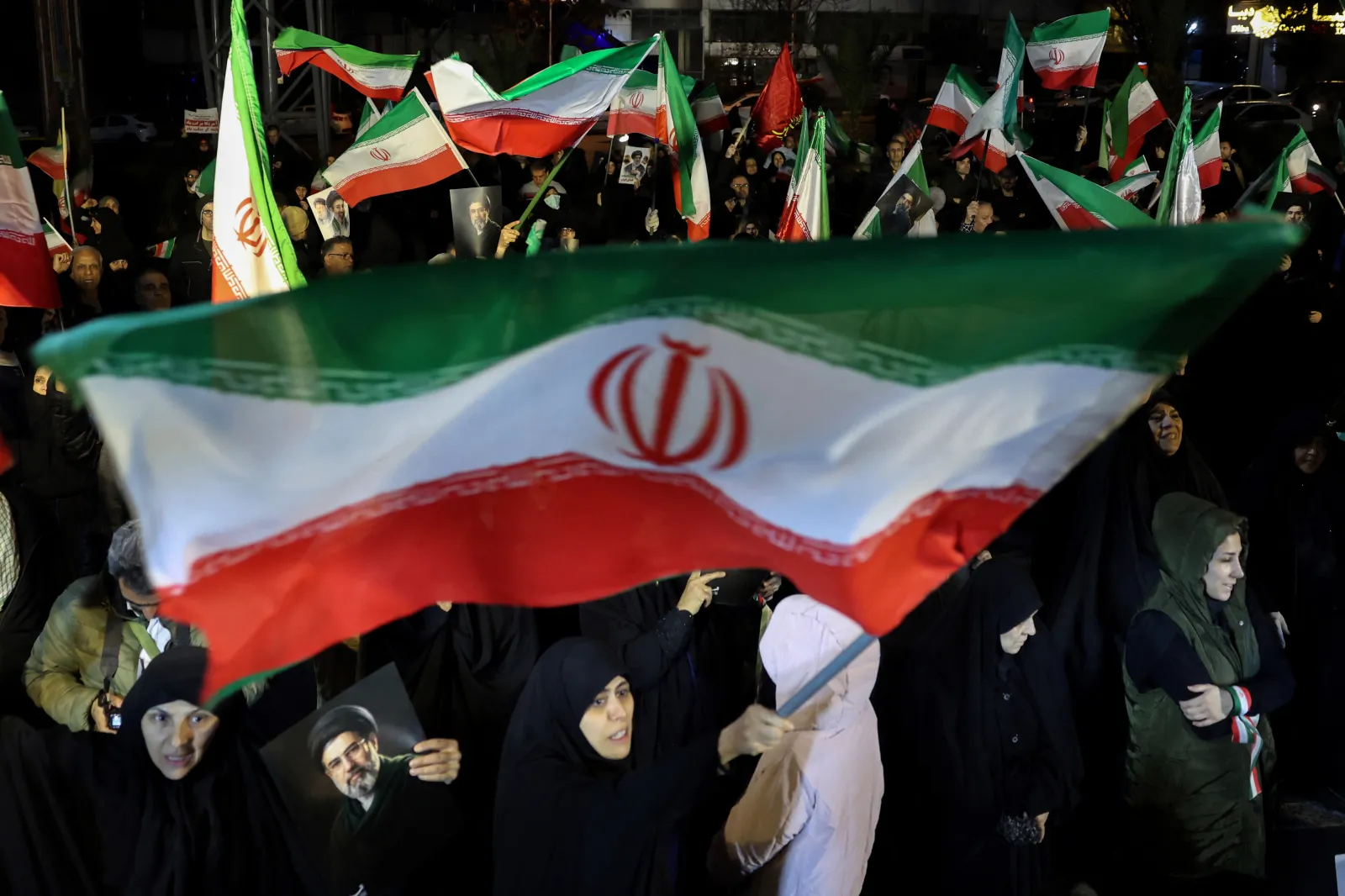
A propaganda video shown on Iran’s state broadcaster has used artificial intelligence to depict the destruction of the Statue of Liberty. The clip is part of a campaign by Tehran to use memes and videos to pump out anti-American messages casting the U.S. as the enemy of Tehran.
The minute-long clip on IRIB, which ends with the slogan “one vengeance for all," features sequences invoking Native American dispossession, atom bombs being dropped on Japan, the Vietnam War and recent Middle Eastern conflicts.
The clip also suggests that the Iran war was intended by President Donald Trump as a distraction from the Jeffrey Epstein scandal and shots showed AI-generated figures of assassinated Supreme Leader Ayatollah Ali Khamenei and the late military leader Qassem Soleimani looking skyward. Soleimani was assassinated in a targeted drone strike ordered by President Donald Trump on January 3 2020 in Baghdad.
Read More on World
The final sequence shows a missile in the Iranian colors smashing into the Statue of Liberty, whose head has been replaced by that of Baal, an idol who is demonized in some religious traditions.
Other Iranian war propaganda include videos that resemble the LEGO movies or the children’s program Teletubbies.
...
Germany Teases Direct Talks
German Foreign Minister Johann Wadephul said Friday the U.S. and Iran have had indirect negotiations and that representatives would soon meet in Pakistan, which is acting as an intermediary. China has voiced support at Pakistan being a mediator and said that talks would help restore normal navigation through the Strait of Hormuz.
"That is apparently due to take place fairly soon at short notice," Wadephul told the station Deutschlandfunk. The development followed indirect contacts between both sides, he said.
President Trump has touted points of agreement between Iran and the U.S. although Tehran has denied talks are taking place.
Wadephul also said that Berlin wanted to secure shipping traffic in the Hormuz Strait following Trump extending the deadline to April 6 for Iran to reopen the waterway it has effectively closed, causing spikes in the price of oil and natural gas.
Iran has said that ships going to and departing ports of U.S. and Israeli allies are banned from transiting the strait and would be turned back if they attempt to pass.
Iran's Islamic Revolutionary Guard Corps said Friday that three container ships were turned back after attempting to enter a designated shipping corridor.
Meanwhile, on Thursday, Iran formally notified the United Nations about alleged U.S. and Israeli plans to assassinate senior Iranian officials—including Parliament Speaker Mohammad Baqer Ghalibaf and Foreign Minister Seyed Abbas Araghchi.
View 0 Comments
Submit Correction
View Editorial & AI Guidelines