...

By Peter Aitken
Politics Weekend Editor
0
Share
Newsweek is a Trust Project member
See more of our trusted coverage when you search.Prefer Newsweek on Googleto see more of our trusted coverage when you search.
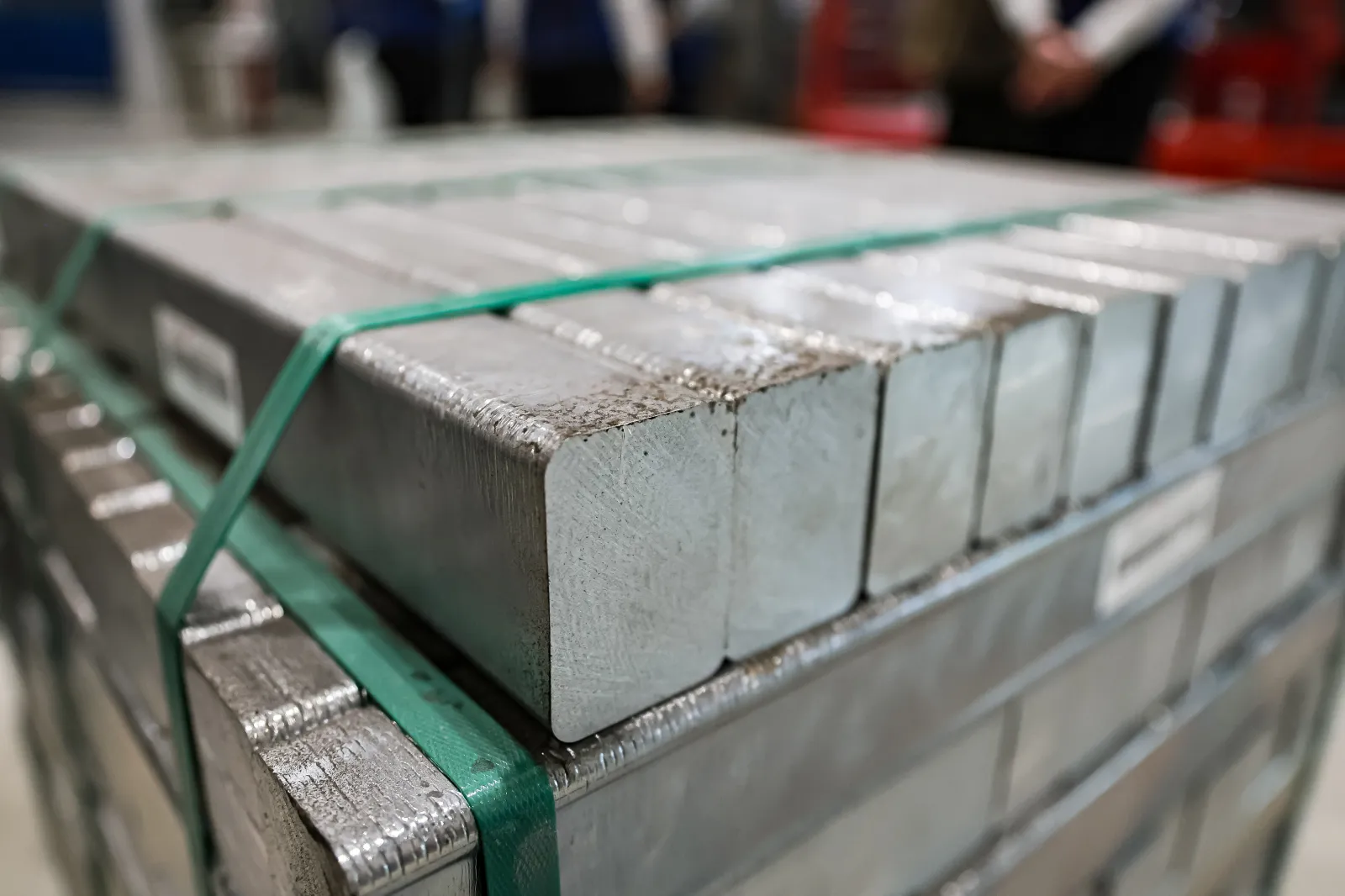
United Arab Emirates (UAE) enterprise Emirates Global Aluminium (EGA) said Saturday that an Iran strike hit the company's facilities, with the extent of damage still unknown.
In a statement issued on the company website, company leadership said the Al Taweelah site "sustained significant damage during the Iranian missile and drone attacks at Khalifa Economic Zone Abu Dhabi," adding that "assessment of the damage is ongoing."
Why It Matters
The Iran war has lasted for nearly a month after joint U.S.-Israel strikes on Tehran killed Ayatollah Ali Khamenei and several dozen other high-ranking officials in the country. Over the course of the war, 13 U.S. military service members have been killed and many others injured. An Iran strike, a mixture of missiles and drones, on the Prince Sultan Air Base in Saudi Arabia on Friday injured 10 service members and damaged several American aircraft as the most recent example.
Read More on World
However, the conflict's toll has reached far beyond the battlefield as Iran leans on every lever of economic power it has, including the closure of the Strait of Hormuz. Iran's strikes have also hit major industrial infrastructure across the Middle East, prompting several major oil producers to declare force majeure as they struggle to produce and export oil.
Gas and oil prices have continued to climb since the strait's closure, with the national average price for gas remains close to $4 a gallon, with some states, mainly those on the West Coast, already nearing $6 a gallon, according to AAA. Oil has crossed $100 a barrel again as of Saturday.
...
What To Know
The Al Taweelah site produced 1.6 million tons of cast metal in 2025, and the company had "substantial" metal stock on the water and on the ground overseas when the conflict began, the company stressed in its statement.
"The safety and security of our people is our top priority at EGA at all times," the company's CEO Abdulnasser bin Kalban said i a statement. "We are deeply saddened and are assessing the damage to our facilities.”
A number of employees were injured in the strike, but none were life-threatening.
The damage to one of the largest producers of aluminum in the world will add further strain to an already precarious industry. Aluminum producers in the Gulf, which is responsible for about eight percent of the global supply, already halted shipments or declared force majeure in several cases, causing prices to climb.
China remains the top producer and exporter of aluminum, accounting for around 60 percent of the global supply, producing around 43 million metric tons in 2024. Other producers, such as India and Russia, produce around only 4 million metric tons. The UAE is the fifth-largest producer and leading producer of the material in the Gulf region, followed by Bahrain.
Aluminum remains a key component of construction and transport equipment, as well as renewable energy gear such as solar panels and both on-shore and off-shore wind projects, according to the Aluminum Association.
What Industries Have Been Impacted by the Iran War?
Aluminum is just the latest industry impacted by the war as Tehran continues to retaliate not only with strikes across the region but leveraging its control over key trade routes.
The most widely reported impacts have followed the closure of the Strait of Hormuz, through which a significant portion of the world's oil supply passes.
Nickel producers in Indonesia, heavily reliant on Gulf‑sourced sulphur, may soon be forced to cut output.
Garment shipments from Bangladesh and India are stranded at airports, threatening the flow of clothing to global retailers. Luxury brands already struggling with weak demand face new pressure.
South Korea has warned that chipmakers could face shortages of key materials such as helium, which is necessary for MRI machines and other medical equipment.
Drone strikes on Amazon data centers in the UAE and Bahrain have raised alarms about the resilience of cloud infrastructure. Banks are taking precautions too. Citigroup and Standard Chartered have told Dubai staff to work from home, while HSBC has shuttered all branches in Qatar for safety.
Update 3/28/26, 2:05 p.m. ET: This article has been updated with additional information.
In a polarized era, the center is dismissed as bland. At Newsweek, ours is different: The Courageous Center—it's not "both sides," it's sharp, challenging and alive with ideas. We follow facts, not factions. If that sounds like the kind of journalism you want to see thrive, we need you.
When you become a Newsweek Member, you support a mission to keep the center strong and vibrant. Members enjoy: Ad-free browsing, exclusive content and editor conversations. Help keep the center courageous. Join today.


View 0 Comments
Submit Correction
View Editorial & AI Guidelines