...



By Brendan Cole, Shane Croucher, and John Feng
0
Share
Newsweek is a Trust Project member
See more of our trusted coverage when you search.Prefer Newsweek on Googleto see more of our trusted coverage when you search.
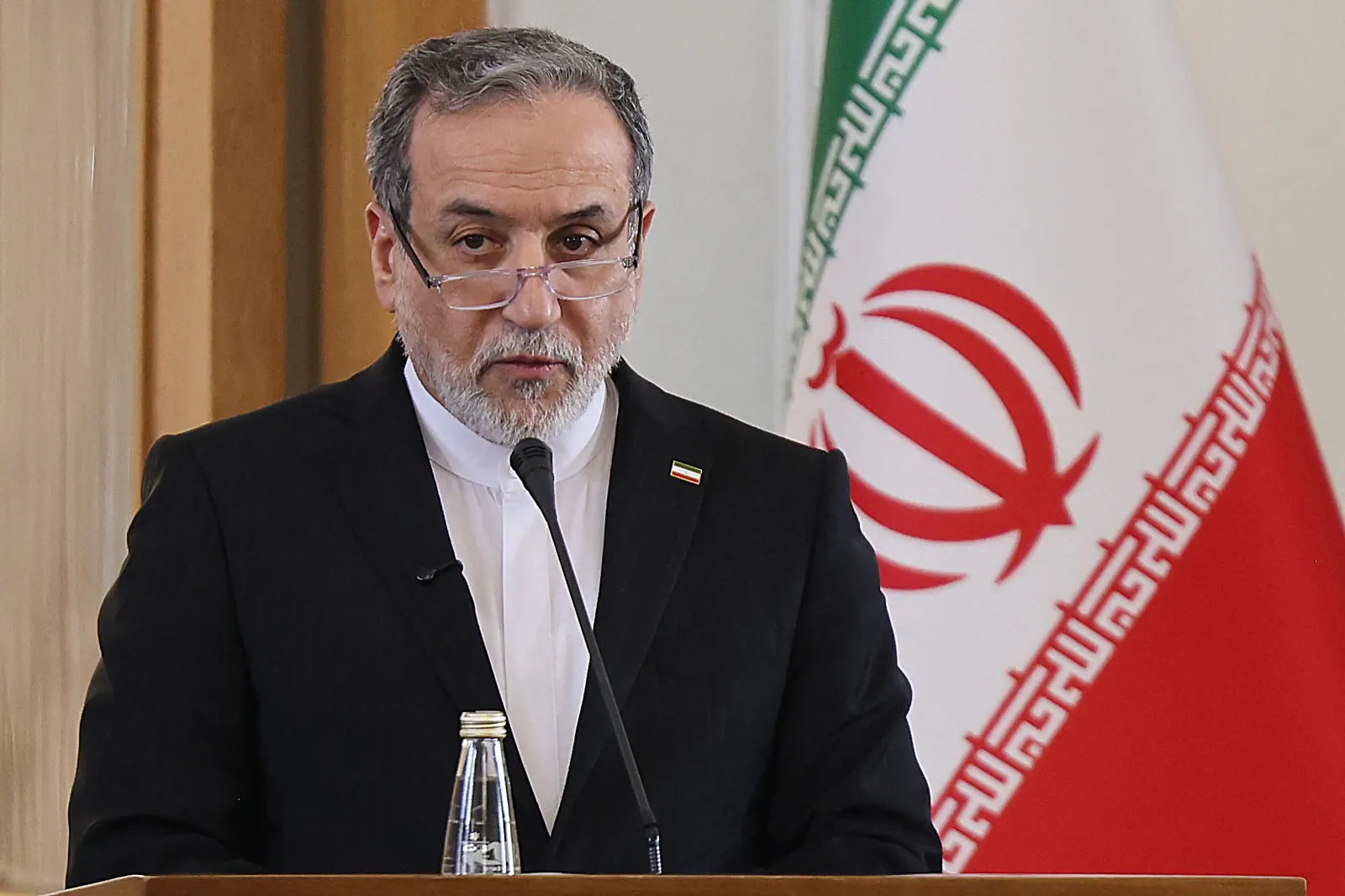
Iranian foreign minister Abbas Araghchi said Tehran has not requested negotiations with the U.S. and told Washington to stop making threats of war if it seeks to engage in diplomacy.
Araghchi's comments came after President Donald Trump said Iran is ready to make a deal to avert U.S. strikes.
Newsweek has contacted the White House for comment.
Read More on World
...
Why It Matters
Trump has sent what he described as an "armada" of warships into the region to pressure Iran in the wake of its deadly crackdown on protests that have led to a death toll of thousands, with many more arrested. Trump has also teased the prospect of negotiations with Tehran, although Araghchi suggested such talks were not imminent.
What To Know
Speaking to journalists on Wednesday, Araghchi said he had not had any contact with Trump’s special envoy, Steve Witkoff and that Tehran had not requested negotiations.
The comments follow Trump’s raising the prospect of a deal with Tehran and his boast of a U.S. “armada” near Iran after he had warned of American intervention in the Islamic Republic if it continued with its violent crackdown on protesters.
However, Araghchi said that Tehran was in contact with mediating countries, suggesting indirect channels were involved even if Iran publicly plays down the prospect of talks.
"How is it that on the international stage these things are always paired together—meaning both threats and diplomacy? Military diplomacy and diplomacy have always been raised and pursued. Each of these has its own path," he said.
"Our position is exactly this: pursuing diplomacy through military threats cannot be effective or constructive. If they want negotiations to take shape, they must certainly set aside threats, excessive demands, and the raising of irrational issues."
Egyptian Foreign Minister Badr Abdelatty had spoken with Trump's Middle East envoy Steve Witkoff and Araghchi, according to Egypt's foreign ministry.
Meanwhile, senior figures in Iran have dismissed the significance of the U.S. military buildup in the region and issued their own warnings to Washington.
Iran’s army deputy coordinator, Rear Admiral Habibollah Sayyari, said U.S “adventurism” would carry “heavy costs for the enemy,” Iranian state-linked media reported. Ahmad Vahidi, the IRGC’s deputy commander-in-chief, said Tehran was not intimidated by Washington’s rhetoric and that Iran “not afraid of words.”
Abbas Kaabi, a member of the presidium of Iran’s Assembly of Experts, said any attack on Supreme Leader Ali Khamenei would be an assault on Islam itself and cause “unimaginable consequences for the United States and Trump.”
What People Are Saying
President Donald Trump told a rally Iowa on Tuesday: "I hope they make a deal."
Iranian foreign minister Abbas Araghchi said on Wednesday: "We have not made any request for negotiations."
He added: "Various intermediaries do get in touch, of course. Different countries are trying—acting in good faith, and we are in contact with them—but no decision has been made yet. This request does not exist on our side."
"Negotiations must be conducted on an equal footing, based on mutual respect, and for mutual interests."
Abbas Kaabi, a member of the presidium of Iran’s Assembly of Experts, said: “Any aggression against Ayatollah Khamenei is an action against the entire Islamic world."
What Happens Next
While Iran's public statement suggests a deal with Washington is not imminent, indirect talks with the U.S. involving Egypt could lead to a breakthrough.
Update 01/28/26, 8:35 a.m. ET: This article has been updated with further information.
In a polarized era, the center is dismissed as bland. At Newsweek, ours is different: The Courageous Center—it's not "both sides," it's sharp, challenging and alive with ideas. We follow facts, not factions. If that sounds like the kind of journalism you want to see thrive, we need you.
When you become a Newsweek Member, you support a mission to keep the center strong and vibrant. Members enjoy: Ad-free browsing, exclusive content and editor conversations. Help keep the center courageous. Join today.


View 0 Comments
Submit Correction
View Editorial & AI Guidelines