...

By Alice Gibbs
Senior Reporter
0
Share
Newsweek is a Trust Project member
See more of our trusted coverage when you search.Prefer Newsweek on Googleto see more of our trusted coverage when you search.
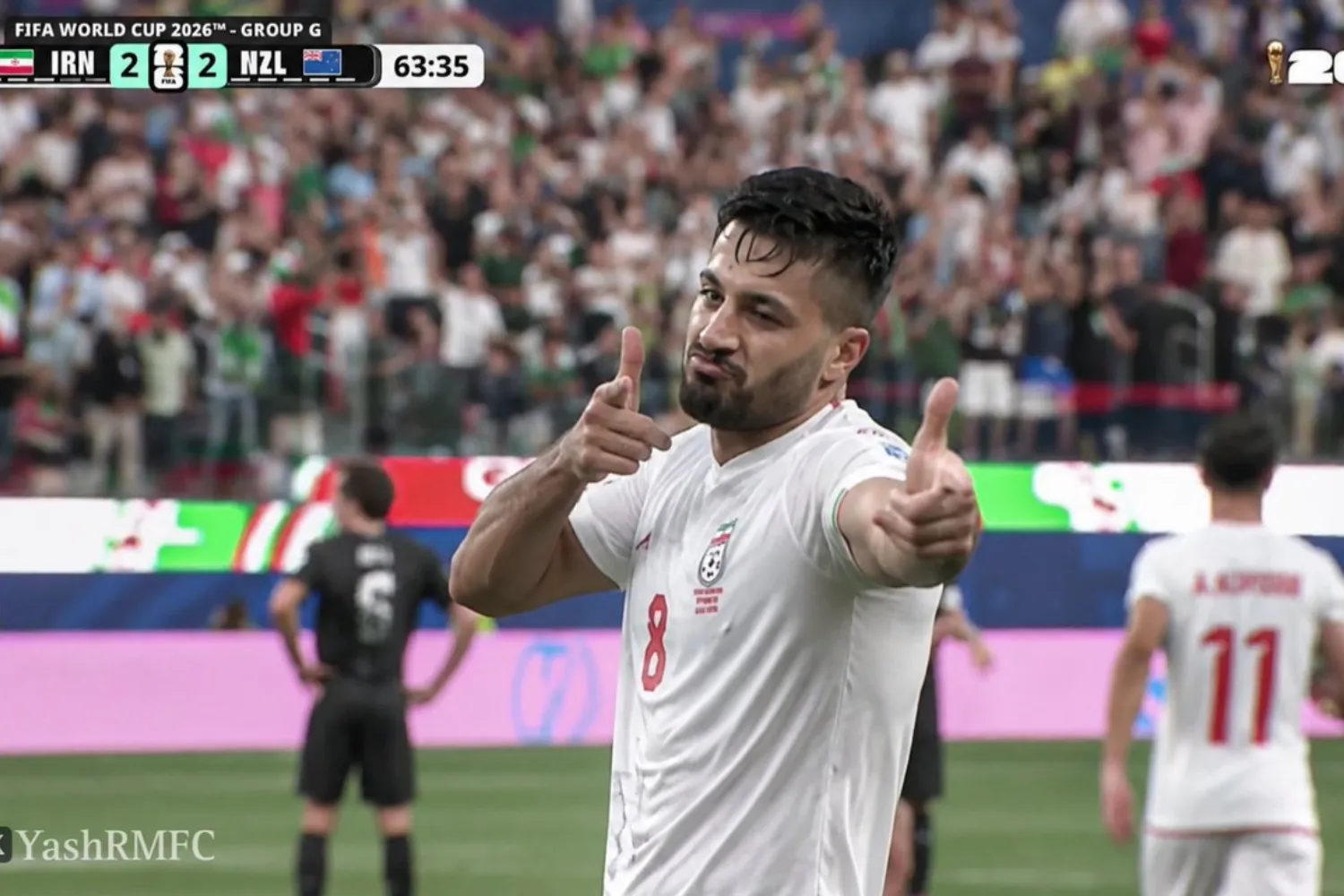
Iran’s Mohammad Mohebi sparked controversy at the 2026 World Cup after appearing to make a “gun” gesture while celebrating his goal in a 2-2 draw with New Zealand in Los Angeles.
The moment quickly went viral, drawing criticism from some fans who said the gesture was inappropriate given the tournament’s U.S. setting and heightened political backdrop.
Others defended the Iranian winger, arguing it was a spontaneous celebration with no deeper meaning.
Read More
Fact Check: Was Hitler Lookalike Spotted at Germany World Cup Game?3 min read

Traffic Cones, Kilts and Bagpipes—How the Tartan Army Has Taken Over Boston6 min read

German World Cup Tourist on Road Trip Through America Is Taking US by Storm5 min read

Mohebi later said it was simply “a celebration,” as debates grow over how on-field gestures are interpreted at this year’s World Cup.
...
Match Context and Reaction
Mohebi’s goal came in the 64th minute, helping Iran fight back for a 2-2 draw after twice trailing New Zealand in their Group G opener. The result leaves all teams in the group level on points after the first round of matches.
But focus quickly shifted to the celebration that followed, which some observers interpreted as a gun gesture. While such celebrations are not uncommon in football, the context of the match and political backdrop between Iran and the U.S. raised eyebrows.
"If FIFA banned other players for political gestures, why does this one get a free pass just because of the location?" said one viewer on X. While another wrote: "Call me crazy, but just looked like an 'in your face' finger wave to me."
Tensions Surrounding Iran’s World Cup Campaign
The incident unfolded against a politically charged backdrop.
Iran’s participation in the U.S.-hosted tournament sits amid months of conflict between the United States and Iran. On Sunday, President Donald Trump announced a deal aimed at ending months of conflict between the United States and Iran, with both sides agreeing to a ceasefire framework and further negotiations.
While the agreement has been presented by the administration as a step toward de-escalation, it has already drawn scrutiny in Washington. Some Republican lawmakers, including Senator Lindsey Graham, have said they are concerned about differences in how the deal is being interpreted and have called for Congress to review any long-term commitments.
Against that backdrop—and with protests and heightened security around Iran’s opening match in Los Angeles—even routine moments on the pitch risk being viewed through a wider political lens.
Player Response and FIFA Position
Mohebi played down the significance of the celebration after the match, insisting there was no deeper message behind his actions and describing it simply as an instinctive reaction in the moment.
"First, I wanted to say thank you to all the Iranian fans that came to watch in Los Angeles. They made a great atmosphere in the game," Mohebi said in a post-match interview.
"The celebration was just coming in the mind, in the moment. I do it like this [gestures with his hands] and I wanted to do it like this for all the fans. It's just a celebration you know, and that's it."
FIFA has not indicated whether it will review the incident.
Under current rules, players can be cautioned if a celebration is deemed provocative or inflammatory, although enforcement is typically based on the referee’s judgment and the specific circumstances.
Gestures Under Closer Scrutiny
The episode follows other recent discussions about gestures at this World Cup, including a separate case involving referee Shaun Evans, who was investigated over a hand signal before being cleared by FIFA.
Taken together, the incidents point to a broader trend at the 2026 tournament, where actions on the pitch—however brief—are being examined not only as sporting expressions but in light of the wider environment in which the competition is taking place.
View 0 Comments
Submit Correction
View Editorial & AI Guidelines