10
Loading video...

By Alice Gibbs
Senior Reporter
0
Share
Newsweek is a Trust Project member
See more of our trusted coverage when you search.Prefer Newsweek on Googleto see more of our trusted coverage when you search.
In 2025, Grammy-award winning songwriter Ed Sheeran said he "identifies as culturally Irish" despite being born and raised across the Irish Sea.
But after the removal of Macklemore from his U.S. tour sparked a backlash over pro-Palestinian remarks, some of Ireland's politicians, musicians, broadcasters and public figures are publicly distancing themselves from one of the country's most enthusiastic adopted sons.
The strength of that reaction draws on Ireland’s longstanding identification with Palestinian self-determination, its own history of British rule and partition, and a foreign policy that has often placed Dublin among the strongest European supporters of Palestinian statehood.
What Happened Between Ed Sheeran and Macklemore?
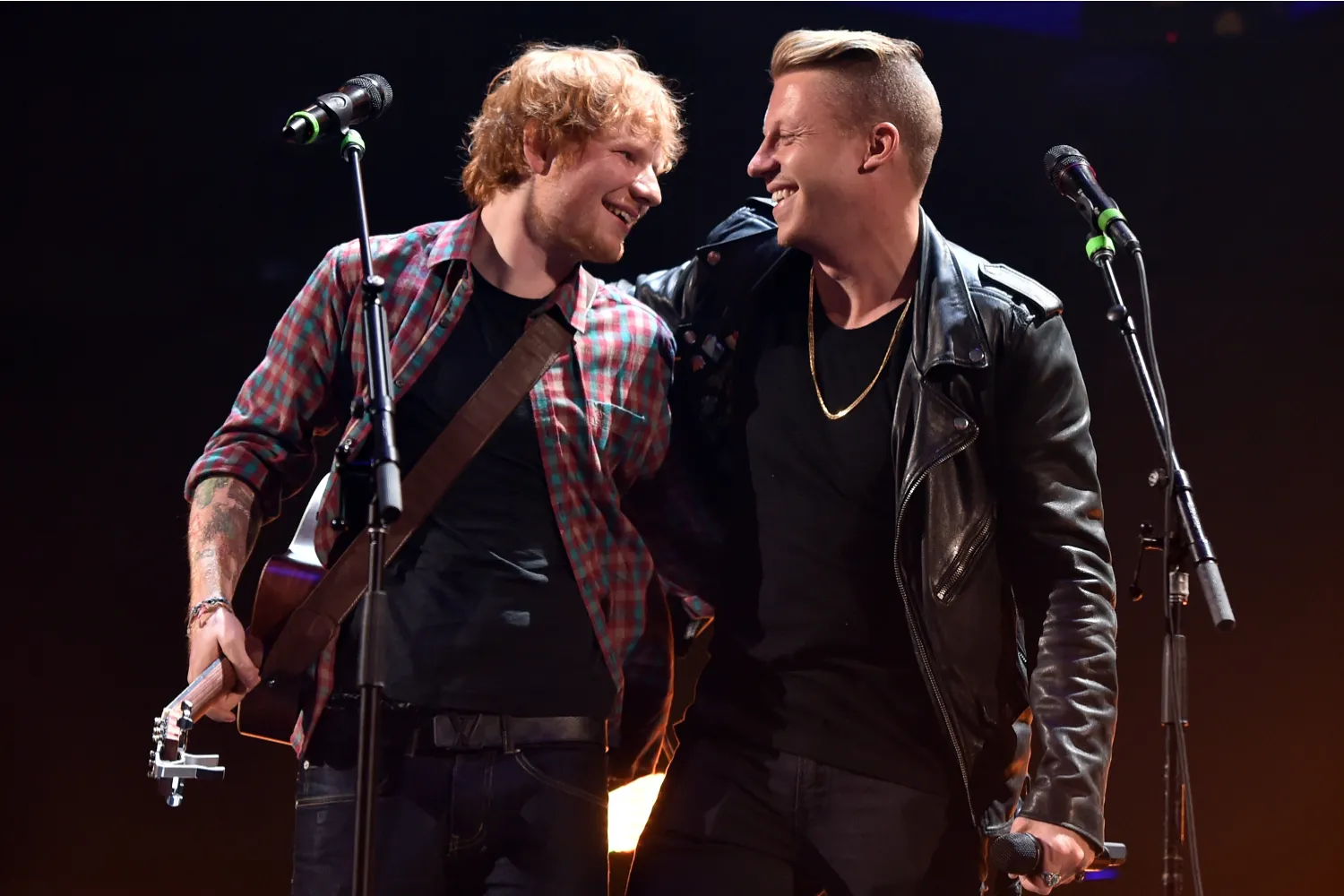
Controversy began when Macklemore used his opening slot on Ed Sheeran’s Loop Tour at MetLife Stadium on September 4 to give a two-minute speech in which he repeatedly said “Free Palestine” and said that he wanted people in Gaza and the West Bank to know they had not been forgotten.
Read More on News
The rapper went on to perform his pro-Palestinian song "Hind's Hall" while images from Gaza were shown on screen.
This quickly sparked backlash from some pro-Israel groups, including a petition from the Israeli-American Council, and days later, Macklemore announced he had been removed from the remaining U.S. tour dates.
...
In a lengthy statement, he said Sheeran told him that Robert Kraft, owner of Gillette Stadium, had objected to his participation and that a group of stadium owners had presented an ultimatum that could have jeopardized the tour if he remained on the bill.
Kraft subsequently confirmed he had opposed Macklemore appearing at Gillette Stadium, but said the decision was based on what he described as a broader pattern of antisemitic rhetoric rather than support for Palestinians.
Related Story
Ed Sheeran’s Two-Chord Solution to Pop’s Dumbest War
Sheeran responded by saying Macklemore's removal was not his decision but was driven by concerns raised by promoters and venue owners.
The fallout has since widened beyond the two artists. All remaining opening acts departed the tour in solidarity with Macklemore, including Irish singer Aaron Rowe and Irish folk group Beoga, who had also served as Sheeran's backing band.
Why the Macklemore Dispute Resonates in Ireland
Support for Palestinian rights occupies a distinctive place in Irish political and cultural life, shaped partly by the country’s own history of British rule, partition and conflict over national self-determination. Pro-Palestinian supporters in Ireland frequently draw parallels involving occupation, displacement, partition and resistance to colonial rule.
This support for Palestinian self-determination has had a sustained and unusually prominent place in the Republic of Ireland’s foreign policy. Ireland’s Department of Foreign Affairs says the country was the first member of what is now the European Union to declare that peace in the Middle East required a fully sovereign Palestinian state, independent of and coexisting with Israel. That position appeared in a joint declaration by the foreign ministers of Ireland and Bahrain in 1980.
In May 2024, Ireland formally recognised the State of Palestine alongside Spain and Norway and agreed to establish full diplomatic relations between Dublin and Ramallah. The Irish government presented recognition as support for Palestinian self-determination and a two-state solution, while explicitly reaffirming Israel’s right to exist in peace and security.
Announcing the decision, then-Taoiseach Simon Harris compared it with Ireland’s own 1919 appeal for international recognition. He said Ireland’s founders had asked the world to recognize the country’s distinct identity and right to self-determination, adding: “Today we use the same language to support the recognition of Palestine as a State.”
A nationally representative survey of 1,547 people in Ireland last month found that 76 per cent of Irish respondents said the Israeli-Palestinian conflict mattered to them either “a fair amount” or “a great deal,” compared with 44 per cent in Spain. The survey also found that 53 per cent of Irish respondents expressed greater sympathy with Palestinians, compared with 11 per cent who expressed greater sympathy with Israel.
Ireland Turns on Ed Sheeran
While Sheeran prepares for the next date of his tour at Lincoln Financial Field in Philadelphia, across the Atlantic all is not well.
In fact, those in Sheeran’s chosen cultural home of Ireland have been vocal in speaking out against him in the wake of the Macklemore tour debate.
Among politicians, Alan Kelly, a Labour TD, accused Sheeran of having "thrown his friend under the bus in favor of commerciality," while Ruth Coppinger of People Before Profit argued that allowing Macklemore's removal was a "political decision" that ultimately backfired.
Labour finance spokesperson Ged Nash similarly called Sheeran's position "extremely disappointing" and praised artists who withdrew from the tour in protest.
Some of the strongest criticism came from Irish musicians connected to the tour itself. Dublin singer Aaron Rowe pulled out as a support act, saying that as an Irish person he could not ignore issues of "genocide, forced famine and violent occupation." Irish folk band Beoga, longtime collaborators and touring musicians for Sheeran, also withdrew, arguing the controversy was distracting from the suffering of Palestinians.
Other Irish cultural figures rallied behind Macklemore. Belfast rap trio Kneecap—long known for their own strong pro-Palestinian stance—posted "All love and solidarity to Macklemore" alongside calls to "Free Palestine," while actor Liam Cunningham wrote on X, simply: "We know who Ed Sheeran is now."
Singer Imelda May, broadcaster Carl Mullan, singer Nell Mescal, actor Lola Petticrew and musician CMAT also publicly backed those criticizing Sheeran's handling of the controversy with comments and reactions on Instagram.
The reaction has extended beyond public figures, too. Irish broadcaster Classic Hits Radio announced it would remove Sheeran's music from its playlists "for the foreseeable future" following listener feedback about the controversy.
Dave Kelly, group program director at Bay Broadcasting, said in a statement shared with Newsweek: “We have listened carefully to the reaction from our listeners over recent days. We also respect the decision taken by Irish artists Aaron Rowe and Beoga to step away from the tour on an issue about which they clearly feel very strongly.
“Our decision to remove Ed Sheeran’s music from the Classic Hits Radio playlist has been carefully considered. It is not intended as a personal judgment on Ed Sheeran, and we acknowledge his own explanation of the circumstances surrounding recent events.”
Perhaps the most scathing criticism came from journalist Andrew E. Quinn of the Irish Mirror who accused Sheeran of being a “gutless coward” in an op-ed published on Wednesday, while making scathing remarks about the singer’s identification with Irishness.
But Ireland's national broadcaster RTÉ said it would not drop Sheeran's music from its radio stations following the backlash. The broadcaster said its "threshold for banning artists is, and should be, very high."
Newsweek reached out to Ed Sheeran's management, and to representatives for Alan Kelly, Ged Nash, Ruth Coppinger, Beoga and Aaron Rowe via email for comment.
...
Is Ed Sheeran Irish?
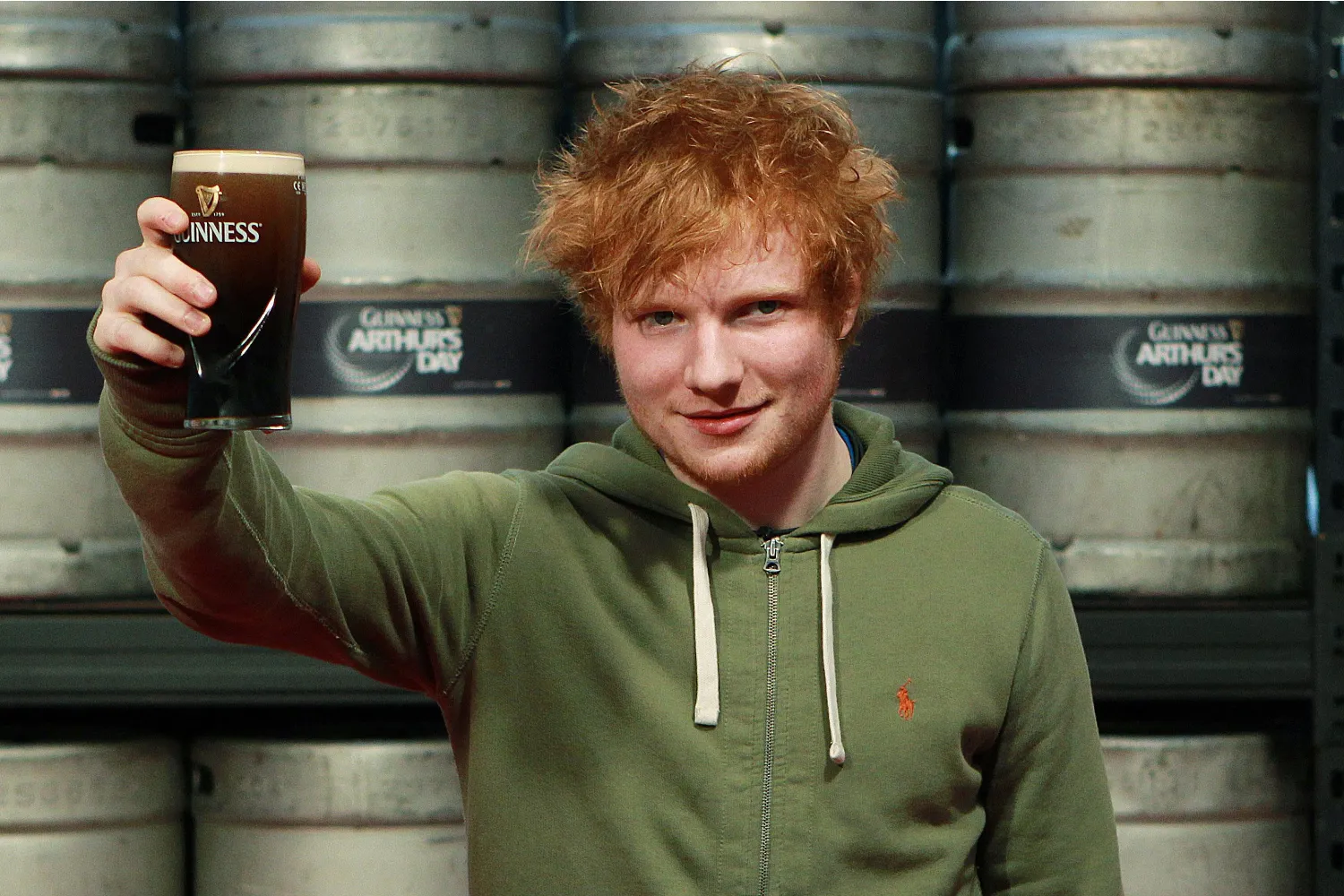
Ed Sheeran was born in West Yorkshire, England, and was raised around 180 miles away in Suffolk, England.
Despite being born and raised in England, Sheeran’s father is from Belfast and his grandparents are Irish, meaning that Sheeran holds an Irish passport and citizenship.
The singer has previously shared how he spent childhood holidays in Ireland and grew up listening to traditional Irish music at home, while his own songs like Galway Girl and Nancy Mulligan draw heavily on his Irish background.
In an interview on The Louis Theroux Podcast in 2025, Sheeran said: "I class my culture as Irish. I think that's what I grew up with.”
He added: “We'd spend all of our holidays in Ireland. My first musical experiences were in Ireland, I grew up with trad music in the house. So I identify culturally as Irish, but I was obviously born and raised in Britain."
In the wake of this week’s tour backlash though, Quinn took issue with this, writing in his Irish Mirror piece: “Sheeran likes to think of himself as ‘culturally Irish’ but after what unfolded over the last few days it's fair to conclude he's just been cosplaying. Being Irish isn't like putting on and taking off a pair of shoes, it's for life and it comes with a strict code—stand up for what is right. Ed Sheeran failed at the first hurdle and proved he is the epitome of the ‘plastic Paddy.’”
Contact Newsweek editors on this story: Ben Kelly and Emma Lee-Sang
Update 9/18/26 4.50 a.m. ET: This article was updated with a statement from RTÉ.
View 0 Comments
Submit Correction
View Editorial & AI Guidelines