
...


By Brendan Cole and Gabe Whisnant
0
Share
Newsweek is a Trust Project member
See more of our trusted coverage when you search.Prefer Newsweek on Googleto see more of our trusted coverage when you search.
President Donald Trump on Tuesday blamed Iran for the downing of an Army Apache helicopter near the Strait of Hormuz, and later in the day, the U.S. military responded with "self-defense strikes."
The incident threatens to escalate tensions in a conflict that has already rattled global energy markets and strained a fragile April ceasefire. U.S. military personnel and regional allies could face heightened risk as Washington weighs its next move. Two U.S. Army aviators aboard the aircraft were rescued by an unmanned Navy vessel and are safe, according to Trump and U.S. Central Command.
Later Tuesday, U.S. Central Command (CENTCOM) posted on X that it began attacks in response to the downed Apache helicopter: "CENTCOM forces began launching self-defense strikes against Iran at 5 p.m. ET today at the Commander in Chief’s direction, in response to yesterday’s downing of a U.S. Army Apache helicopter. The mission is a proportional response to unjustified Iranian aggression."
Read More
What Houthis Entering Iran War Means for US Gas Prices6 min read

100 Days of Iran War: Winners and Losers 11 min read

The helicopter went down around 3:30 a.m. local time Tuesday off the coast of Oman while on patrol, Central Command said. A U.S. Navy drone boat located the downed crew after roughly two hours in the water, recovering both in stable condition. Captain Tim Hawkins, a CENTCOM spokesman, said the operation marked the first known drone-led rescue at sea by the U.S. military.

...
Trump said in a social media post that the crew members “are safe and uninjured,” but added, “nevertheless, the United States must, of necessity, respond to this attack.” Military officials have said the incident remains under investigation.
Following Trump's post, Iranian Parliament Speaker Mohammad-Bagher Ghalibaf wrote on X, We prefer the language of diplomacy, but we speak other languages far more fluently. Break your commitments, and we'll switch to what we speak best. You ride the horse you saddled!"
The Apache downing comes as the Middle East remains on edge following an exchange of strikes between Iran and Israel a day earlier, in what officials described as one of the most serious blows yet to the already strained ceasefire announced April 8. Iranian state media reported that Israeli strikes killed at least two members of the country’s air defense units.
Since the U.S. and Israel began military operations against Iran on February 28, the conflict has driven up global energy prices and disrupted key shipping routes through the Strait of Hormuz, a vital artery for oil supplies. The U.S. has relied heavily on AH-64 Apache helicopters to enforce a blockade on Iranian crude shipments and counter drone threats in the region.
Officials have so far failed to convert the temporary truce into a lasting agreement, particularly as Israel expands operations in Lebanon against the Iranian-backed Hezbollah militia, raising the risk of a broader regional war.
Israel Defies Trump's Ceasefire With New Strikes on Lebanon
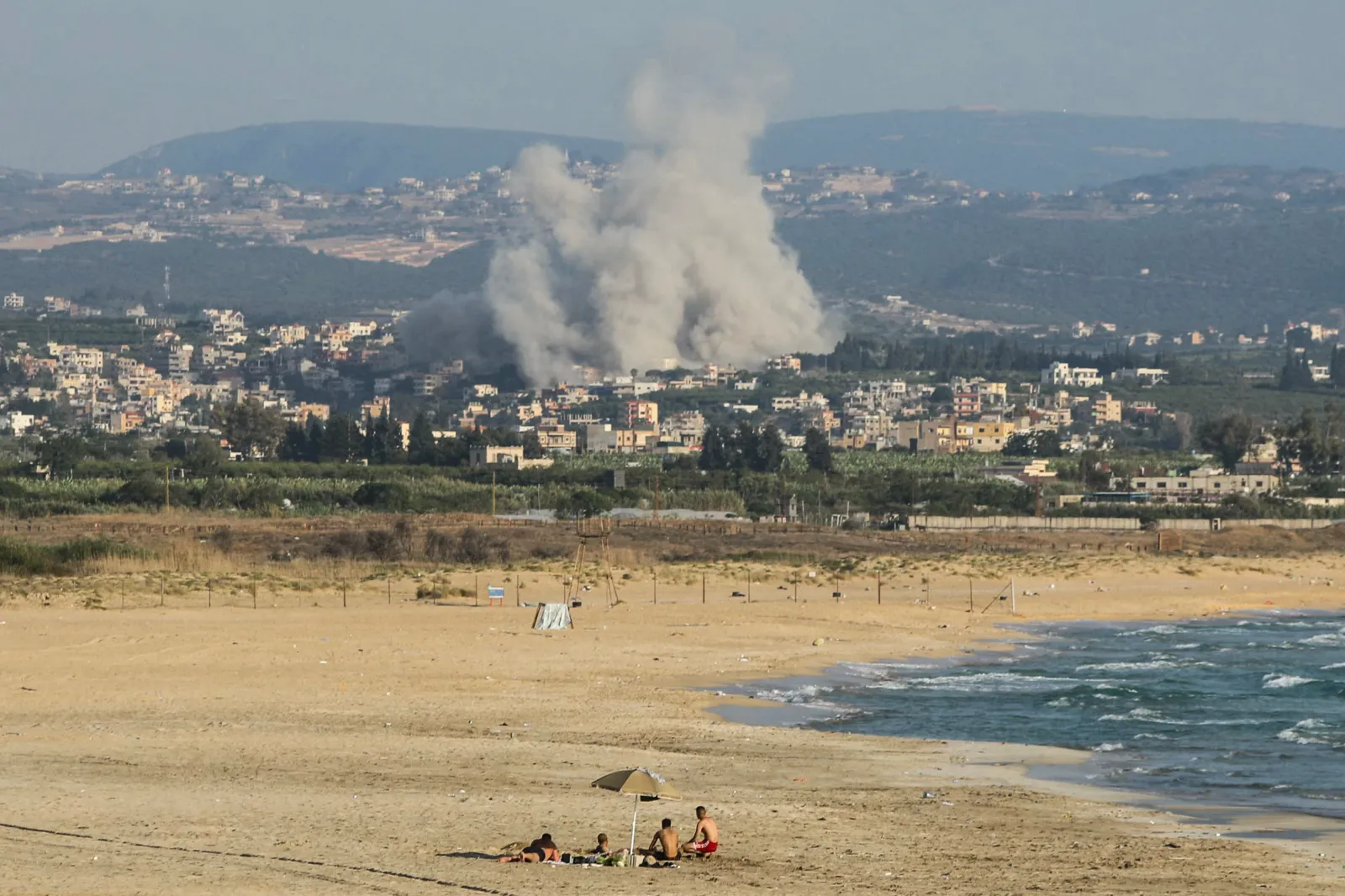
Israeli airstrikes on the southern Lebanese city of Tyre killed at least eight people on Tuesday, it has been reported, as hostilities cast doubt on President Donald Trump’s claims of an imminent end to the Iran war.
It comes two days after Iran and Israel had exchanged fire for the first time since a ceasefire announced in April. They then announced Monday they had halted attacks on each other following Trump's plea for them to stop "shooting" immediately.
Despite Trump again teasing a deal between Washington and Tehran, Tuesday's strikes pave the way for further confrontation.
Lebanon was drawn into the Iran war when Hezbollah operatives fired rockets at Israel on March 2 in support of Tehran after U.S.-Israeli strikes on the Islamic Republic days earlier.
...
More than a million people have been displaced in Lebanon by Israel’s targeting of Hezbollah, which the government in Beirut does not control. Lebanon officials say 3,666 have been killed and 11,000-plus have been injured since Israel strikes began again on March 2. Iran has insisted there can be no peace until Israel stops its attacks on Lebanon.
On Tuesday, footage shared on social media showed smoke billowing into the sky above Tyre following the Israeli strikes.
The Israel Defense Forces (IDF) issued an evacuation order for residents in the southern Lebanese city, including those in its Christian quarter, to move north of the Zahrani river and that the presence of Hezbollah "endangers your lives."
The IDF has said that it is carrying out strikes because Hezbollah had violated a ceasefire agreement and was targeting "Israel’s home front."
Israel's demolishing of homes and presence in territory in the south of Lebanon has raised fears of a long-term occupation like the one that ended in 2000.
Israeli attacks on Lebanon come despite Trump’s order to Israeli Prime Minister Benjamin Netanyahu to halt strikes.
Trump told the BBC that he had spoken to Netanyahu on Monday, stressing the need for "common sense" amid reports that the president is becoming exasperated with the Israeli premier. This came after Israel fired missiles at Iran on Monday, despite the U.S. president’s request for it not to.
"We’re very close to signing a very powerful deal," Trump told the BBC, adding that if he tells Netanyahu to do something, "he does it."
Iran Renews Threats
Vice President JD Vance told Fox News that Washington was well positioned to achieve Trump's objectives in negotiations with Iran, although Tehran has played down chances of an agreement.
Iranian lawmaker Ali Haddad said on Tuesday that American military bases and Israel would be "legitimate targets" if Israel attacked Iran or Lebanon again and that "even under fire, concessions can be taken from the enemy."
Ebrahim Rezaei, spokesman for the Iranian parliament's National Security Committee, told CNN negotiations with the U.S. were being treated as an extension of the battlefield and that Tehran would not retreat from supporting what it calls the "resistance front."
In a post on X marking what he described as 100 days of a national struggle, Mohammad-Bagher Ghalibaf wrote on X, "One hundred days have passed since the national jihad that rose up to preserve the lifeblood of Iran. God's greetings upon you who warmed Iran's back, disheartened the enemy, and pulled the country from the jaws of ferocious wolves that had bared their teeth to force the submission of Islamic Iran. Long live Iran, and long live the resistance of the great Iranian nation."
View 0 Comments
Submit Correction
View Editorial & AI Guidelines