...

By Micah McCartney
Reporter
0
Share
Newsweek is a Trust Project member
See more of our trusted coverage when you search.Prefer Newsweek on Googleto see more of our trusted coverage when you search.
Key Takeaways
- Rejection of "Militarism" Accusations: Japanese Defense Minister Shinjirō Koizumi countered Beijing's claims of a "new militarism," pointing out the stark reality that Japan possesses neither the nuclear weapons nor the strategic bombers found in China's arsenal.
- Firm Stand on Defense Transparency: While emphasizing that Tokyo remains open to diplomatic dialogue, Koizumi criticized China's rapidly expanding military footprint and high level of defense spending for its lack of transparency.
- Strengthening Regional Partnerships: Amidst the diplomatic friction, Japan is actively deepening security ties with other Indo-Pacific nations concerned by Beijing's maritime ambitions, including moving forward with critical military equipment transfers to the Philippines.
Read More on World
Japanese Defense Minister Shinjirō Koizumi on Sunday shrugged off China's accusation that Tokyo's defense push amounts to a "new militarism" while saying the door is open to dialogue.
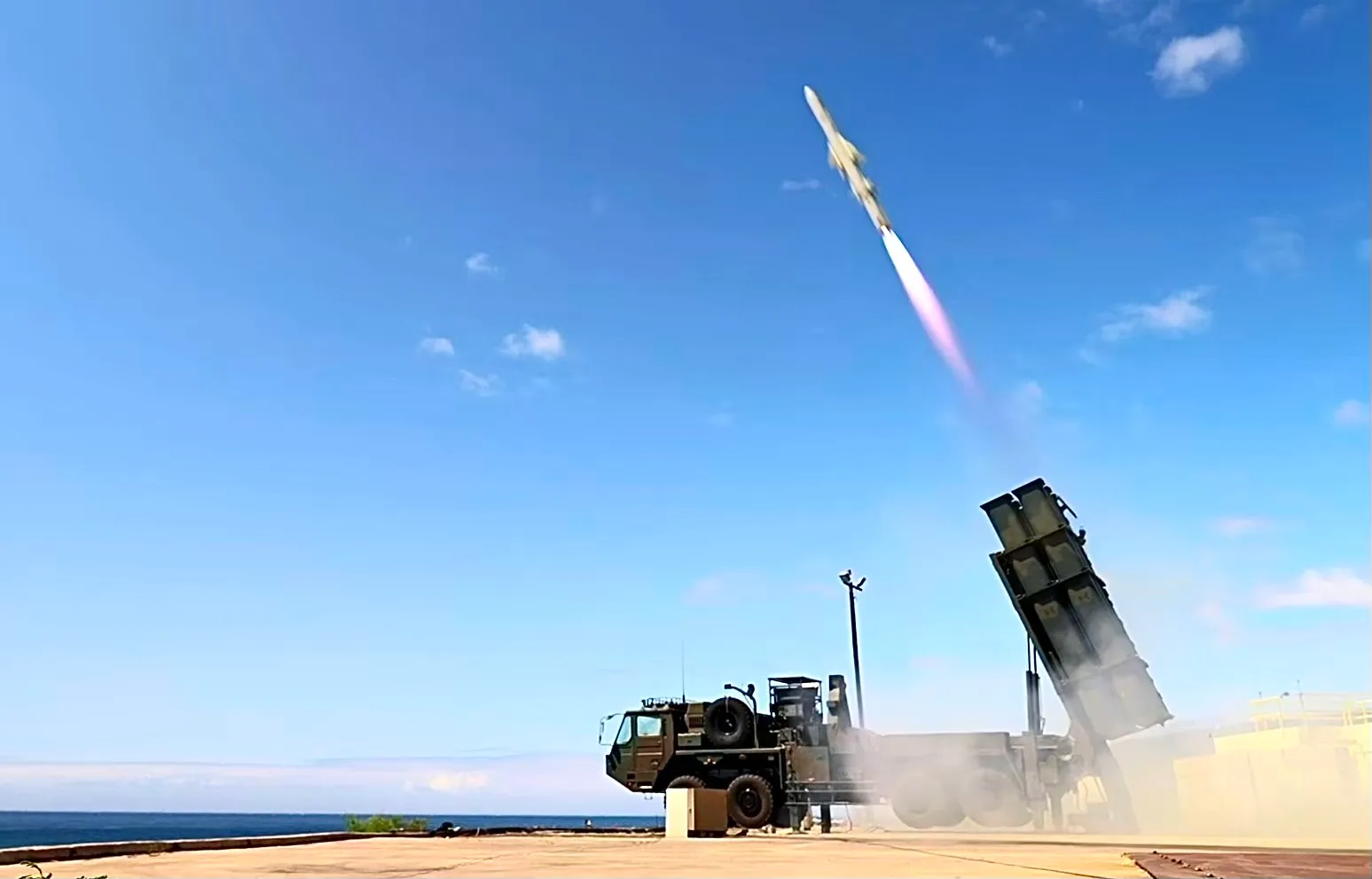
Japan's postwar constitution strictly limits the nation's military role and renounces war as a sovereign right. Yet tensions with China have in recent years driven the country to strengthen its security posture. Tokyo has moved to double its defense spending to 12 percent gross domestic product, deepened military cooperation with the United States and regional partners, and announced plans to deploy antiaircraft missile units along the Ryukyu island chain near Beijing-claimed Taiwan.
Newsweek contacted the Chinese Foreign Ministry for comment by email.
Clarifying Japan's Strategic Intentions
The exchange took place at the Shangri-La Dialogue—an annual summit hosted by the International Institute for Strategic Studies (IISS) that draws an eclectic ensemble of defense ministers, military officials, diplomats and analysts from across the region.
"Japan's defense policy and defense buildups are not based on the idea of identifying any specific country or region as a threat—or having a military confrontation with it," Koizumi said, after a challenge from Chinese military official Major General Meng Xiangqing during a Q&A session.
Meng had drawn comparisons to the country's "toxic legacy" during the 1930s and 1940s, arguing that Tokyo's strengthening defense posture is a concern for nations that previously suffered under imperial Japanese occupation.
Koizumi did not mince words when he turned to China's own defense budget—which stands officially at $280 billion for 2026, second only to that of the U.S.—and lack of clarity from Beijing about its intentions.
"China continues to increase its defense spending at a high level and is rapidly expanding its military capabilities across a wide range of areas without sufficient transparency," he said. "These activities are serious areas of concern for Japan and the international community."
...
"There is a country that has a huge arsenal of nuclear weapons and strategic bombers," Koizumi continued. "Japan has neither of such weapons. And yet, Japan is labeled new militarism. Isn't it strange?"
Tokyo remains committed to diplomacy and believes "persistent, candid dialogue" is imperative through all available channels, without shying away from difficult issues, the official said.
"Japan's door is always open," he added.
The defense minister also conveyed his best wishes to his Chinese counterpart, Dong Jun, expressing disappointment that a bilateral meeting could not take place.
The Chinese defense chief skipped the Shangri-La Dialogue for the second consecutive year, with Beijing instead sending a lower-level delegation of People's Liberation Army (PLA) officials and academics.
Japan's Partnerships
Japan is broadening and deepening its security ties not only with the U.S. but also with other regional partners, most notably Australia and the Philippines—both of which have mutual defense treaties with Washington.
In April, Japan joined the U.S.-led Balikatan military exercises in the Philippines for the first time. That same month, Tokyo also relaxed long-standing restrictions on lethal weapons exports.
During talks on the sidelines of the summit, Koizumi and Philippine Defense Secretary Gilberto Teodoro Jr. advanced plans to transfer retired Japanese Abukuma‑class destroyer escorts and TC‑90 surveillance aircraft to bolster Manila's defense capabilities. Japan is also furnishing Australia with up to 11 agile Mogami‑class frigates.
Robert Ward, IISS's Japan chair and the director of its geo-economics and strategy program, said Tokyo was successfully finding common ground with neighbors anxious about Beijing's growing assertiveness in the region.
"In a sense, Japan's pushing on a bit of an open door with some countries that are also worried about China," Ward told Newsweek. "But that doesn't change the primacy of the U.S.-Japan security alliance."
Like Japan, the Philippines is embroiled interterritorial dispute with the East Asian power. The Chinese coast guard has been deploying more frequent and more heavily armed vessels into waters near a group of uninhabited, Japanese-controlled East China Sea islands claimed by both countries.
Meanwhile, Manila continues to challenge Beijing's expanding presence within the Philippines' exclusive economic zone. China claims upward of 80 percent of the South China Sea as its territory, alleging historical rights.
These efforts have been met with Chinese officials drawing parallels with imperial Japan. Koizumi ignored Shen Zhixiong, a senior colonel at the PLA National Defense University, when he asked whether Tokyo was ready to apologize for its wartime aggression.
Teodoro dismissed this narrative as "ludicrous" and aimed at China's domestic audience, "who don't have the freedom to listen to other points of view."
In a closed-door interview with reporters attended by Newsweek, Teodoro said, "[Japan] has done more to apologize by positive actions and by goodwill rather than in plain words," and he called the country a "model citizen of the world."
Update 6/2/26, 4:20 a.m. ET: This article has been updated with additional information and a comment from Gilberto Teodoro.
View 0 Comments
Submit Correction
View Editorial & AI Guidelines