...

By Micah McCartney
Reporter
0
Share
Newsweek is a Trust Project member
See more of our trusted coverage when you search.Prefer Newsweek on Googleto see more of our trusted coverage when you search.
Japan deployed naval and aerial assets to monitor Russian and Chinese warships that sailed close to its waters in recent days, as they appeared to be returning home following a joint patrol in the West Pacific.
Why It Matters
Security coordination between Russia and China has sharply increased in recent years as the quasi-allies step up what many analysts believe is a challenge to U.S. military primacy in the region. According to the Center for Strategic and International Studies, over half of the 113 joint drills conducted since 2003 have taken place since 2019.
Read More on World
Japanese defense officials are increasingly concerned by these actions, describing them as demonstrations of force and a clear national security threat to a U.S. ally under the Mutual Defense Treaty.
Newsweek reached out to the Chinese and Russian Foreign Ministries via email for comment.
What To Know
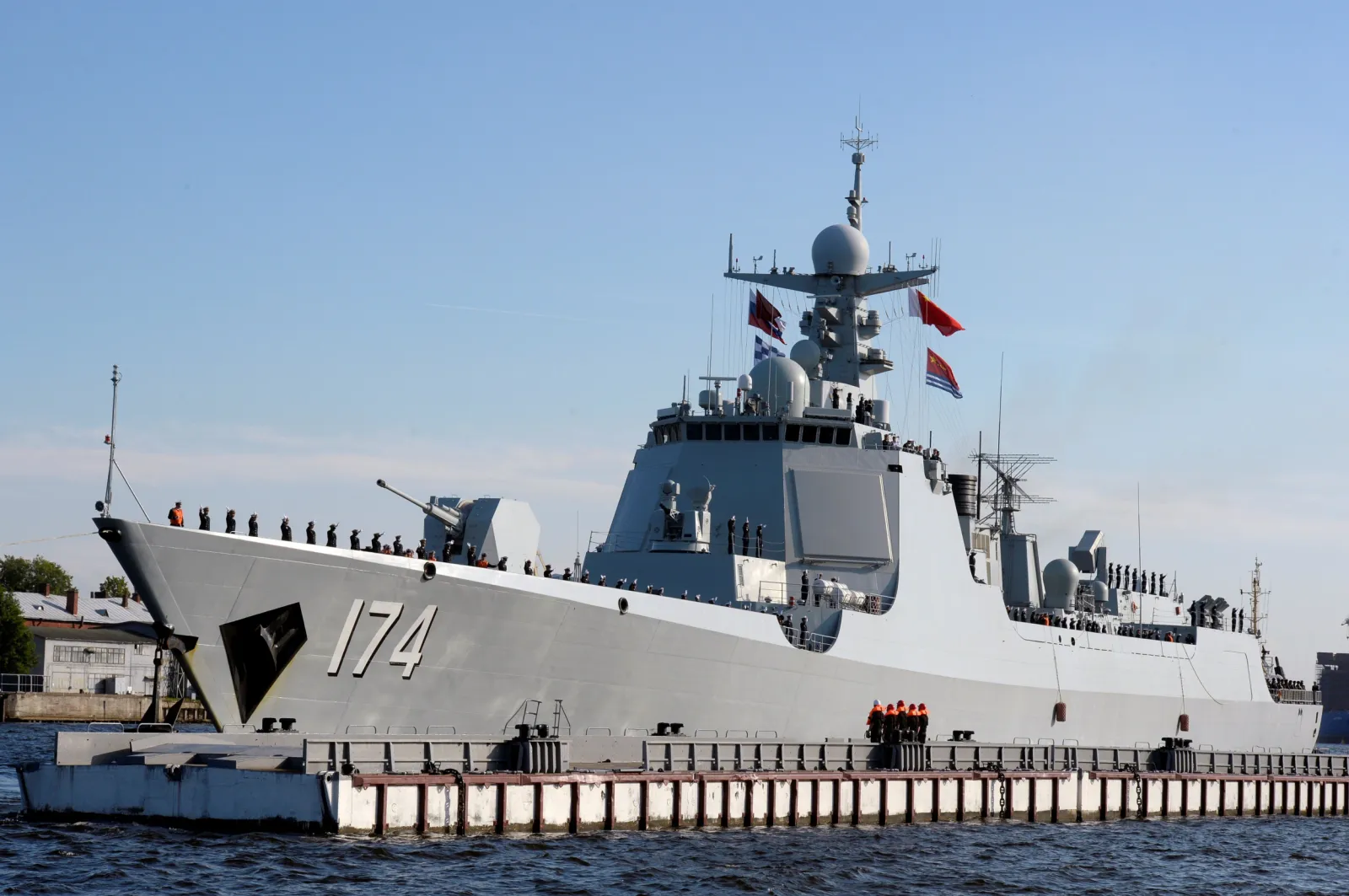
The Japan Maritime Self-Defense Force (JMSDF) tracked two Chinese naval vessels—the Luyang III-class (Type 052D) guided-missile destroyer Shaoxing and the Fuchi-class replenishment ship Qiandaohu—the Japanese Ministry of Defense said in a statement released Monday.
The Chinese vessels reportedly passed between Okinawa and Miyako before heading north into the East China Sea.
...
Their presence followed sightings of the Russian Udaloy I-class destroyer Admiral Tributs and an Altay-class oiler, confirmed on Friday to be approximately 44 miles northwest of Cape Shiriya, at the northern tip of Japan's main island of Honshu.
Japan responded by deploying two JMSDF vessels and at least two P-3C maritime patrol aircraft to conduct "warning and surveillance activities and gather information, the statement added.
The Admiral Tributs, Qiandaohu, and Shaoxing were among the participants of "Joint Sea 2025," a bilateral naval exercise held off Vladivostok in early August and later embarked on a joint patrol to the central Western Pacific, according to the Russian Pacific Fleet.
According to a JMSDF map, the ships were then tracked as they transited the Soya Strait between Hokkaido and Russia's Sakhalin Island en route to the open Pacific.
The joint patrol ultimately covered more than 6,000 nautical miles, or roughly 6,900 miles.
Chinese and Russian officials maintain their activities are legal and not aimed at third parties. But Japan, the U.S. and their partners have expressed concerns that the growing coordination is part of an attempt to reshape the region's security balance.
The Global Times, a state-backed Chinese tabloid, criticized Japanese media on Tuesday for framing the patrol as an "encirclement" of Japan. Military commentator Fu Qianshao told the outlet the joint missions were intended "to protect peace and stability in the Western Pacific," and insisted they took place in international waters.
What People Are Saying
Japan's Defense Ministry, in its 2025 white paper: "China is further strengthening its cooperation with Russia, including in military activities. It has also conducted joint bomber flights and naval navigations with Russia in the vicinity of Japan. These repeated joint activities are clearly intended for demonstration of force against Japan and are a grave concern from the perspective of the national security of Japan."
Jiang Bin, a spokesperson for China's Defense Ministry, at an August 8 press conference: "The Joint Sea exercise is an institutionalized cooperation program between the Chinese and Russian navies. Since its inception in 2012, the exercise has been held 10 times and has become a key platform for China-Russia military cooperation."
What Happens Next
China and Russia are expected to continue conducting war games and joint patrols in the Asia-Pacific region.
Japan's Defense Ministry pledged in its Monday statement to "continue to conduct vigilance, surveillance, and information gathering."
View 0 Comments
Submit Correction
View Editorial & AI Guidelines