
...


By Newsweek Editors and Christopher Roberts
0
Share
Newsweek is a Trust Project member
See more of our trusted coverage when you search.Prefer Newsweek on Googleto see more of our trusted coverage when you search.
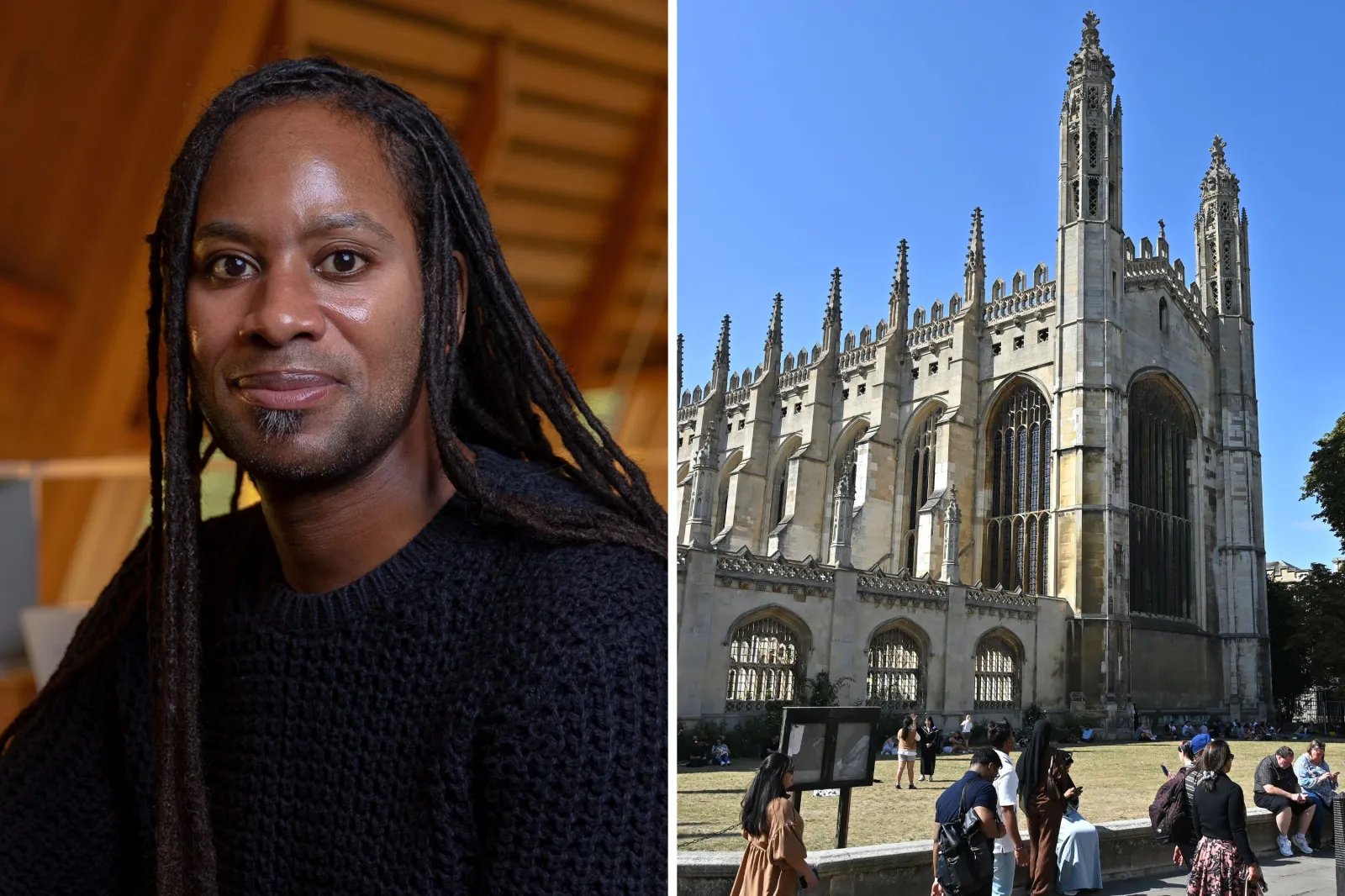
In July 2023, four months after he became the youngest Black professor in the history of Cambridge University, Jason Arday was asked whether his astonishing, bewildering biography risked becoming what disability campaigners call inspiration porn: a complicated life compressed into an uplifting story. He said he was indeed being positioned as "our next great hope," adding: "Because I don't have any expectations, and then I don't see myself how other people see me."
Three years later that positioning had reversed. In his last major interview before resigning from Cambridge amid a plagiarism scandal about his work and a fabrication scandal about his life, which together sparked a wildfire of controversy in British society, Arday objected to "the positioning of me as this kind of liar and fantasist."
Read More on Analysis
But his life story was indeed incredible. According to Arday’s account, he was diagnosed with autism at 3, was non-verbal until 11 and unable to read or write until 18. He also described being attacked at 18 and developing epilepsy, before making his way through university and into teaching and academia.
Alongside that transformation, he portrayed himself as an extraordinary endurance athlete and fundraiser—running 30 marathons in 35 days, 300 miles in three days or, alternatively, 600 miles in 12 days, helping fundraising collectives raise more than £5.5 million ($7.4 million) for upward of 70 charities, organising homeless drives and mobile soup kitchens, before earning a PhD and eventually reaching Cambridge at 37.
Living in Jung's Shadow
Hero and fraud don’t have to be opposites.
Carl Jung, the Swiss psychiatrist who founded analytical psychology and has more recently been revived by Jordan Peterson (another of Arday’s critics), described the material we cannot acknowledge in ourselves, and therefore experience as belonging to somebody else, as 'the shadow.'
That’s how so many of Arday’s defenders, critics, apologists, publicists and interrogators saw him: as a shadow, both of him and themselves.
Now the real Jason Arday is dead. He was found unresponsive at his home in Battersea, south London, on Friday, August 14, aged 41. The Metropolitan Police said the death was unexpected but not believed to be suspicious. His family said a sustained campaign of abuse and misinformation had become too much. His death does not prove his defenders right, nor does it make scrutiny of a public figure illegitimate. But shadows cannot provide answers.

...
The Story of Jason Arday
Arday’s own biography supplied much of what would later turn into various shadows: prodigy, fraud, symbol, victim. Cambridge's announcement on February 23, 2023, did not simply report that it had hired a sociologist. It called him a "renowned" and "highly respected" scholar and described "the latest chapter in a remarkable academic career."
At 37 he was the youngest Black person ever appointed to a Cambridge professorship, the university said, even though therapists and career advisers had predicted assisted living and lifelong support. Bhaskar Vira, Cambridge's Pro-Vice-Chancellor for Education, concluded: "Jason Arday is an exceptional scholar of race, inequality and education." The university explicitly linked the appointment to addressing the underrepresentation of disadvantaged and minority ethnic people.
Arday could see the projection. In that 2023 interview he described a "baptism of fire" at Cambridge, said he masked aspects of his neurodivergence because he feared they could be weaponized against him, and said people entering old white institutions had to be prepared to "take the hits."
One of those hits was academic. Retraction Watch, the site that tracks research misconduct, reconstructed a paper trail beginning in May 2023, weeks after Arday arrived. Dave Harris, an emeritus professor at Plymouth Marjon University in England, queried similarities between a 2018 Arday paper in the journal Social Sciences and earlier research by an epidemiologist. Martyn Hammersley, a sociologist at the Open University, reviewed the material and alerted Cambridge.
Arday agreed to revise it.
Scrutiny deepened. Times Higher Education, the respected British trade paper for universities, assembled a 63-page report on apparent textual borrowing in Arday's PhD and submitted 97 pages of evidence to Cambridge and Liverpool John Moores University.
The outlet killed the story after Arday retained Carter-Ruck, one of Britain's leading defamation firms. David Sanders, a biochemist at Purdue University in Indiana who reviewed the dossier, told Retraction Watch: "There is no question that there is extensive plagiarism." Hammersley thought the matter should never have reached culture warriors: "It's an unfortunate situation because it could have been dealt with by Cambridge."
Personal Discrepancies
Scrutiny then moved to the man, not just his work. Asked about the claim that he had run 600 miles in six days, Arday told the Guardian the distance had been covered over 12 days with rest days in between. Asked about the £5 million or £5.5 million he was said to have raised for charity, he said the sum represented work with multiple fundraising collectives over two decades.
The Washington Free Beacon, a conservative American news site, and later the Sunday Times, found that Simon & Schuster, Arday's publisher for his memoir Great And Unfortunate Things, had quietly edited its author page between May and July 2025, before the public scandal.
Other discrepancies were harder to edit. Ohio State University said Arday had not held the visiting professorship attributed to him. Glasgow disputed another visiting-professor claim. Birkbeck, University of London, could not find a record of the master's degree attributed to him. The academic publisher Palgrave Macmillan said a proposed book had been accepted but never published, though biographies described it as published.
Contradiction, ambiguity and inflation aren’t the same, but the coverage increasingly treated them as one problem: the Jason Arday problem.
Arday acknowledged mistakes but rejected the characterization of himself as a fabulist. Pressed by the Guardian on the absence of corroboration for some of his claims about racist victimization, he replied: "To be honest with you, I thought you'd just believe me. Why would I lie?"
Cambridge And The Story It Told
Cambridge cast its own shadow by making the appointment stand for more than an appointment. It presented Arday as both an exceptional scholar and evidence of institutional progress. The praise was not restrained. In a BBC video from the time of the appointment, resurfaced during the scandal, Hilary Cremin, then head of Cambridge's Faculty of Education, told Arday: "The board of electors on your interview day were absolutely unanimous. We are so lucky to have you. You are the best in the world in terms of the research that you do."
Private warnings came quickly. Hammersley emailed Cremin and Cambridge's head of policy, governance and integrity in May 2023 about the 2018 paper. Arday agreed to take it down and Cambridge said that he had the department's full support.
The public posture hardened when Nathan Cofnas' Substack appeared with a litany of plagiarism accusations, followed by reporting in the mainstream British press. Cambridge called Arday the victim of a "vile campaign to undermine his credibility" and said he had been cleared of allegations regarding his thesis and journal publications, and this was technically correct: Liverpool John Moores, which awarded the PhD in 2015, had concluded he had not plagiarized.
Part of the response to these claims appears to have been prompted by who his accuser was, not what the accusations were: Cofnas is a philosopher and self-defined “race realist” whose own Cambridge affiliation was terminated in 2024.
But motive and evidence answer different questions. A “race realist” can find a true discrepancy. Priyamvada Gopal, professor of postcolonial studies at Cambridge and far from a marcher on the anti-DEI crusade, said the appointment itself required investigation: "It is highly unusual, to say the least, to appoint such an early-career academic to a very senior post."
Cambridge, she said, had been tempted to "cut corners on the hard work of fostering equality and inclusion" with a media-friendly appointment, and bore "no little responsibility for the grotesque racism which this whole business has unleashed."
On August 5, Cambridge changed its mind, announcing an investigation after new information about Arday's academic qualifications and honorary appointments, with separate misconduct complaints handled under its research policy. Hours later Arday resigned from the university and his fellowship at Jesus College, writing that the accusations and commentary had "taken a profound toll on me and on those I love" and that his departure should not "be mistaken for an acceptance of the narratives that have surrounded me."
By August 12, Cambridge's vice-chancellor, Deborah Prentice, under pressure from other academics at the university, had agreed the review would be conducted "independently by senior academics from within and beyond Cambridge," feeding into a review of senior appointments.
She acknowledged "anger and anxiety around this damaging and difficult case," shared colleagues' concerns about the appointment, and insisted it was "an aberration and should not be used to cast aspersions on their work or the legitimacy of their roles at Cambridge."
What The Defenders Saw
Arday's defenders saw a different shadow: not only the allegations, but the political and racial motives of some of the people making them. That was not imaginary. But, as with Cofnas’ accusations, it made it easy to treat the provenance of a claim as an answer to the claim itself.
A solidarity letter from the Good Law Project, a campaigning legal organization, was among the first to come resolutely to Arday’s defense. Its headline told readers that right-wing newspapers were smearing Arday with fake plagiarism accusations.
The letter continued: "Entirely false allegations of plagiarism were made against Professor Arday and referred to two universities. Investigations have found no evidence whatsoever of wrongdoing." Signatories included Lord Simon Woolley, who founded the campaign group Operation Black Vote and heads Homerton College, Cambridge; Kehinde Andrews, Britain's first professor of Black studies; Daniel Kebede, general secretary of the National Education Union, the country's largest teaching union; Paul Boateng, Britain's first Black cabinet minister; Zack Polanski, leader of the Green Party; and assorted MPs, writers, lawyers and campaigners.
Over time, however, reporters also found prominent names had disappeared from among the signatories: Sonita Alleyne, Master of Jesus College, which was Arday's own college; the autism researcher Sir Simon Baron-Cohen; the Cambridge education professor Ricardo Sabates Aysa; and Ijeoma Uchegbu, President of Wolfson College, Cambridge.
Arday had supplied his supporters with the shadow playbook in advance. At the 75th anniversary conference of the British Sociological Association in April 2026, in a talk titled Wanted Dead or Alive: The Playbook, he warned that conservative activists were combing Black academics' work for misconduct: "The instruments that are designed to protect academic integrity [...] are weaponised." Three months later, academic-integrity allegations against him were national news.
...
Professor Andrews was one of those who did not simply retreat as more reporting emerged. Speaking to the Guardian on August 8, he accepted that there were "problems with some of [Arday's] scholarship" while calling the campaign coordinated and premised on the view that Black people should not be at Cambridge: "I think there's a real question about whether these spaces are safe for us and whether we just have to start doing this outside universities."
A friend of Arday's, he later told the BBC television program Newsnight that after the resignation Arday had stopped leaving the house and lost a great deal of weight. "He was very upset. He felt that there was no way out."
Paul Gilroy, among the most eminent living scholars of race in Britain, apportioned blame in the same report to "racist critics" but also to the "culture warriors" who had appointed Arday.
Sir Simon Baron-Cohen's intervention was different again. Before Arday's death the director of Cambridge's Autism Research Centre posted that one in four autistic people had planned or attempted suicide, and that Arday was being systematically discredited over every detail of his life.
"We should of course always investigate plagiarism to protect academic standards,” he said. “However, I cannot stand by and watch when an autistic man is on the ground and the kicking continues. This is relentless bullying of a vulnerable autistic man and raises safeguarding issues." Commentators on Arday often found it impossible to simultaneously accept the first and last parts of what Baron-Cohen said.
Nicholas Guyatt, professor of North American history at Cambridge and a fellow of Jesus College, criticized those who saw Arday as proof of institutional favoritism: "Look at the numbers. It's just not true." Higher Education Statistics Agency data show 75 Black academics among Cambridge's 6,180 academic staff.
Kebede was more categorical after Arday's death. In the union's statement he called what happened "a public and brutal takedown that unleashed a tirade of racism," whose effect had been chilling: entering prominent public positions, he said, "will make you a target."
The Media's 249 Decisions
The press created a different kind of shadow: cumulative rather than ideological. No single article had to be indefensible for the totality to become something else. That said, there was nothing wrong with attempts by the British press to do its job. If something doesn’t seem to add up, saying so is not harassment.
Times Higher Education began looking seriously in June 2025, after a professor raised concerns about ethics clearances. It sent three sets of polite inquiries over two months: first about plagiarism and unusual data, then about CV discrepancies, then about the athletic and charity claims.
But editors, facing Carter-Ruck, feared ruinously expensive litigation and did not run the piece. A complaint about the reporter, Jack Grove, was made to police; when the Met called him on February 3 an officer told him not to contact Arday again because of Arday's mental health. Grove had not emailed Arday in four months. In August the force accepted the officer's actions had the potential to "frustrate legitimate journalism."
Grove's own conclusion is this: "For me, this was, above all else, a story about potential research malpractice—it should have remained that way." He did not share Cofnas' political conclusions.
The communications researchers Tom Nicholls and Jonathan Bright had already suggested why it didn’t “remain that way.” Studying 61,864 British news articles, they identified "story chains," connected clusters rather than isolated articles, and found more than half of news production happened within them. Reporting breeds interest; interest breeds more reporting.
There’s an analogy for the problem in British press regulation. Guidance from the Independent Press Standards Organisation, which regulates most of the national papers, warns court reporters about "jigsaw identification": it says that details that identify nobody when taken alone can identify a protected person when combined with what is being published elsewhere. Arday was a public figure, so the analogy is ethical rather than legal. But if journalists can ask what the ecosystem already contains when protecting identity, why is proportionality assessed as though every article stands alone?
NewsCord, a media-accountability group which is also running an IPSO complaint campaign against several papers, identified 249 distinct items substantively about Arday across 15 national outlets in the 22 days from July 24 to about 10 p.m. on August 14. That doesn’t include TV, outlets outside the mainstream, or social media.
The timing is revealing. Arday resigned on August 5, saying he had reached "the limits of what any person should reasonably be expected to endure."
In the nine days between his resignation and his death, those 15 outlets published 188 further items, 20.9 a day. Forty appeared on August 6 and 38 on August 7. NewsCord catalogued pieces inviting readers to vote on whether criticism of Arday was racially motivated; columns using his collapse as proof that DEI had poisoned institutions; jokes comparing him to comic inventions and reality-television figures; and stories litigating his account of childhood disability through old classmates and social media. On the day he died, one of those outlets published a story about Arday’s schoolmates at 3:11 p.m. The London Ambulance Service called the Met from his home at 3:12.
Baron-Cohen spoke to Arday on the morning of his death. Arday had been "bombarded by every media outlet to paint him as a fraud," he told Today, BBC radio's flagship morning news program, and felt unable to leave the house. "What he was saying to me was 'they've destroyed my life'," Baron-Cohen said, taking it to mean the press.
A Culture Wars Icon
The culture war had the least use for ambiguity. It needed Arday as a silhouette: not a man with a contested biography and disputed scholarship, but proof of a larger argument. Cofnas saw his version of the shadow immediately. His Substack was not titled "Questions about attribution in a doctoral thesis." It was "DEI Fraud and Cover-Up at Cambridge." Having set out his analysis, he distilled the meaning he wanted taken from it: "In other words, hiring Arday was an overtly political act."
After Arday died, James Cleverly, who represents the opposition Conservative Party on housing and is a former foreign secretary, made a similar claim. Academic institutions, he wrote, had promoted Arday into roles he was clearly not qualified for because they wanted "a black wunderkind to show off," and had pushed him into the spotlight for their own benefit: "His exposure was inevitable, a case of when, not if."
Jason Okundaye, a Guardian columnist writing from the left, identified the trap from a different side: institutions had sold the appointment through "youngest Black" exceptionalism rather than encouraging anyone to engage with the scholarship.
Still Chasing Shadows
Some of these claims may never be settled. Arday’s family, in a statement after his death, said: "The campaign of misinformation was too much for Jason, who was a gentle man and who always wanted to see the best in everyone."
British Prime Minister Andy Burnham described it as "a tragedy on so many levels."
"It's not a moment for any rushing to judgment," he said. "It's a moment for reflection, I would say, reflecting on how things came to this."
A shadow doesn’t have to be a lie somebody tells. Cambridge saw in Arday the institution it wanted to be and could not see its own appetite for publicity. Arday's defenders saw the racism, which was real, and often refused to see what the racism did not explain. Newsrooms saw everybody's incentives in the Arday scandal but their own.
Arday cannot help them to revise these accounts now. What is left is what everybody else brought to him: the prodigy, the fraud, the martyr, the emblem. Each version is just a shadow of the real Jason Arday.
View 0 Comments
Submit Correction
View Editorial & AI Guidelines