...

By Anna Commander
News Editor
0
Share
Newsweek is a Trust Project member
See more of our trusted coverage when you search.Prefer Newsweek on Googleto see more of our trusted coverage when you search.
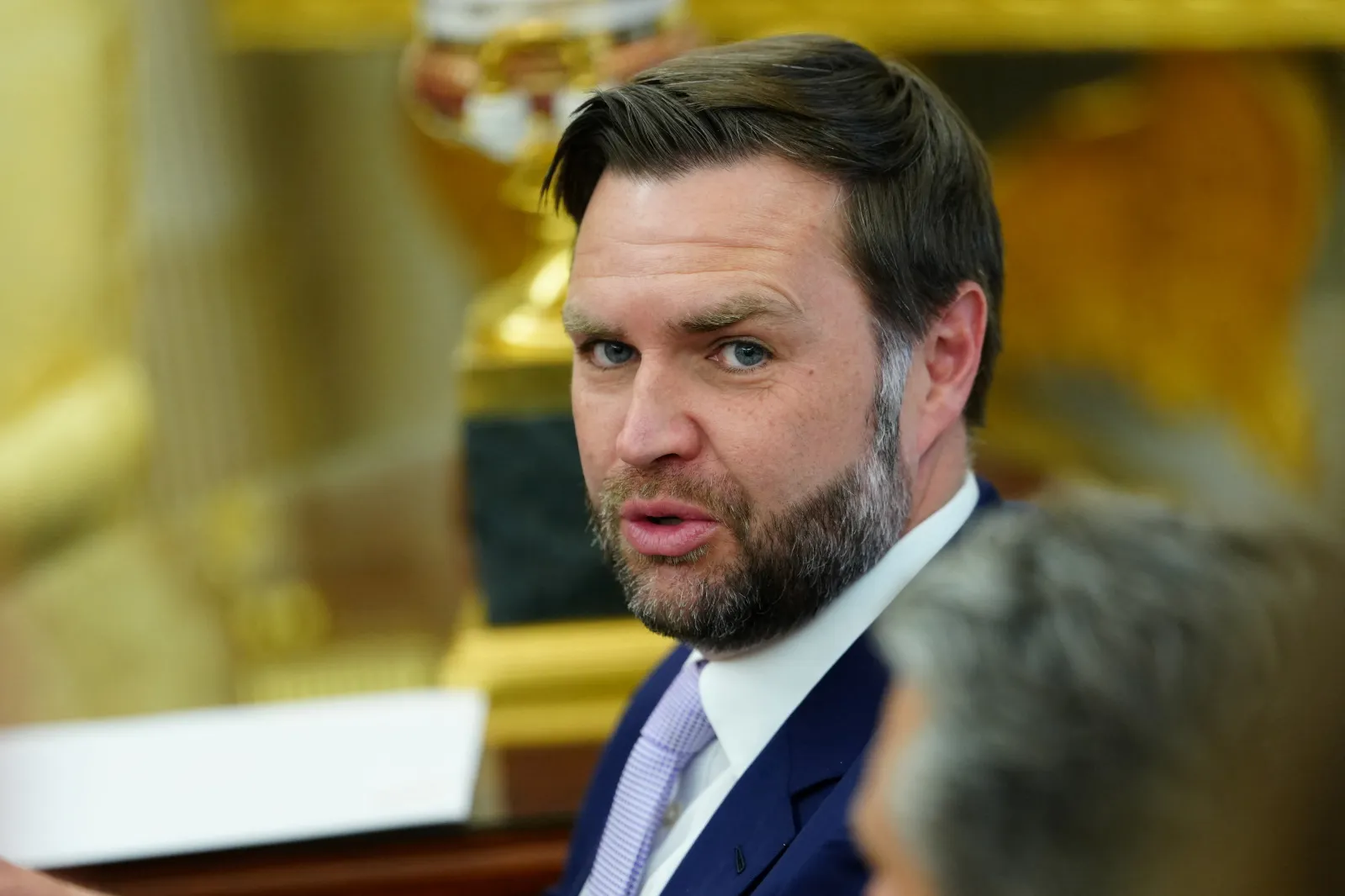
Vice President J. D. Vance said Tuesday the United States is in a "great position" regardless of how negotiations with Iran ultimately unfold, arguing the Trump administration has leverage whether diplomacy ultimately succeeds or breaks down.
Speaking as U.S. envoys reportedly met with a Qatari official in Doha on Tuesday, Vance said a successful agreement would result in "an Iran that is permanently transformed," while failure would still leave the U.S. in a stronger strategic position because, he claimed, Iran's nuclear program and conventional military had already been destroyed.
"I actually think that the United States is in a great position, however the negotiation ultimately shakes out," Vance said. "If the negotiation is successful, which obviously we want it to be successful, you have an Iran that is permanently transformed. That's not funding regional terrorism and instability, that is permanently given up on any nuclear weapons ambition, and that, as a result, is welcomed back into the world economy. That's a great outcome for the American people; it's a great outcome for the whole region," Vance said while speaking with Fox News' Laura Ingraham.
Read More on News
"If, on the other hand, the Iranians don't behave. If they don't make the concessions in the negotiations that we need to see, their nuclear program is still destroyed, their conventional military is still destroyed, and the United States is still in a much stronger position relative to the Iranians. So, my attitude on this, Laura, is we have all the cards in negotiation," Vance said, adding later that it is a "win-win" for the American people.
Newsweek reached out to the White House via email late Tuesday night for additional comment.
Meanwhile, diplomatic efforts in Doha have been clouded by confusion over whether direct U.S.-Iran talks were actually happening, with an Iranian official denying any upcoming face-to-face negotiations even as Trump claimed Iran requested a meeting, the Associated Press reports. Majed al-Ansari, a spokesman for Qatar’s Foreign Ministry, also said that the U.S. envoys would not be directly negotiating with Iranian diplomats while in Doha, the outlet added.
That uncertainty unfolded on the heels of recent maritime tensions, including strikes and attacks on commercial shipping in the Strait of Hormuz.
Rajan Menon, professor emeritus of International Relations at the City College of New York, told Newsweek on Tuesday night that "Vance is correct in one sense. If the US gets what it wants from the negotiations, then, by definition, it will have been successful. But what if the US doesn’t get all at it wants, especially on Iran’s nuclear program? How could that count as a success? Likewise, I can’t see how the US would come out ahead if the talks fail, because Iran would then most likely shut down the Strait of Hormuz again."
Menon added, "That could put Iran and the US back on a path to armed conflict: that’s not certain, but it can’t be ruled out. So I’m confused about what the vice president means when he says the US will come out ahead no matter how things shake out. There are good outcomes and bad outcomes for the US, just as they are for Iran."
When asked if he thought a concrete ceasefire deal would come out of the 60-day memorandum of understanding, Menon told Newsweek in part that "no one can say at this point, and you shouldn’t believe anybody who claims to know."
What To Know
Vance's comments came as senior U.S. envoys Steve Witkoff and Jared Kushner met with Qatar's Prime Minister and Minister of Foreign Affairs, Mohammed bin Abdulrahman bin Jassim Al Thani, in Doha. According to Qatar's Foreign Ministry, the officials reviewed the latest developments in ongoing U.S.-Iran negotiations conducted under a memorandum of understanding, as well as broader efforts to promote regional security and stability through diplomacy and dialogue.
Qatar said on X on Tuesday in a translated post that the meeting also covered regional developments, including the ceasefire in Lebanon, with both sides stressing the importance of preserving Lebanon's unity and stability. The ministry said Al Thani reaffirmed Qatar's commitment to continuing its mediation efforts and supporting negotiations aimed at reaching a comprehensive and sustainable agreement. It added that the U.S. envoys thanked Qatar, along with Pakistan, for helping facilitate the talks and reiterated Washington's commitment to continuing the diplomatic process.
The meeting in Doha comes as the Trump administration seeks to continue negotiations with Tehran following weeks of heightened tensions.
Vance's remarks also underscore the administration's public message that it believes it is negotiating from a position of strength, maintaining that the United States stands to benefit whether the talks produce a new agreement or ultimately fail.
Rubio's Closed-Door Briefing with Lawmakers
During a closed-door House briefing about Iran on Monday, Republican Congressman Rich McCormick questioned the Trump administration's decision to pursue a memorandum of understanding with Tehran, arguing that Iran has a history of failing to honor past agreements, MS Now reporter Mychael Schnell reported on X, citing an unnamed source.
According to the source on the call, McCormick said he did not understand why the U.S. would seek an agreement with a country "that has never been compliant," adding that easing prewar sanctions could allow Iran to claim victory.
Secretary of State Marco Rubio defended the administration's approach, reportedly telling lawmakers the U.S. should judge Iran by its actions rather than its public statements, according to the source. Rubio also acknowledged the uncertainty surrounding the diplomatic effort, warning that no one was "under any illusion" negotiations would be easy or even successful, but argued the administration believes they are worth attempting despite decades of failed efforts.
Before the briefing, House Minority Leader Hakeem Jeffries said when asked by Newsweek during a press briefing Monday, "We need an all-hands-on-deck classified briefing for the entirety of the House of Representatives and the entirety the Senate. This is an incredibly significant matter related to Iran of war and peace.
"And the administration is taking a step in the right direction by holding the unclassified briefing today, but clearly this matter, which has adversely impacted the national security interests of the American people and put Iran in a stronger position relative to the United States than they were in prior to the start of Donald Trump's reckless and costly war of choice in the Middle East requires a full classified briefing for the entire House of Representatives. It's my hope that that will happen sooner rather than later."
...
Contact Newsweek editors on this story: Gray R. Thomas
View 0 Comments
Submit Correction
View Editorial & AI Guidelines