...

By Adeola Adeosun
Weekend Night Editor
0
Share
Newsweek is a Trust Project member
See more of our trusted coverage when you search.Prefer Newsweek on Googleto see more of our trusted coverage when you search.
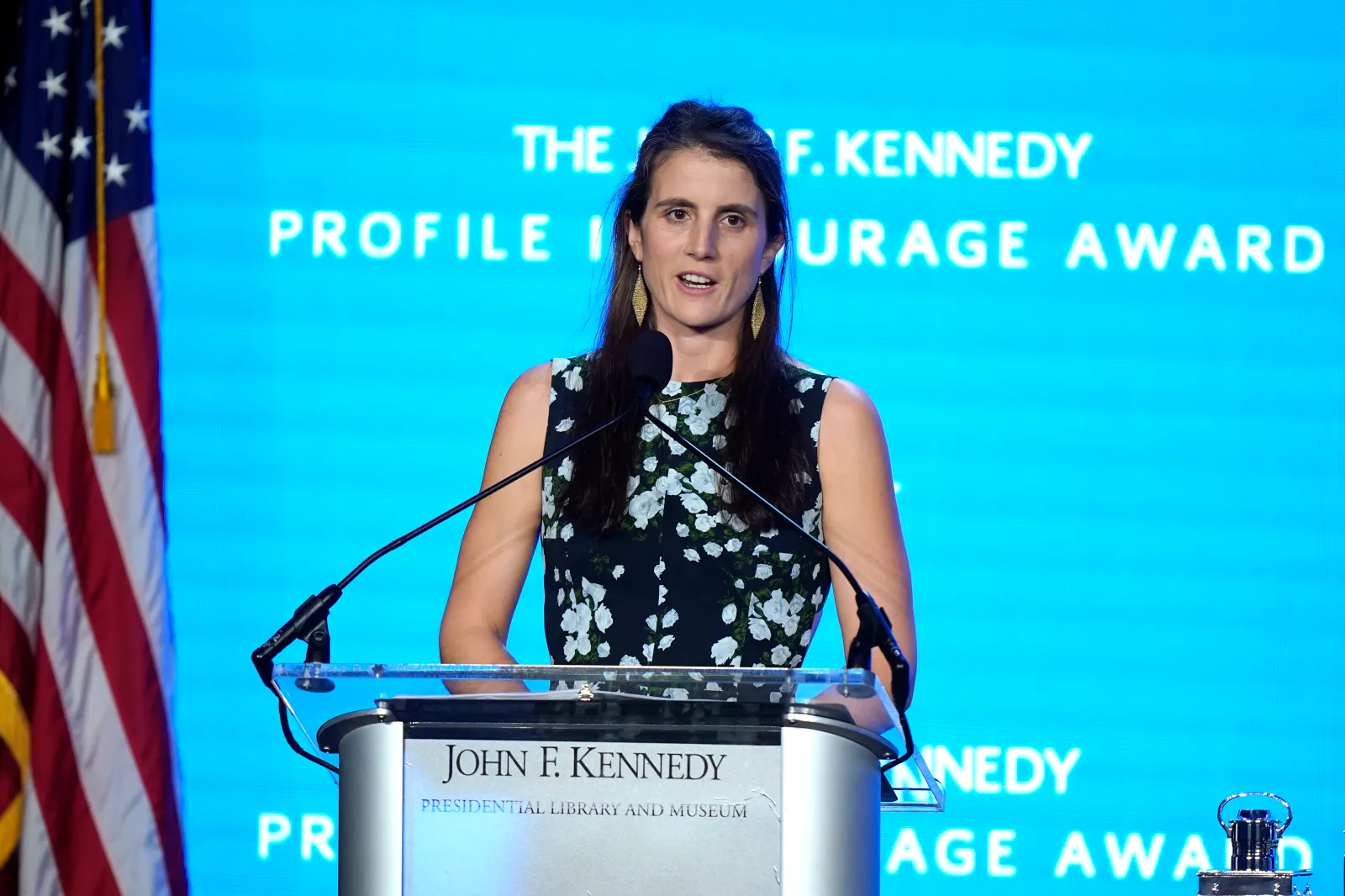
Tatiana Schlossberg, the 35-year-old granddaughter of former President John F. Kennedy, revealed Saturday in a personal essay published in The New Yorker that she has been diagnosed with terminal cancer.
The environmental journalist disclosed she was given less than a year to live following her battle with acute myeloid leukemia, a cancer discovered shortly after giving birth to her daughter in May 2024.
Newsweek reached out to a representative for Schlossberg via email on Saturday for additional comment.
Read More on News
Who Is Tatiana Schlossberg?
Schlossberg is the daughter of former U.S. Ambassador Caroline Kennedy and designer Edwin Schlossberg. She and her husband, George Moran, a urologist, have a 3-year-old son and 1-year-old daughter. Her siblings—Rose, a filmmaker, and Jack, who recently announced a congressional run—have been helping raise her children during her treatment.
The cancer diagnosis adds another chapter to the Kennedy family's long history of tragedy, which includes the assassinations of President John F. Kennedy in 1963 and former Attorney General Robert F. Kennedy in 1968.
Her essay also highlights challenges facing cancer patients amid healthcare policy changes, particularly as her cousin Robert F. Kennedy Jr. serves as Secretary of Health and Human Services.
What To Know
Schlossberg was diagnosed with acute myeloid leukemia with Inversion 3, a rare genetic mutation found in less than 2 percent of AML cases, according to her essay. Doctors discovered her elevated white blood cell count—131,000 cells per microliter compared to a normal range of 4,000 to 11,000—just hours after she delivered her daughter at NewYork-Presbyterian/Columbia University Irving Medical Center on May 25, 2024.
The diagnosis was particularly shocking given Schlossberg's exceptional fitness level. She regularly ran five to ten miles in Central Park and once swam three miles across the Hudson River to raise money for the Leukemia and Lymphoma Society. She had even skied a 50-kilometer cross-country race in Wisconsin that took seven and a half hours.
Schlossberg spent five weeks at Columbia-Presbyterian initially, during which she experienced a life-threatening postpartum hemorrhage. She wrote that her obstetrician saved her life twice: first by noticing her abnormal blood count, and again by stopping the hemorrhage with misoprostol, a drug currently under FDA review at her cousin Robert F. Kennedy Jr.'s urging.
Her treatment journey included several rounds of chemotherapy aimed at reducing blast cells in her bone marrow, followed by a bone marrow transplant from her sister. Describing the transplant process, Schlossberg wrote about her sister holding her arms straight for hours as doctors extracted stem cells. She recalled that the cells smelled like canned tomato soup, and when the transfusion began, she sneezed twelve times and threw up. After a few days, she couldn't speak or swallow due to mouth sores.
The first transplant put her in remission, but she relapsed. In January, she joined a clinical trial for CAR-T cell therapy, which uses engineered T-cells to attack cancer cells. She developed cytokine-release syndrome, leaving her unable to breathe without high-flow oxygen, with her lungs filling with fluid. Though she achieved remission again after losing about twenty pounds, it was temporary.
Schlossberg underwent a second bone marrow transplant in April from an unrelated donor—a man in his twenties from the Pacific Northwest. She relapsed again and joined another clinical trial. In late September, she was hospitalized with an Epstein-Barr virus form that damaged her kidneys, causing her to lose another ten pounds. She had to relearn how to walk, describing her leg muscles as wasted and her arms as whittled into bone.
Schlossberg reflected on the impact on her children, writing in The New Yorker that her son might remember her but will probably confuse memories with pictures and stories. As for her daughter, she wrote: "I didn't ever really get to take care of my daughter—I couldn't change her diaper or give her a bath or feed her, all because of the risk of infection after my transplants. I was gone for almost half of her first year of life."
...
What People Are Saying
Tatiana Schlossberg on her initial cancer diagnosis: "I did not—could not—believe that they were talking about me. I had swum a mile in the pool the day before, nine months pregnant. I wasn't sick. I didn't feel sick. I was actually one of the healthiest people I knew."
Schlossberg on her family: "For my whole life, I have tried to be good, to be a good student and a good sister and a good daughter, and to protect my mother and never make her upset or angry. Now I have added a new tragedy to her life, to our family's life, and there's nothing I can do to stop it."
What Happens Next?
Schlossberg continues treatment while focusing on creating memories with her children.
View 0 Comments
Submit Correction
View Editorial & AI Guidelines