...


By Mandy Taheri and Jason Lemon
0
Share
Newsweek is a Trust Project member
See more of our trusted coverage when you search.Prefer Newsweek on Googleto see more of our trusted coverage when you search.
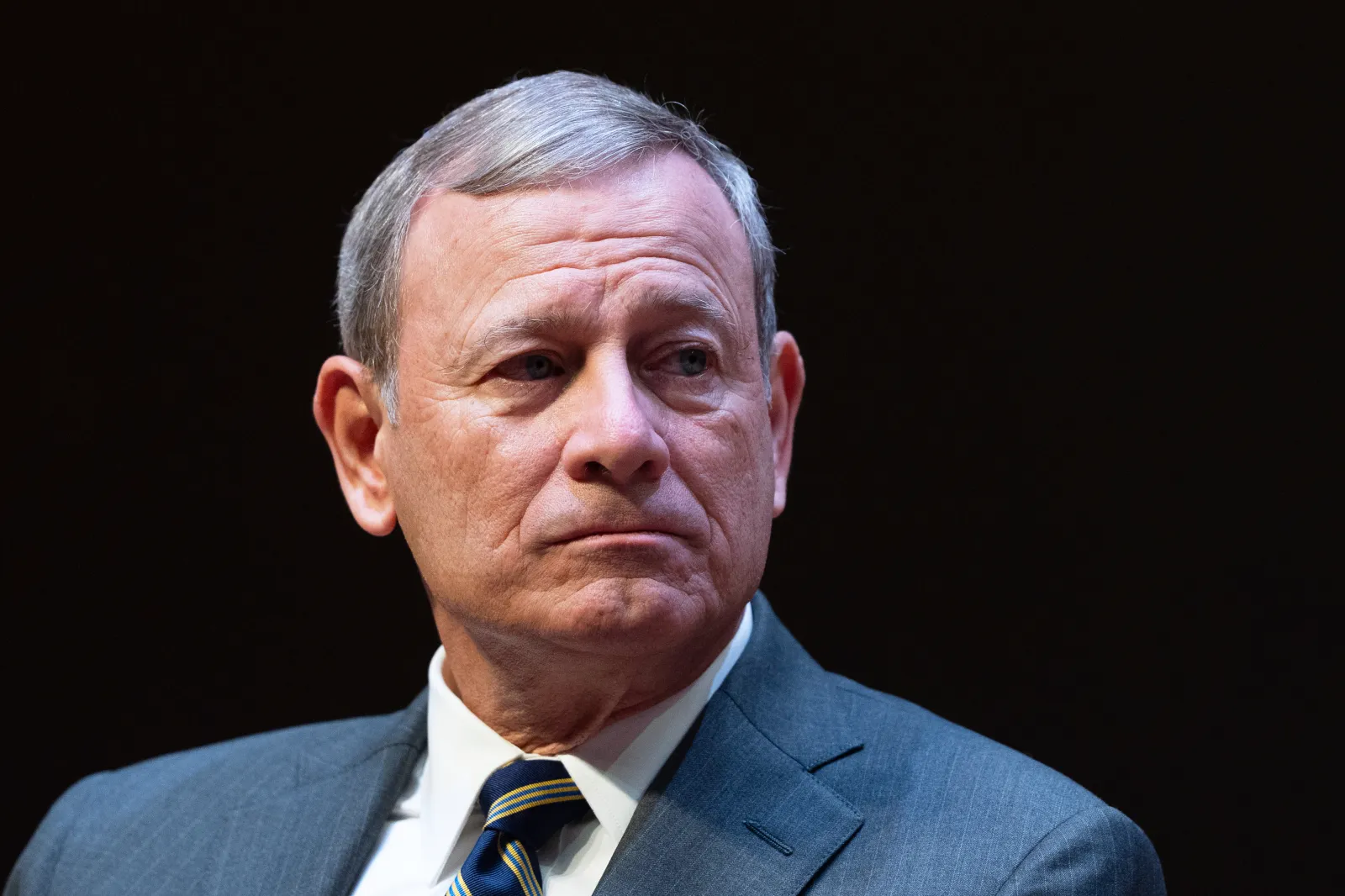
The Supreme Court Chief Justice John Roberts put a temporary hold on a lower circuit court decision in a case related to a policy requiring immigration judges to obtain permission before making any “official” speeches.
Why It Matters
The case was brought to the Supreme Court for an emergency stay by U.S. Solicitor General D. John Sauer on behalf of Daren Margolin, the acting director of the Executive Office for Immigration Review (EOIR), who is in a legal battle with the National Association of Immigration Judges (NAIJ) over a policy requiring immigration judges to receive approval before speaking publicly about immigration matters. NAIJ argues that the policy infringes on First Amendment rights.
Read More on News
The Supreme Court has issued several emergency stays related to major immigration policies this past year. The court has a 6-3 conservative majority, including three justices appointed by Trump in his first term. Roberts is the court’s circuit justice for the Fourth Circuit and handles emergency requests from that region.
What To Know
In Roberts' short Friday order, he stayed the ruling of the U.S. Court of Appeals for the Fourth Circuit, effectively freezing it, which was set to take effect on December 10. It came just hours after Sauer brought the request to the Court.
The Fourth Circuit’s June ruling revived the immigration judges’ lawsuit and sent it back to the federal trial court for fact-finding regarding whether civil service laws were functioning properly.
In the administration's request for stay, it told the Court, "This is the rare case where the court of appeals’ decision is so evidently contrary to this Court’s precedents that it calls for summary reversal on two independent grounds."
...
The request also notes that procedural history of the EOIR, writing, "Immigration judges are subject to broad ethical restrictions to avoid the appearance of bias and to preserve an image of impartiality. Among those is a requirement that immigration judges seek prior supervisory and ethics approval for written work and speeches." It notes that EOIR formalized that policy in September 2017.
What People Are Saying
Ramya Krishnan, senior staff attorney at Knight First Amendment Institute at Columbia University, who served as legal representation in the original case, told Newsweek: "The Supreme Court should deny the extraordinary relief the government seeks. There is no compelling reason to further delay resolution of the question whether immigration judges can raise their First Amendment claims directly in federal court, especially when the gag order they challenge deprives the public of their insights every day it remains in effect.”
What Happens Next
Roberts ordered that responses to the application be filed by 4 p.m. ET on December 10.
Update 12/5/25, 5:05 p.m. ET: This article was updated with additional information.
Update 12/5/25, 5:31 p.m. ET: This article was updated with comment from Ramya Krishnan and additional information.
View 0 Comments
Submit Correction
View Editorial & AI Guidelines