...


By Jason Lemon and Peter Aitken
0
Share
Newsweek is a Trust Project member
See more of our trusted coverage when you search.Prefer Newsweek on Googleto see more of our trusted coverage when you search.
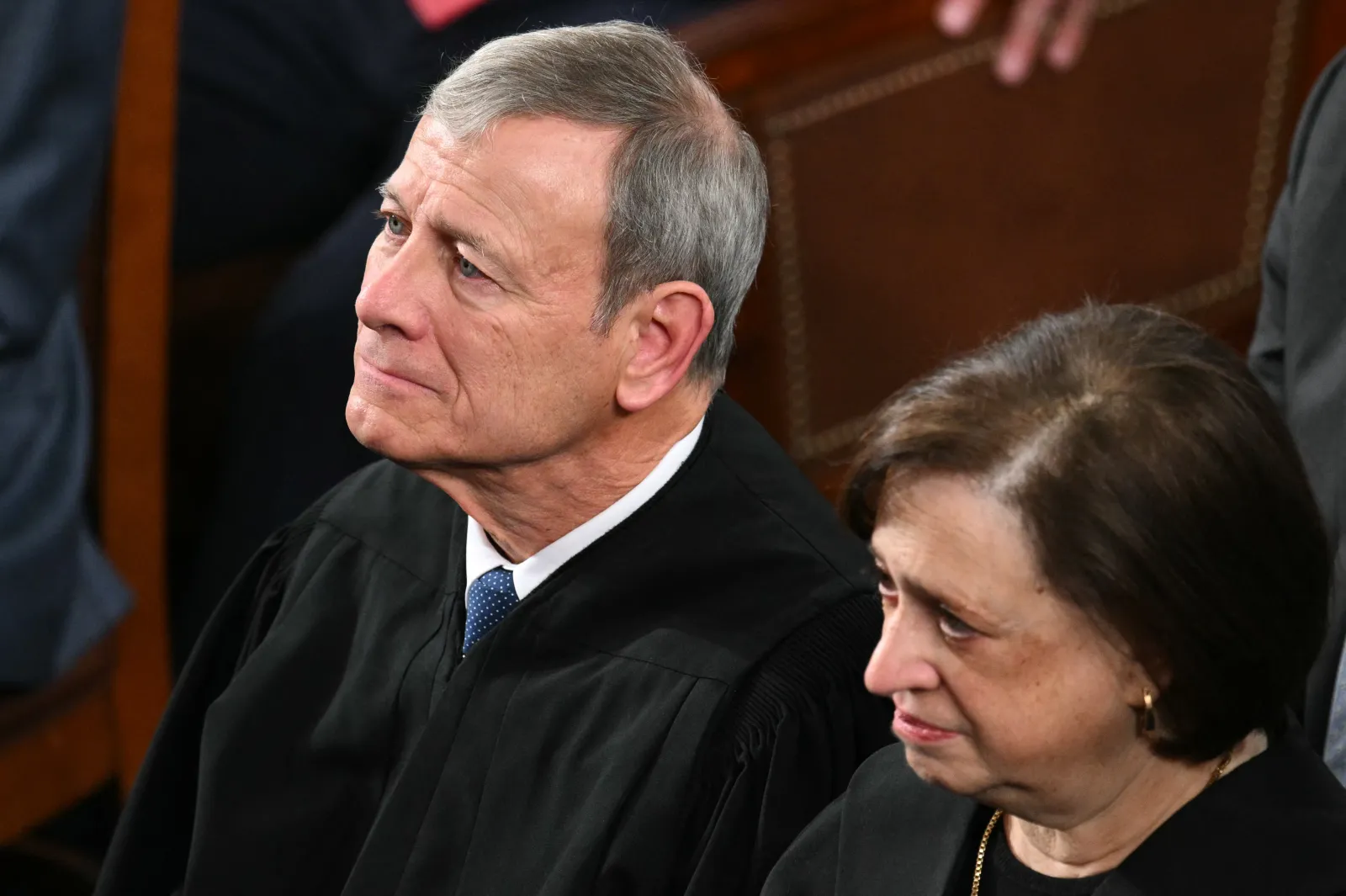
Chief Justice John Roberts warned that the Supreme Court must be cautious about overruling precedent, saying doing so for ideological reasons can damage the legal system.
"If you do it cavalierly, overrule precedent just because you think it’s wrong, then the whole system begins to suffer," Roberts, who was appointed by former President George W. Bush, said at the Pennsylvania event.
His remarks come as the court faces intense public scrutiny and historically low approval following a series of high-profile rulings that overturned long-standing precedent.
The warning underscores growing concerns about how future decisions—on issues including abortion rights, affirmative action and election law—could affect public trust in the court and the stability of U.S. law. The court’s conservative justices have faced pressure and direct criticism from President Donald Trump and his GOP allies for ruling against the administration on tariffs, and speculation that it will do so on "birthright citizenship" as well.
...
Chief Justice Roberts on What People Get Wrong about the Supreme Court
Roberts said that "at a very basic level, people think we're making policy decisions," but said it's inaccurate.
"I think they view us as truly political actors, which I don’t think is an accurate understanding of what we do. I would say that’s the main difficulty."
Roberts also pushed back on the idea that the Supreme Court justices are "political actors."
"I think at a very basic level, people think we’re making policy decisions, [that] we’re saying we think this is what things should be as opposed to this is what the law provides," he said.
"We’re not simply part of the political process, and there’s a reason for that, and I’m not sure people grasp that as much as is appropriate," Roberts said.
"I think considered criticism is a very good thing," he added. "You hope it’s intelligent criticism, but it doesn’t have to be. It’s a free country and I certainly don’t object to it, and I don’t think my colleagues do either."
Roberts noted that often decisions are "unpopular," but that those rulings are "based on our best effort to figure out what the Constitution means and how it applies."
When Has Trump Criticized the Supreme Court?
After the Supreme Court struck down a major pillar of Donald Trump’s second-term trade policy—his sweeping global tariffs—he denounced the decision as "deeply disappointing," said he was "ashamed" of certain justices, and suggested the Court had been "swayed by foreign interests."
In the same burst of criticism, he took aim at members of the conservative bloc—including appointees Neil Gorsuch and Amy Coney Barrett—calling them an "embarrassment to their families," brushing off whether the justices would attend his State of the Union, and vowing to keep pursuing new tariffs through other legal avenues.
In the run-up to the tariff showdown, Donald Trump also used social media to warn that a loss at the Supreme Court would bring "chaos" and leave the country "screwed," framing the justices’ review as a high-stakes threat to national security and his governing program.
After the Court ruled against him, he continued by praising the dissenters while disparaging the majority—keeping the focus on individual justices and motives—reinforcing a second-term pattern of responding to Supreme Court resistance with direct public attacks and insinuations of improper influence.
As the Supreme Court weighed litigation tied to his push to restrict birthright citizenship, Donald Trump publicly criticized the conservative justices he had nominated, complaining they were asking "real bad questions" and predicting they would rule against his administration.
He amplified that pressure while the case was still pending by accusing those same justices of having "totally misrepresented who they were," casting the looming ruling in explicitly personal and political terms rather than treating it as an ordinary judicial dispute.
Supreme Court's Shadow Docket Leak
The Trump administration has increasingly used the High Court’s emergency docket, referred to as the "shadow docket" by critics for its lack of transparency, to seek quick intervention from the justices in cases still playing out in lower courts. The High Court sided with the Trump administration in about two dozen decisions last year, often lifting orders issued by lower-court judges who found the administration's policies likely illegal. Such shadow docket rulings come without opinions, meaning judges are unsure of the legal arguments that swayed the justices.
The New York Times reported that recently obtained internal Supreme Court memos have shed new light on how the court’s "shadow docket" has been used in Roberts' court in the past.
The documents show that, in an exchange over five days in 2016, the justices voted 5–4 to block former President Barack Obama’s Clean Power Plan before lower courts had ruled on its legality, and issued only a brief, unsigned order.
"Absent a stay, the Clean Power Plan will cause (and is causing) substantial and irreversible reordering of the domestic power sector before this court has an opportunity to review its legality," Roberts wrote in one of the memos published by the publication in April.
Update 5/8/26, 6:36 a.m. ET: Further details about recent Supreme Court rulings and use of the emergency docket were added.
View 0 Comments
Submit Correction
View Editorial & AI Guidelines