
...

By Robert Alexander
Senior Crime & Court Reporter
0
Share
Newsweek is a Trust Project member
See more of our trusted coverage when you search.Prefer Newsweek on Googleto see more of our trusted coverage when you search.
A federal judge has denied President Donald Trump's attempt to halt a lawsuit brought by Democratic California Governor Gavin Newsom, effectively allowing the case to proceed as scheduled on Monday, August 11. The ruling sends a signal that the court potentially views Newsom's claims—centered on the alleged unlawful federalization of the California National Guard in 2025—as legally viable.
Trump's legal team had argued that the claims under the Posse Comitatus Act "fail as a matter of law," but the judge rejected that argument, allowing the trial to move forward.
Why It Matters
The case could shape up to be a significant constitutional test of presidential authority.
Read More on U.S.
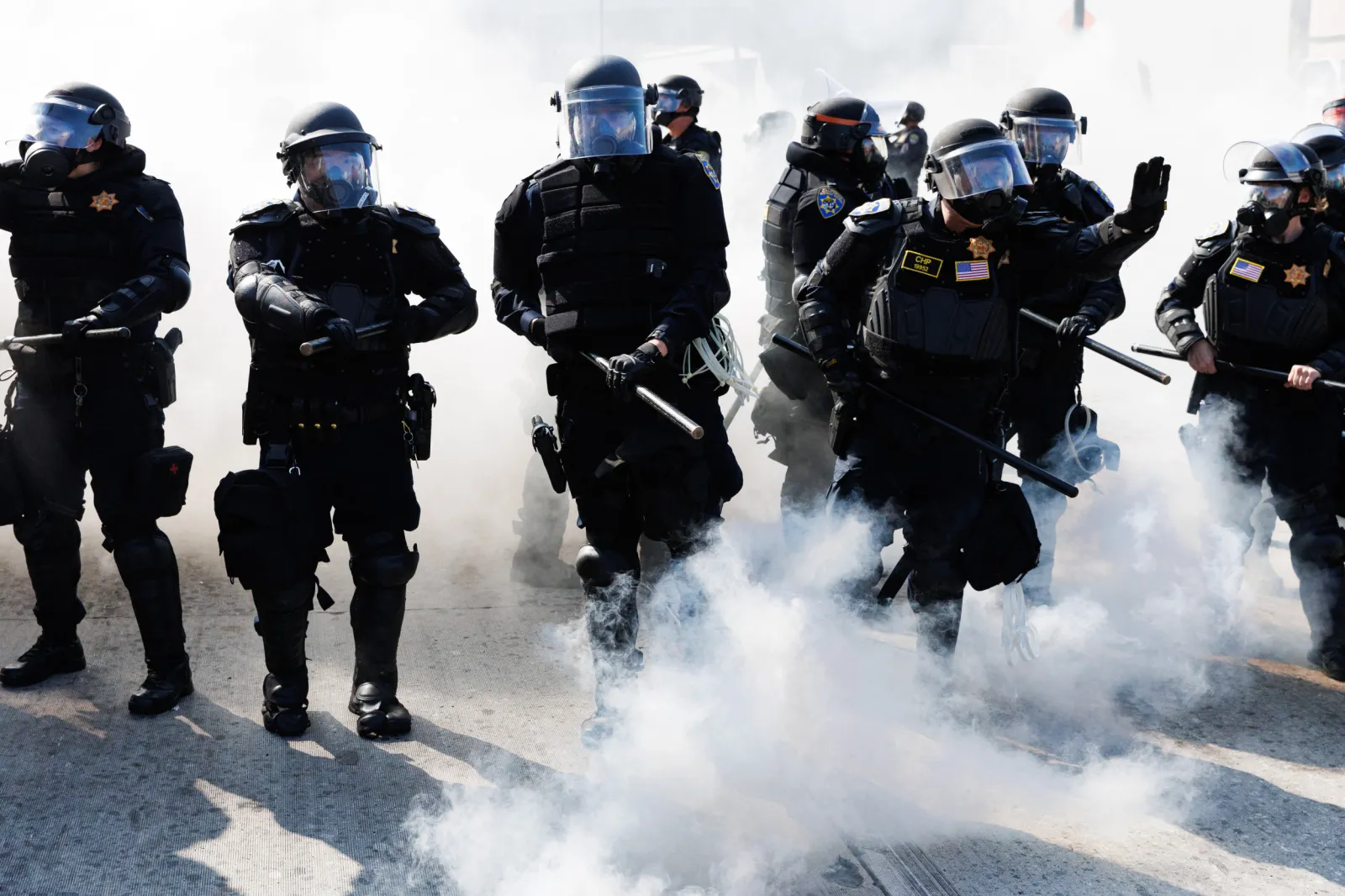
At issue is Trump's decision in June 2025 to take control of California's National Guard and send troops to Los Angeles following protests that sprung up following federal immigration raids. Newsom said the move was unlawful, violated the Posse Comitatus Act, and infringed on California's sovereign control of its National Guard. Trump's legal team argues the deployment was justified under the Insurrection Act.
The outcome could set an important precedent for how and when a president may use military forces domestically, especially in politically charged situations. The case is being closely watched for its implications on civil-military relations.
...
What to Know
Why Was the National Guard Deployed?
In early June 2025, following unrest sparked by immigration enforcement operations, Trump ordered the federalization of the California National Guard, citing what he called a breakdown in law and order. The administration said the deployment was necessary to protect federal property and maintain public safety, invoking the Insurrection Act. Newsom, however, insisted the state had the situation under control and accused the administration of overreach.
Legal Framework: Two Laws in Conflict
The Posse Comitatus Act, enacted in 1878, prohibits the use of the U.S. military for civilian law enforcement unless expressly authorized by Congress. It is designed to preserve civilian control and prevent the use of military force for domestic political purposes.
The Insurrection Act, originally passed in 1807, serves as an exception. It allows the president to deploy the military in limited situations, such as to suppress rebellion, enforce federal authority, or address serious obstruction of the law when states cannot or will not act.
Filed shortly after the deployment, Newsom v. Trump challenges the legality of the president's decision to take control of the California National Guard.
California argues that the criteria under the Insurrection Act were not met, saying that there was no rebellion, no state request for help and no breakdown in governance. Therefore, they say Trump's order amounts to an unlawful use of the military and a violation of both constitutional and statutory protections.
...
The Stakes
Though the case is being heard as a bench trial—which means without a jury—the implications could be broad.
If the court rules in Newsom's favor, it could reaffirm limits on when the federal government can intervene in state-managed military affairs and reinforce protections against domestic use of force. A ruling for Trump could expand the scope of presidential authority in crisis situations, potentially weakening restrictions intended by the Posse Comitatus Act.
What People Are Saying
Democratic California Governor Gavin Newsom, said June 9, 2025: "Donald Trump is creating fear and terror by failing to adhere to the U.S. Constitution and overstepping his authority. This is a manufactured crisis to allow him to take over a state militia, damaging the very foundation of our republic. Every governor, red or blue, should reject this outrageous overreach. This is beyond incompetence—this is him intentionally causing chaos, terrorizing communities, and endangering the principles of our great democracy. It is an unmistakable step toward authoritarianism. We will not let this stand." gov.ca.gov
Democratic California Attorney General Rob Bonta, said at the same meeting: "Let me be clear: There is no invasion. There is no rebellion. The President is trying to manufacture chaos and crisis on the ground for his own political ends. Federalizing the California National Guard is an abuse of the President's authority under the law—and not one we take lightly. We're asking a court to put a stop to the unlawful, unprecedented order." gov.ca.gov
U.S. District Judge Charles R. Breyer, said in his June 12 order: "His [Trump's] actions were illegal—both exceeding the scope of his statutory authority and violating the Tenth Amendment to the United States Constitution. He must therefore return control of the California National Guard to the Governor of the State of California forthwith."
Adding: "We're talking about the president exercising his authority. And the president is, of course, limited in his authority. That's the difference between a constitutional government and King George."
What Happens Next
The trial is scheduled to begin Monday, August 11, with evidence presented first and legal arguments expected to follow the next day. Both parties have been ordered to submit updated witness lists and exhibits in preparation. The case will be heard in San Francisco before Breyer.
Whatever the outcome, the case is expected to influence future interpretations of federal power in domestic security matters—particularly when political conflict intersects with military authority on American soil.
View 0 Comments
Submit Correction
View Editorial & AI Guidelines