
...

By Jenni Fink
Senior Editor
0
Share
Newsweek is a Trust Project member
See more of our trusted coverage when you search.Prefer Newsweek on Googleto see more of our trusted coverage when you search.
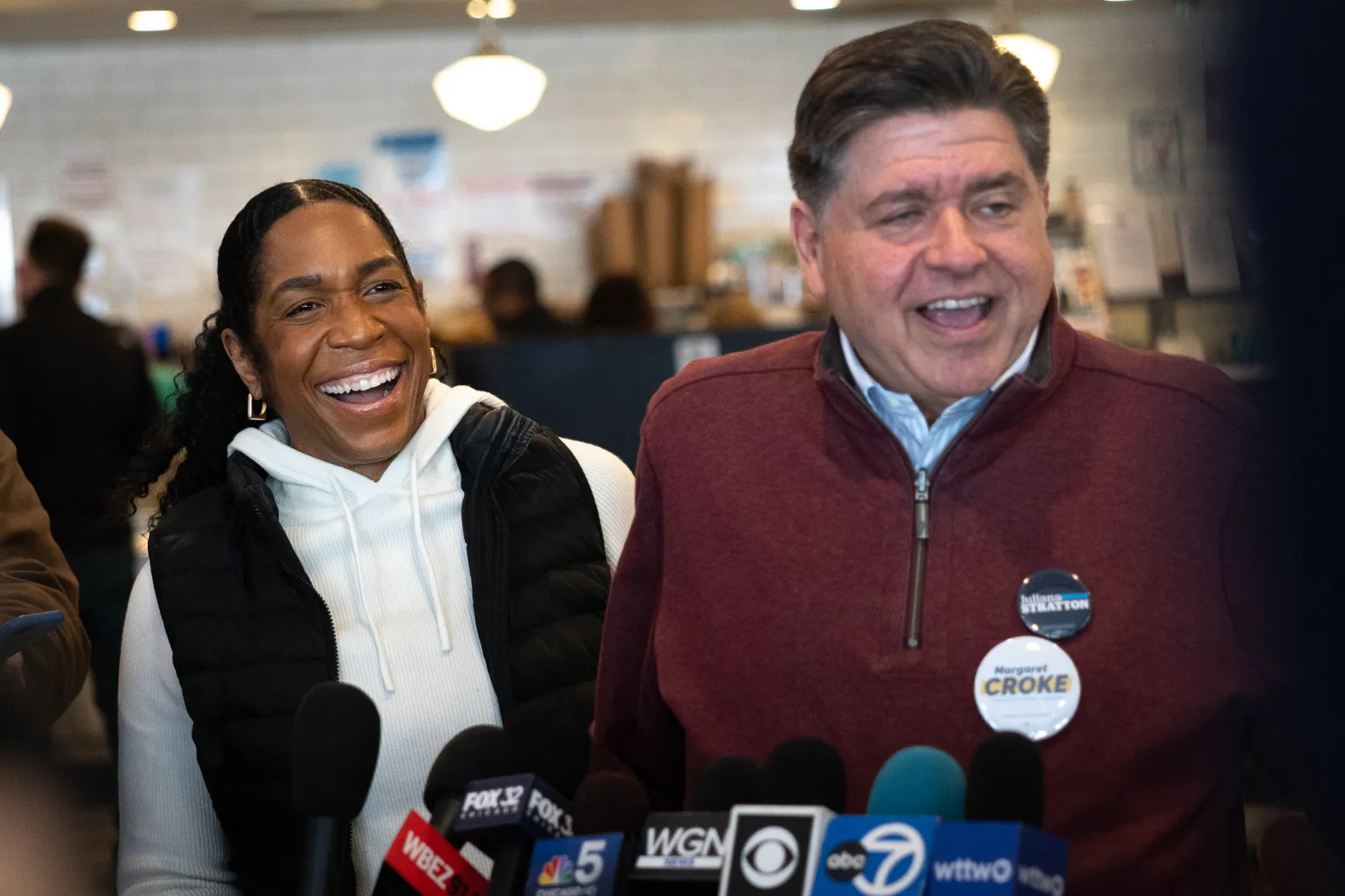
Lieutenant Governor Juliana Stratton’s victory in the Illinois Democratic primary for Senate is good news for Governor JB Pritzker as he seeks a historic third term.
The race to replace retiring Senator Dick Durbin is a test of Pritzker’s sway over a divided Democratic Party. By backing his lieutenant governor early, pouring millions into aligned super PACs, and inserting himself directly into the contest, Pritzker tied his own political standing to Stratton’s fortunes. With Stratton emerging victorious, voters have effectively endorsed the Pritzker way of governing, indicating that he could also be headed for a victory in November.
Pritzker, who easily won his initial election and reelection, is hoping to once again be voted back into office in November and become the first governor in Illinois to serve three terms.
Read More on Politics
...
A High-Stakes Proxy Battle for the Governor
From the outset, the primary was never just about who would succeed Durbin. It was a referendum on Pritzker’s leadership and ambitions, as the governor had been discussed as a potential presidential candidate.
Stratton’s campaign leaned heavily on her role as a governing partner in an administration that Democrats broadly view as successful, repeatedly arguing that Illinois under Pritzker offered a working model for what Democrats could deliver nationally.
Stratton framed herself not as a Washington outsider making abstract promises, but as a sitting lieutenant governor who helped enact policies voters could already see in their paychecks and household budgets. She frequently pointed to Illinois’ decision to raise the minimum wage, expand health care protections and lower prescription drug costs as proof that Democrats could still translate progressive ideas into concrete outcomes.
That governing record became a central contrast with her primary opponents, both longtime members of Congress. Stratton argued that while Washington Democrats had often stalled on affordability issues, Illinois under Pritzker had moved aggressively on “kitchen table” concerns, including wages, child care and consumer protections.
The campaign also tied Pritzker’s high-profile confrontations with the Trump administration to Stratton’s own pitch as a fighter, particularly on immigration and federal overreach. Stratton emphasized that she and Pritzker had governed through years of conflict with Washington, presenting Illinois as a state that resisted federal pressure while continuing to expand rights and social programs. That message—governing competence paired with confrontation—helped Stratton align herself with Pritzker’s brand of Democratic leadership, reinforcing the idea that her candidacy was an extension of an administration that Democratic primary voters already trusted.
By endorsing Stratton almost immediately after Durbin announced his retirement, Pritzker set the terms of the race. His decision placed him in direct opposition to well-funded and well-connected House members, particularly Representative Raja Krishnamoorthi, who had built a massive fundraising advantage and attracted significant outside spending from pro-crypto groups.
Pritzker not only endorsed Stratton but also directed millions of dollars into super PACs supporting her candidacy, making him one of the most influential actors shaping the primary electorate’s choices.
That level of involvement drew sharp criticism, including from prominent members of the Congressional Black Caucus, who accused Pritzker of attempting to “tip the scales” in favor of his preferred candidate.
"A sitting governor shouldn’t be heavy-handing the race. Quite frankly, his behavior in this race won’t soon be forgotten by any of us," Representative Yvette Clarke, chair of the Congressional Black Caucus, said in a statement.
Stratton’s victory allows Pritzker to rebut those criticisms with results. In practical terms, it shows that the governor’s political infrastructure, from fundraising networks to turnout operations, remains dominant in Illinois Democratic politics. If Stratton were to win in the general election, she'd become the second Black woman elected to the Senate in Illinois.
Pritzker Could Get an Ally in the Senate
Beyond raw political power, Stratton’s win is also good news for Pritzker because it means he could have a close ideological ally in the Senate if she wins the general election.
Throughout the campaign, Stratton positioned herself as a progressive partner to the governor, particularly on immigration and opposition to the Trump administration’s enforcement policies. Stratton took one of the strongest stances in the field against U.S. Immigration and Customs Enforcement, aligning closely with Pritzker’s own confrontational posture toward federal immigration crackdowns affecting Chicago and other Illinois communities.
With Stratton in the Senate, Pritzker gains a trusted partner in Washington who is likely to reinforce his policy priorities rather than complicate them. That alignment matters as Illinois navigates federal-state tensions on immigration, funding and regulatory authority.
The primary exposed deep fissures within Illinois Democrats, from disagreements over immigration enforcement to concerns about outside money and generational change. These divisions mirror broader tensions inside the national party.
Stratton’s win does not erase those divisions. But it does put Pritzker in a stronger position to manage them. Rather than emerging from the primary weakened by an embarrassing loss or a negative referendum on his administration, he now enters the general election season with his preferred candidate at the top of the ticket and his authority reinforced.
What Comes Next
With Stratton now the Democratic nominee and heavily favored in a state where Republicans have struggled statewide for more than a decade, attention will quickly turn to the general election and to Pritzker’s next moves.
For now, though, the immediate takeaway is clear: Stratton’s primary victory is a win not only for her campaign, but for the governor who staked his reputation on her success.
In a polarized era, the center is dismissed as bland. At Newsweek, ours is different: The Courageous Center—it's not "both sides," it's sharp, challenging and alive with ideas. We follow facts, not factions. If that sounds like the kind of journalism you want to see thrive, we need you.
When you become a Newsweek Member, you support a mission to keep the center strong and vibrant. Members enjoy: Ad-free browsing, exclusive content and editor conversations. Help keep the center courageous. Join today.


View 0 Comments
Submit Correction
View Editorial & AI Guidelines