...

By Sam Stevenson
Associate News Editor
0
Share
Newsweek is a Trust Project member
See more of our trusted coverage when you search.Prefer Newsweek on Googleto see more of our trusted coverage when you search.
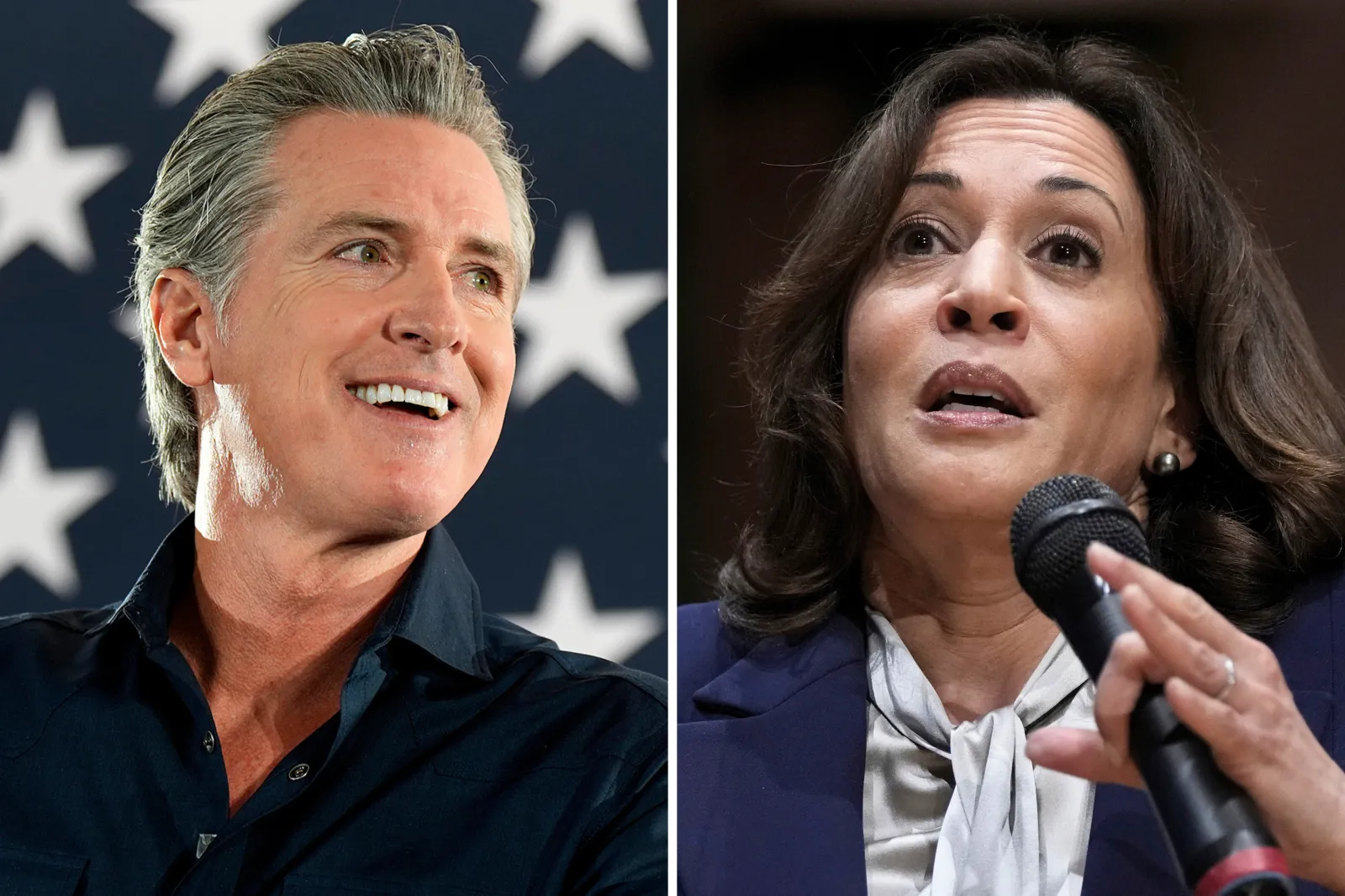
Former Vice President Kamala Harris has edged ahead of California Governor Gavin Newsom in a new poll of likely Democratic voters, marking a notable shift in early thinking about the party’s 2028 presidential field.
Why It Matters
Early primary polling offers a snapshot of how Democratic voters are reacting to shifting national politics and party leadership debates. Movement at the top signals changing perceptions of electability and leadership strength, though the Democratic primary, let alone the presidential election, remains far away.
Read More on Politics
...
What To Know
A new March 2026 survey from Echelon Insights shows Harris narrowly leading Newsom among likely Democratic primary voters, reversing the dynamic seen just one month earlier.
The latest Echelon Insights Verified Voter Omnibus was conducted online between March 12 and March 16 among 1,033 voters in the likely electorate nationwide. The poll carries a margin of error of plus or minus 3.4 percentage points.
Asked who they would support if the 2028 Democratic presidential primary were held today, 21 percent of respondents chose Harris, while 19 percent backed Newsom.
That represents a 3‑point gain for Harris compared with February and a 5‑point drop for Newsom over the same period.
Representative Alexandria Ocasio‑Cortez from New York placed third with 11 percent support, followed by former Transportation Secretary Pete Buttigieg at 9 percent.
Pennsylvania Governor Josh Shapiro drew 5 percent, while Senators Cory Booker and Mark Kelly each received 4 percent.
Some 12 percent of respondents said they were unsure.
The February 2026 Echelon Omnibus Survey painted a different picture.
That poll, fielded from February 19 to February 23 among 1,002 registered voters in the likely electorate, had Newsom leading with 24 percent support.
Harris trailed at 18 percent, with Ocasio‑Cortez at 9 percent and Buttigieg at 8 percent.
The margin of error for the February survey was plus or minus 3.5 percentage points.
Taken together, the two polls suggest momentum has shifted.
Harris has consolidated modest gains, while Newsom has seen support soften, enough to flip their positions at the top of the field.
Beyond the leading pair, several figures appear to be slowly raising their national profiles.
Senator Mark Kelly, an Arizona Democrat, remains at 4 percent in both polls, but his visibility has increased in recent months.
Kelly has drawn attention for a high‑profile clash with President Donald Trump and a related legal dispute over comments he made about service members’ obligations to follow lawful orders, an issue that has kept him in national headlines and may be contributing to greater voter awareness.
Support across the rest of the field remains fragmented. No candidate outside the top four currently breaks into double digits.
What People Are Saying
Newsom has argued that Democrats have paid an electoral price for timidity, telling The Atlantic earlier this year that “given the choice, the American people always support strong and wrong versus weak and right.”
Harris told Democratic officials recently, per Axios: “Both parties have failed to hold the public’s trust.”
What Happens Next
Attention is likely to remain focused on how national Democrats position themselves ahead of the 2026 midterm elections, which are expected to shape party leadership debates and voter priorities.
View 0 Comments
Submit Correction
View Editorial & AI Guidelines