10
Loading video...

By Hannah Parry
Associate News Editor
0
Share
Newsweek is a Trust Project member
See more of our trusted coverage when you search.Prefer Newsweek on Googleto see more of our trusted coverage when you search.
The Kennedy Center board has proposed a new way to put President Donald Trump’s name back on the building — but the move is set to face renewed scrutiny in federal court.
The board voted Thursday to inscribe beneath the Kennedy Center’s main signage the words “Restored and Renovated by President Donald J. Trump,” while also approving a plan to close the center’s main building for two years for renovations. The board is directing officials to pursue “all legal means” to honor Trump and is considering naming the grounds “President Donald J. Trump Plaza.”
The maneuver comes only two months after U.S. District Judge Christopher Cooper ordered Trump’s name removed from the Kennedy Center, ruling that the board lacked authority to change the name of an institution Congress established as a memorial to President John F. Kennedy.
Read More on News
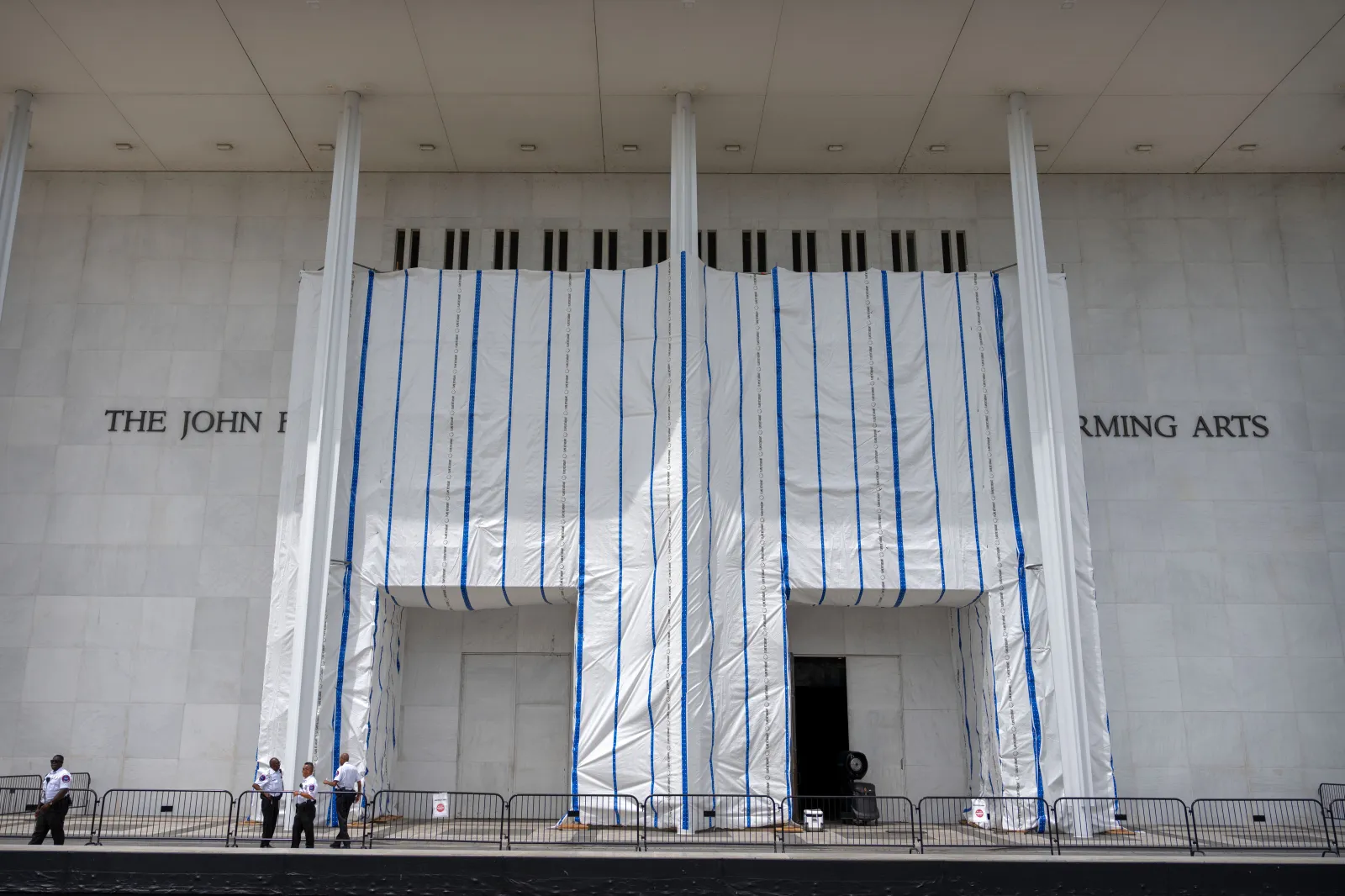
The Kennedy Center removed Trump’s name from the facade in June, after workers erected scaffolding and tarps around the building. The board’s latest action appears designed to avoid repeating the precise name change that Cooper rejected while nevertheless putting Trump’s name prominently back on the building.
But opponents argue the distinction between renaming the Kennedy Center and memorializing Trump on its facade may not survive scrutiny under the same federal law that produced Cooper’s earlier ruling.
Norm Eisen, the former White House ethics lawyer who represents Beatty alongside Nathaniel Zelinsky, sharply criticized Thursday’s vote. “A federal judge already rejected the board’s unlawful attempt to rename the Kennedy Center, and told Donald Trump’s handpicked board that its last closure vote was ill-informed and preordained,” Eisen said.
“Today’s vote is more of the same, and a show of blatant disrespect to the courts.”
Eisen added in another statement that “the court already ruled against the board when it bowed to Trump’s demands. Now, the defendants must answer for their actions — again — in court.”
Representative Joyce Beatty, a Democrat who sits on the Kennedy Center board through her congressional position, also condemned the vote.
“This latest development is a transparent effort to circumvent the court’s ruling, and flies in the face of the statutes that Congress passed,” said Beatty, who brought the initial lawsuit challenging Trump's name on the Kennedy Center. “I will continue to fight for this treasured national monument.”
...
What Is The 'Loophole?'
The board is no longer attempting to call the institution the “Trump-Kennedy Center.”
Instead, the resolution would leave the Kennedy Center’s official name intact while adding a separate inscription crediting Trump for its restoration and renovation.
That distinction could be central to the legal battle.
Judge Cooper wrote in May that the Kennedy Center’s governing statute “makes crystal clear that the Center is to be named for President Kennedy” and that Congress, rather than the board, has the authority to change that name. His order required Trump’s name to be removed from the Center's physical and digital branding.
The board's latest resolution, however, goes beyond the wording on the facade. It also proposes honoring Trump through other physical spaces, including a possible President Donald J. Trump Plaza.
Democracy Defenders Action, which represents Beatty in the litigation, argues that the statute expressly restricts additional memorials or plaques in the Center's public areas.
Lawyer Harry Litman warned that the Kennedy Center Board, who he described as being "composed of Trump acolytes" was "inviting a showdown with Judge Cooper," with the latest proposal.
"They vote to add to the building, inscribed, 'restored and renovated by Pres Donald J. Trump' below JFK. See you in court!" he warned.
Related Story

Sorry America: Donald Trump Is Too Funny To Be a Fascist | Opinion
Closure Vote Could Create a Second Legal Fight
The name isn't the only issue headed back before Judge Cooper. The board also voted to close the Kennedy Center's main building for two years while a roughly $250 million renovation takes place. The newer Reach building would remain open for limited programming.
The judge had previously blocked the closure, saying the board's initial decision was based on a “one-sided presentation of information” and that the trustees had neglected their broader statutory obligations to the institution. He characterized the original decision as “ill-informed and seemingly preordained.”
The judge did not say the Kennedy Center could never close for construction. Rather, he left open the possibility that the board could reach that conclusion after conducting a genuinely independent assessment of its competing obligations. Reuters reported after the May ruling that Judge Cooper specifically said the board could close the Center if it reached that decision anew after independently balancing those obligations.
The board says it has done precisely that: it considered alternatives and received outside analysis supporting a full closure.
But Beatty's legal team is likely to ask whether the process was sufficiently independent — particularly because Trump announced the two-year closure months before Thursday's supposedly fresh decision.
Trump announced plans to close the center for a two-year renovation project in February, following a wave of cancellations by musicians and performers after he added his name to the building and ousted previous leadership.
“This important decision, based on input from many Highly Respected Experts, will take a tired, broken, and dilapidated Center, one that has been in bad condition, both financially and structurally for many years, and turn it into a World Class Bastion of Arts, Music, and Entertainment,” Trump wrote in a Truth Social post.
Statute May Complicate the Board's Workaround
There is another potential problem for the board's strategy.
Democracy Defenders Action argues that the Kennedy Center's governing statute expressly prohibits additional “memorials or plaques in the nature of memorials” in public areas, subject to narrow exceptions. The organization says that provision could independently undermine Thursday's proposed inscription and the proposed Trump Plaza.
That means the board may have created a legal argument that is actually broader than the original naming dispute.
If the court concludes that the proposed inscription is effectively a new memorial to Trump, the board could face the question of whether it has violated not merely the court's prior order but the underlying statute itself.
Who Is On The Kennedy Center Board?
Trump has reshaped the Kennedy Center's board since taking control of the institution in 2025, replacing or removing trustees and installing a group of allies and administration officials.
The board includes :
- Trump himself as chairman,
- White House Chief of Staff Susie Wiles,
- adviser Dan Scavino,
- Commerce Secretary Howard Lutnick's wife Allison Lutnick,
- and other prominent Trump supporters, alongside members who serve by virtue of their government positions.
- Rep. Beatty holds an ex officio seat on the board and has become one of the most prominent critics of Trump's efforts to reshape the institution. Court records in Beatty's lawsuit list dozens of trustees as defendants, including Trump, Wiles, Scavino, Lutnick and other political allies.
The board's composition has become central to the legal dispute because Beatty has argued that trustees who are politically aligned with Trump have failed to exercise the independent judgment required of them in making decisions about the Kennedy Center's name, operations and future.
Will the Kennedy Center Close Again?
The Kennedy Center board voted Thursday to close the main building for roughly two years while a $250 million renovation is carried out, reversing the effect of a federal judge's earlier order that blocked the original closure plan.
The board says the shutdown is necessary to carry out major structural and mechanical work safely and efficiently. A renovation plan presented to trustees considered both a full closure and a phased approach, with outside consultants concluding that keeping the building operating during construction would be substantially more expensive. The plan calls for the main building to reopen in summer 2028, while the Reach, a newer part of the Kennedy Center campus, would remain open for limited programming.
But the decision still faces scrutiny from U.S. District Judge Cooper, who previously blocked the closure after finding that the board's original decision-making process was “ill-informed and seemingly preordained.” The question now is not simply whether the Center needs repairs, but whether the board genuinely reconsidered the consequences of closing the nation's premier performing-arts memorial after the judge ordered it to do so.
Will Trump's Name Be Added to the Kennedy Center?
Judge Cooper ruled in May that the board did not have the authority to rename the Kennedy Center after Trump and ordered references to his name removed. The Center complied in June, removing Trump's name from its facade and official materials.
The board's latest vote would add his name to the building as part of a statement that said, “Restored and Renovated by President Donald J. Trump” beneath the Kennedy Center's existing name. The board also directed officials to pursue “all legal means” to recognize Trump for what it describes as his contributions to the Center's survival.
Once again, the move will now be subject to Judge Cooper's scrutiny.
Which Parts of the Kennedy Center Will Be Renamed?
The board has not voted to formally rename the Kennedy Center itself as the Trump-Kennedy Center. Instead, Thursday's resolution calls for Trump's name to be added to the building as a restoration dedication and proposes naming the grounds “President Donald J. Trump Plaza.”
That distinction is important because Judge Cooper previously ruled that Congress — not the Kennedy Center board — has the authority to change the institution's statutory name. The board's new strategy appears to be to preserve the official John F. Kennedy Center for the Performing Arts name while creating separate spaces and inscriptions honoring Trump.
What Is the Kennedy Center Chuck Redd Lawsuit?
The Chuck Redd case is a separate lawsuit that illustrates how the Kennedy Center's attempt to add Trump's name affected artists as well as the institution's governance.
Redd, a jazz musician who had performed an annual Christmas Eve “Jazz Jam” at the Kennedy Center for years, canceled his 2025 performance after Trump's name was added to the building. The Kennedy Center subsequently sued Redd for breach of contract and sought damages, after then-Kennedy Center president Richard Grenell had threatened him with a $1 million claim. Redd's lawyers argued that he had never signed a contract requiring him to perform and that the lawsuit was an attempt to punish him for protesting the renaming.
A D.C. Superior Court judge dismissed the Kennedy Center's lawsuit in June under the District's Anti-SLAPP law, which is designed to protect speech and other activity on matters of public interest. The court found that the Center had failed to establish a valid breach-of-contract claim.
The legal fallout continued this week. On August 11, the judge ordered the Kennedy Center to pay Redd $252,479.70 in legal fees and costs after his successful defense. The Center has indicated that it intends to appeal.
The Redd case is separate from Beatty's federal lawsuit over the Kennedy Center's name and closure, but it has become another legal consequence of the Trump-led transformation of the institution — and another example of the disputes that followed the original decision to put Trump's name on the building.
What Happens Next
For now, Thursday's vote does not mean Trump's name can legally be placed back on the Kennedy Center.
The Kennedy Center has until next week to share its plan with Judge Cooper, who is expected to assess whether the board's new approach complies with his earlier ruling and the Kennedy Center's governing statute.
“The board will be expected to prepare itself with sufficient information to make a considered, independent decision,” the judge wrote in his May order. He added that it must take into account "its obligation to both maintain and operate a premiere arts venue and its solemn duty to memorialize a fallen president.”
Contact Newsweek editors on this story: Jason Lemon and Gray R. Thomas
View 0 Comments
Submit Correction
View Editorial & AI Guidelines