...

By Jenna Sundel
News Reporter
0
Share
Newsweek is a Trust Project member
See more of our trusted coverage when you search.Prefer Newsweek on Googleto see more of our trusted coverage when you search.
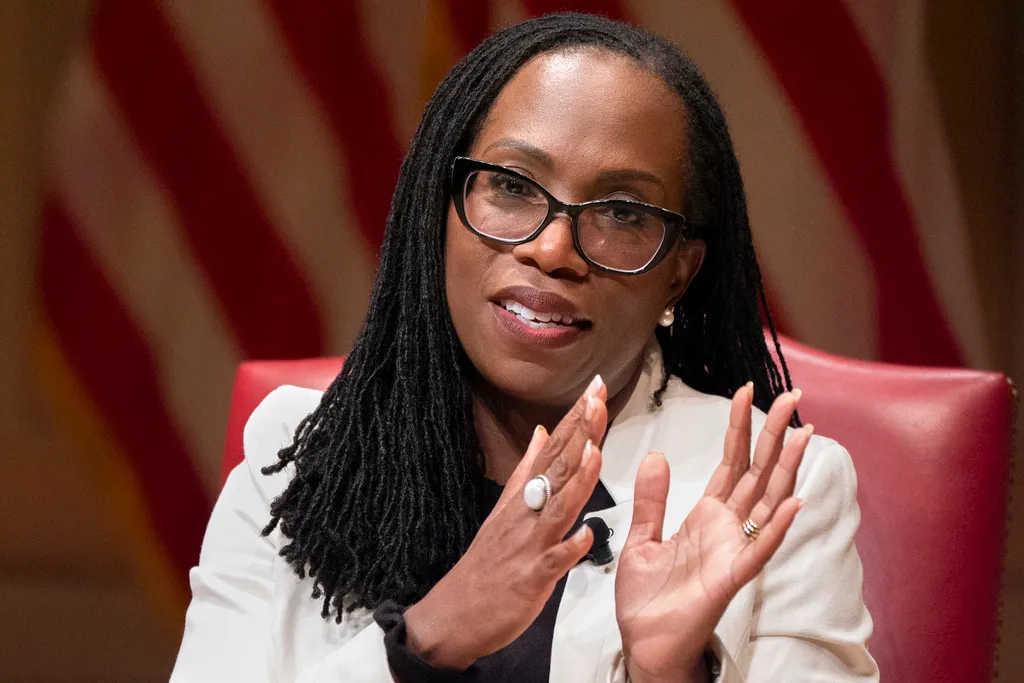
Supreme Court Justice Ketanji Brown Jackson dissented from the Court's majority on three decisions, one of which she called “intolerable.”
Why It Matters
The Court denied a petition by an inmate serving a 70-year sentence to file with the Court for free and denied his petition for a writ of certiorari. The justices also directed the clerk not to accept future petitions from inmate Danny Howell unless the required docketing fee, which is $300 plus printing costs, is paid.
Read More on News
The Court majority argued that Howell “repeatedly abused this Court's process.” Jackson said Howell filed six petitions with the Court over the span of 14 years.
“A categorical, forward-looking filing bar is a questionable restriction as to any litigant who cannot afford to pay a filing fee. For me, it is an intolerable one as to incarcerated individuals. Accordingly, I respectfully dissent,” Jackson wrote in a dissenting opinion released on Tuesday.
...
What To Know
Howell was sentenced to 60 years for child molesting and 10 years for sexual misconduct with a minor in 2004, according to Indiana Department of Corrections records. He is currently housed at New Castle Correctional Facility, according to records.
Howell’s petition for a writ of certiorari raised questions about alleged judicial bias and alleged failure by prosecutors to correct the testimony of a witness in his case. A writ of certiorari orders a lower court to deliver its record in a case so that a higher court can review it.
Jackson said in her dissent that Howell had submitted several petitions the Court deemed “frivolous,” but “even if Howell were to identify meritorious grounds for habeas relief or wanted to bring a justifiable challenge to his conditions of confinement, he will now be prevented from doing so unless he pays the filing fee—no matter what.”
Jackson also dissented from two other cases in Tuesday’s order where the Court majority barred petitioners from filing future petitions without paying the required docketing fee.
Jackson wrote in her dissent to the Howell decision, “I believe that when balancing prisoners’ access to judicial review, on the one hand, and reducing our administrative burden, on the other, we should err on the side of keeping our courthouse doors open. For a system designed to administer justice, reflexively rejecting (potentially meritorious) petitions from incarcerated litigants has a cost that is much too high when compared to the (meager) administrative efficiency gain.”
What People Are Saying
Supreme Court majority decision, in an order: “As the petitioner has repeatedly abused this Court's process, the Clerk is directed not to accept any further petitions in noncriminal matters from petitioner unless the docketing fee required by Rule 38(a) is paid and the petition is submitted in compliance with Rule 33.1.”
Justice Ketanji Brown Jackson, in a dissenting opinion: “The future is famously hard to predict. So the justification for a permanent filing bar—even one related to the Court’s administrative convenience—is murky at best.”
Why It Matters
Under the Supreme Court's current decision, Howell is unable to file future petitions without paying the required fee.
In a polarized era, the center is dismissed as bland. At Newsweek, ours is different: The Courageous Center—it's not "both sides," it's sharp, challenging and alive with ideas. We follow facts, not factions. If that sounds like the kind of journalism you want to see thrive, we need you.
When you become a Newsweek Member, you support a mission to keep the center strong and vibrant. Members enjoy: Ad-free browsing, exclusive content and editor conversations. Help keep the center courageous. Join today.


View 0 Comments
Submit Correction
View Editorial & AI Guidelines