...

By Joe Edwards
Reporter
0
Share
Newsweek is a Trust Project member
See more of our trusted coverage when you search.Prefer Newsweek on Googleto see more of our trusted coverage when you search.
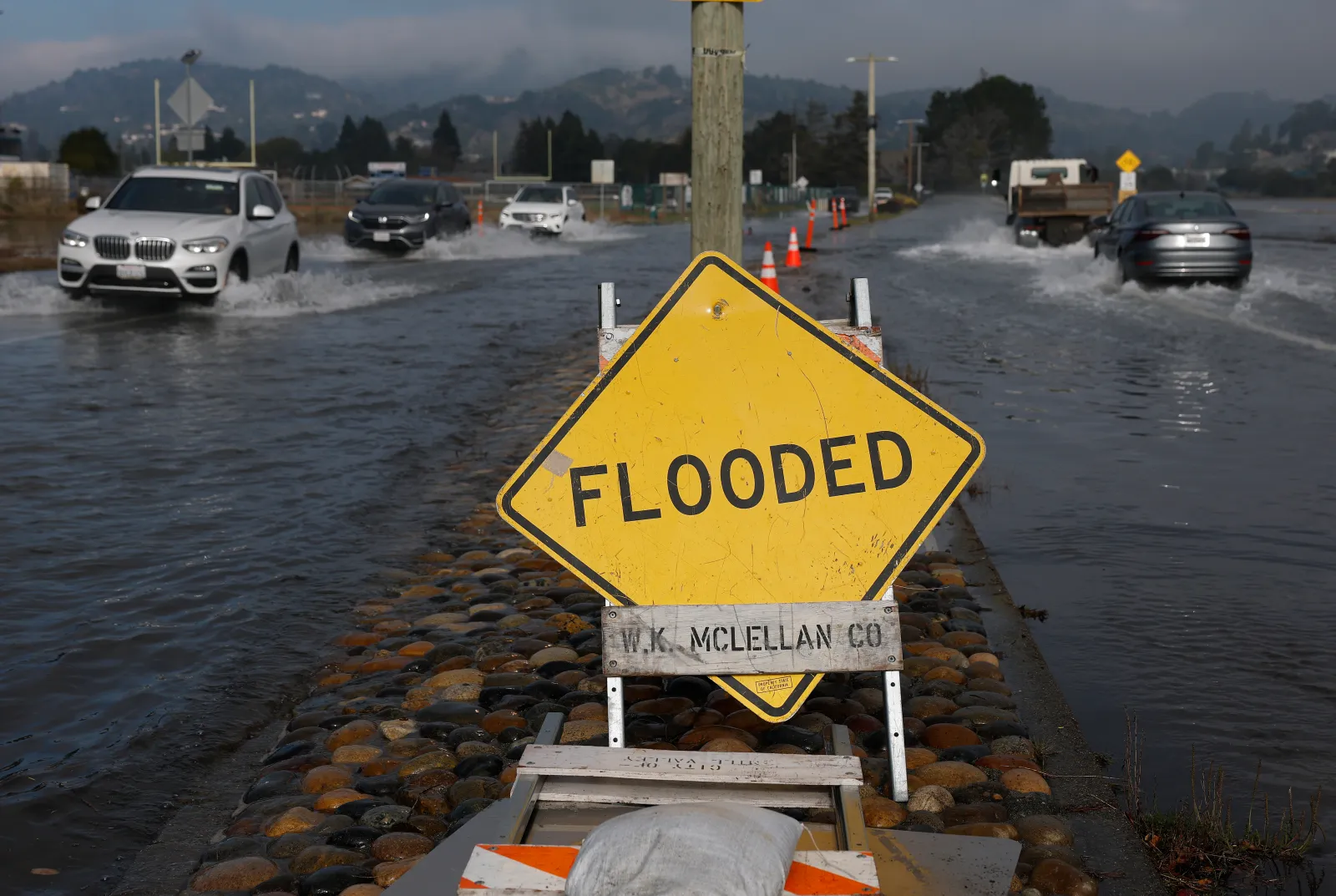
Parts of the West Coast are being warned of potential flooding this week as forecasters expect high tides to impact portions of California, Washington and Oregon.
“King tides are expected to roll back into California, bringing high surf, strong rip currents and a threat of minor to moderate coastal flooding in some areas this week,” the California Governor’s Office of Emergency Services (Cal OES) said in a statement published on Wednesday.
“The next round of high surf and strong rip currents could impact the coastal beaches, reaching two feet above normal at the San Francisco tidal gauge, according to the National Weather Service (NWS),” it said. “Coastal flooding is predicted in low-lying areas near shorelines and tidal waterways through Sunday during high tide.”
Read More on News
The NWS forecast office for the San Francisco Bay Area said late on Thursday that a coastal flood warning for the bay had been issued “due to the combination of king tides and storm surge.”
The agency warned that numerous roads may be closed, and low-lying property—including homes, businesses, and critical infrastructure—could become inundated, with some shoreline erosion also expected.
"Significant coastal flooding expected due to high astronomical tides and storm surge," read the alert. "Up to 2.5 feet of inundation above ground level is possible in low-lying areas near shorelines and tidal waterways during the morning high tide Friday and Saturday."
The coastal flood warning for the San Francisco Bay is in force from 7 a.m. Friday to 2 p.m. PST Saturday as of reporting, with an additional coastal flood advisory spanning 2 p.m. Saturday to 2 p.m. Sunday.
Additionally, a coastal flood advisory is in effect until 2 p.m. PST Sunday for the Pacific Coast from Sonoma County to Monterey County including the Monterey Bay, where the NWS expects flooding of lots, parks, and roads, as well as some road closures.
Those in the area should allow extra time due to potential road closures, the agency said. “Do not drive around barricades or through water of unknown depth,” it added. “Take the necessary actions to protect flood-prone property.”
Cal OES also advised those in potentially affected areas to use caution, and provided safety tips:
- When in doubt, don’t go in.
- Keep children within easy reach.
- Be aware of changing tides and weather conditions.
- Watch for unexpected large waves.
- Be aware of floating debris.
The National Ocean Service describes king tides as “a popular, non-scientific term people often use to describe exceptionally high tides.”
"King tides are not unusual in the winter in California, as they typically occur twice a year and peak in the winter," AccuWeather meteorologist Kai Kerkow told Newsweek.
"The weather occurring during the current king tide can enhance its impacts, as a low-pressure system will bring wind gusts up to 45 mph near the Bay Area through tomorrow," Kerkow added. "The strong winds combined with the king tide can cause coastal flooding along the central California coast."
...
Coastal flood warnings have also been issued for the following areas in Washington and Oregon:
- Clatsop and Tillamook Coast and South Washington Coast (from 9 a.m. to 2 p.m. PST Friday).
- Coos Bay and estuaries (from 8 a.m. Friday to 1 p.m. PST Saturday).
The Clatsop and Tillamook Coast, and the South Washington Coast could see minor flooding during high tides in low-lying areas near bays, sloughs, and the lower stretches of coastal rivers, with water levels reaching up to one foot above ground level, the NWS said.
Update, 01/02/2025, 12:47 p.m. ET: This article was updated with comment from Kai Kerkow.
View 0 Comments
Submit Correction
View Editorial & AI Guidelines