...

By Robert Alexander
Senior Crime & Court Reporter
0
Share
Newsweek is a Trust Project member
See more of our trusted coverage when you search.Prefer Newsweek on Googleto see more of our trusted coverage when you search.
Homeland Security Secretary Kristi Noem made the decision not to turn around deportation flights in March despite a judge ordering the government to do so, the Justice Department has said, naming several officials who advised her.
In a court filing late Tuesday, the department named “officials who made and advised on the decision not to recall the flights in transit," carrying migrants to a mega-prison in El Salvador, despite the order.
The judge who gave that order, U.S. District Judge James Boasberg, last week resumed his criminal contempt inquiry over whether his direction was ignored during events between March 15 and 16.
Read More on U.S.
The government said no violation occurred because “the written order, unlike the oral directives, said nothing about returning... [detainees] who had already been removed."
Newsweek contacted the White House, Justice Depatment and attorneys for the plaintiffs via email outside of normal office hours on Wednesday.
Why It Matters
The court is examining whether or not a temporary restraining order, halting the detainee removals, was carried out as instructed by the judge—an issue now under review for potential criminal contempt.
At issue is whether the government reasonably interpreted the order—which the respondents argue did not require returning individuals already removed—and whether the executive branch properly executed judicial directives in an emergency context.
The outcome could determine not only possible referrals for individual officials but also how courts and the executive branch navigate compliance with rapid-response removal actions in future cases.
...
What To Know
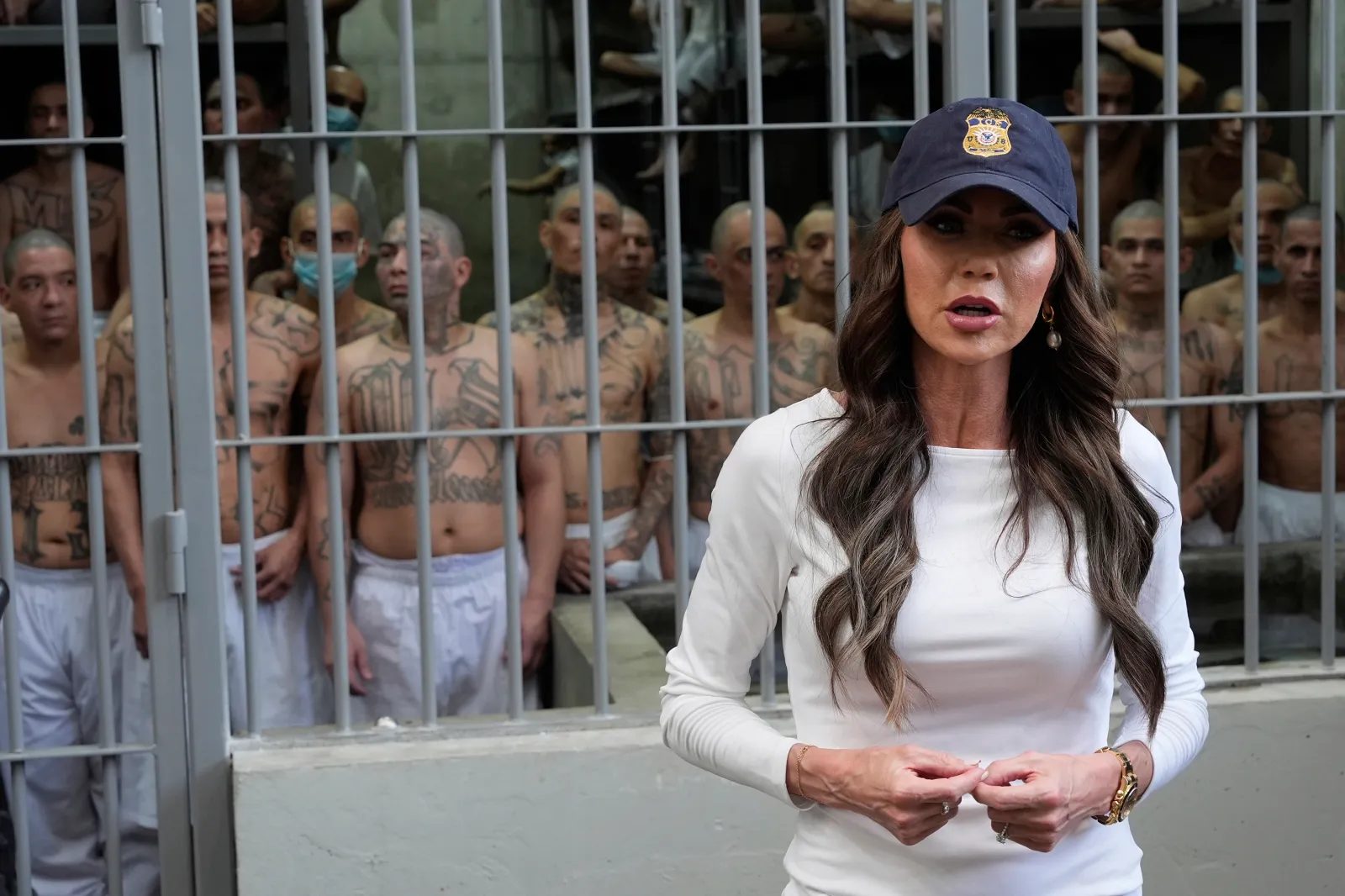
A group of 238 alleged Venezuelan gang members, plus 23 alleged members of the international MS-13 gang, were sent from the U.S. to El Salvador in March. Some were removed under the Alien Enemies Act (AEA), a law not invoked since World War II.
Secretary Noem received legal advice before she "directed that the AEA detainees who had been removed from the United States before the Court’s order could be transferred to the custody of El Salvador," the new filing said.
Government lawyers said its interpretation of the temporary restraining order (TRO) issued on March 15 was “reasonable and therefore not grounds for contempt," based on differences between the oral and written order.
The TRO was first communicated orally approximately 6:45 p.m., instructing that removed class members “need to be returned to the United States," according to the new filing. Two flights had already departed U.S. airspace.
A written order followed at 7:25 p.m., enjoining officials “from removing” the migrants, but containing “nothing about returning class members who had already been removed," the filing said.
The new submission filed by government attorneys said the list of involved officials was offered because it represents “the only remaining information necessary for this Court to proceed with a referral.”
In other words, the government is fulfilling the court’s request by identifying the officials involved, while also signaling that the judge now has all the facts needed to decide on a potential contempt referral and implying that no further fact-finding or hearings are necessary, even as it maintains a referral would be unwarranted.
Officials Named
- Secretary of Homeland Security Kristi Noem
- Acting general counsel Joseph Mazzara of Department of Homeland Security—advised Noem
- Deputy Attorney General Todd Blanche— "provided DHS with legal advice regarding the Court’s order as to flights that
- had left the United States before the order issued."
- Then-Principal Associate Deputy Attorney General Emil Bove—"provided DHS with legal advice regarding the Court’s order as to flights that had left the United States before the order issued"
- Deputy Assistant Attorney General Drew Ensign—who is also defending the government in this case—"promptly conveyed both this Court’s oral directives and its written order to the Department of Homeland Security"
Deputy Assistant Attorney General Drew Ensign relayed both the oral and written directives to the Departments of Homeland Security (DHS) and Justice (DOJ), it added.
The filing states that Deputy Attorney General Todd Blanche and then-Principal Associate Deputy Attorney General Emil Bove provided DHS with legal advice on how the order applied to flights already outside U.S. territory.
DHS acting general counsel Joseph Mazzara subsequently conveyed that advice to Secretary of Homeland Security Kristi Noem, the filing added, noting, “Secretary Noem directed that the AEA detainees who had been removed from the United States before the Court’s order could be transferred to the custody of El Salvador.”
The government maintains this decision was consistent with a permissible interpretation of the TRO.
The submission references a concurring opinion by Judge Gregory Katsas of the D.C. Circuit, issued earlier in the litigation, stating that “[p]lain language, legal context, and the Court’s first TRO all support the government’s narrower reading of the second TRO as keyed to physical expulsion from United States territory.”
According to that opinion, the term “remove” denotes physical expulsion, not transfer of custody, and thus did not require returning detainees who had already left the country before the TRO was formalized.
The government argues that the oral directives issued during the TRO hearing were “inconsistent” and “garbled,” and that the written order necessarily superseded them.
It also emphasizes that Judge Katsas’s agreement with its interpretation demonstrates that the TRO could not have been “so ‘clear and decisive’” as required for criminal contempt.
The filing concludes that although the government continues to dispute that any violation occurred, it has identified the relevant officials for the court’s review. It further asserts that any additional information should be provided through written declarations rather than live testimony.
What People Are Saying
El Salvador's President Nayib Bukele wrote on social media on March 16: "Oopsie... Too late," in reference to the judge's order.
White House press secretary Karoline Leavitt said in a March 16 statement: "The written order and the administration’s actions do not conflict," adding “Federal courts generally have no jurisdiction over the President’s conduct of foreign affairs, his authorities under the Alien Enemies Act, and his core Article II powers to remove foreign alien terrorists from U.S. soil and repel a declared invasion."
What Happens Next
The judge must now decide whether the officials identified in the filing provide enough basis to move forward with a potential criminal contempt referral.
If the judge determines the temporary restraining order was violated, the matter could be referred to prosecutors for independent evaluation, though a referral itself does not constitute a finding of guilt.
View 0 Comments
Submit Correction
View Editorial & AI Guidelines