
...

By Shane Croucher
Senior Editor
0
Share
Newsweek is a Trust Project member
See more of our trusted coverage when you search.Prefer Newsweek on Googleto see more of our trusted coverage when you search.
It's easy to read President Donald Trump's statement that the U.S. is giving “serious consideration” to renaming Lake Ontario as "Lake America" as pure trolling. And it certainly is trolling, to a point.
But the evidence suggests he really means it too. This is more than yanking the Canadian maple tree.
Trump's reasoning was that Americans no longer expect to be doing much business with Ontario. The remark landed mid-trade-war, days after talks with Ottawa collapsed. Tariffs are incoming.
Read More on Analysis
Sure, "Lake America" is a cheap way to needle Canada while the tariffs bite. It costs Trump (or perhaps Natalie Harp) nothing to toss out a Truth Social post.
But there's more to it than that. Trump has built a working politics of symbolic sovereignty. When he wants to demonstrate American primacy, he treats the map as something the U.S. is entitled to rewrite.
He's acting like a Victorian cartographer of the British Empire. Why not Lake America? After all, who's going to stop us?
What the Victorians Understood About Names
In 1858, John Hanning Speke left an ailing Richard Burton behind at Tabora and pressed on to a lake that local people already called Nyanza, one of several names then in use. He renamed it for Queen Victoria, naturally.
The Royal Geographical Society, which sponsored him, is pretty candid about what the expedition was for.
British and Indian authorities wanted knowledge of East Africa’s interior, information that would later help European powers carve the continent into imperial spheres. The "Scramble for Africa" was on.
Related Story

Why Big America Needs Little Finland’s Help in the Arctic
The Society also notes that the portrait it holds shows Speke standing alone, though hundreds of African porters, guides, and interpreters made his journey possible.
Changing what your maps say, because you can, is cheaper than conquest. Naming asserts not ownership but authorship. It announces who believes he has the standing to describe the world.
In the nineteenth century, that was British imperialists still marauding around the globe, though Americans had broken free of them by then.
Today, it's Trump asserting U.S. hegemony over the Western Hemisphere. Whether the Canadians—or, for that matter, the Mexicans—like it or not.
Trump’s Renaming Spree
Trump has already done this once. His January 2025 executive order is remembered for the "Gulf of America," formerly known (and still known by many) as the Gulf of Mexico.
But the order did more than that. It also swapped the Indigenous name Denali for Mount McKinley, and its stated case for honoring McKinley says it all: the order credits him with victory in the Spanish-American War, with championing tariffs, and with presiding over “an expansion of territorial gains for the Nation.”
How very Victorian. The founding document of Trump’s naming policy praises a president for tariffs and annexation in a single paragraph. Lake America is no departure from that logic; it's an extension of it. And probably not the last.
Related Story
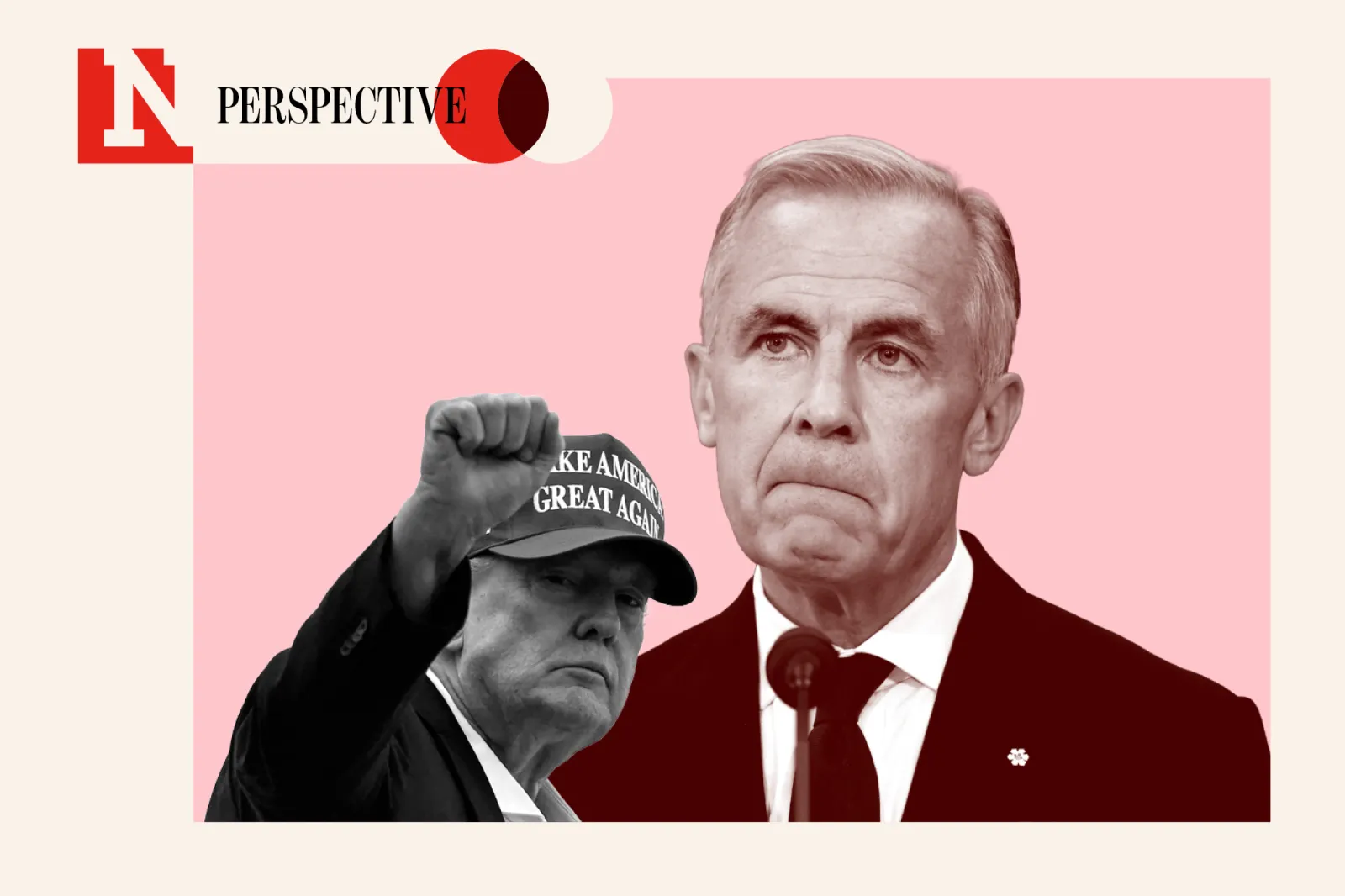
Trump Just Gave Canada Its Brexit Moment
It only gets worse when you look at the etymology. Ontario's provincial government traces the name to an Iroquois word for sparkling water, and the province took its name from the lake rather than the reverse.
So Trump would strip an Indigenous-derived name in order to punish a jurisdiction that borrowed it.
The order also built machinery to keep this process going. It instructed agency heads to consider replacing their appointees to the Board on Geographic Names, the body that decides what federal maps say.
Greenland should probably start worrying again.
The Power of a Brand
Trump knows from his life before politics about the power of naming things for yourself.
His Trump family empire leverages the name and applies it to everything—from real estate, to golf clubs, to cryptocurrencies, to cell phones, to steaks, and more—often through licensing deals.
The omnipresence of a name creates a sense of power, presence, permanence, and even dominance.
It worked for Trump as a businessman. Now he's applying that to America as president (as well as himself—trying to cement his legacy by naming swathes of official things after himself).
Commemoration, Not Colonization
Of course, the Trump order itself frames all of this renaming as commemoration rather than conquest.
It presents renaming as honoring national heritage, and it directs the Interior Department to work with Alaska Native groups on names honoring Alaskan history. Governments do control their own nomenclature. A rename is not an annexation.
Canada will go on calling it Lake Ontario, as will most other countries, it is safe to assume.
The Gulf precedent was also narrower than the branding implied: the order renamed only the American continental shelf, not the whole basin.
Lake America would presumably mean the American half of a lake whose two largest cities, Toronto and Hamilton, sit on the Canadian shore.
But the Victorian comparison should not reassure anyone, because in that story the naming came first and the partition came afterward. Speke’s map was the reconnaissance for empire.
To be clear: the Victorian lesson is not that renaming causes conquest. It is that maps rarely sit outside politics. Naming was one way powerful states made their claims to hierarchy appear natural. And thus it is with Trump's America.
Watch whether the Board on Geographic Names opens a docket, and whether Washington honors the transboundary understanding that requires it to consult Canada’s naming authority on shared features.
A post is a mood, even a puckish one. A docket is a policy.
View 0 Comments
Submit Correction
View Editorial & AI Guidelines