...

By Joe Edwards
Reporter
0
Share
Newsweek is a Trust Project member
See more of our trusted coverage when you search.Prefer Newsweek on Googleto see more of our trusted coverage when you search.
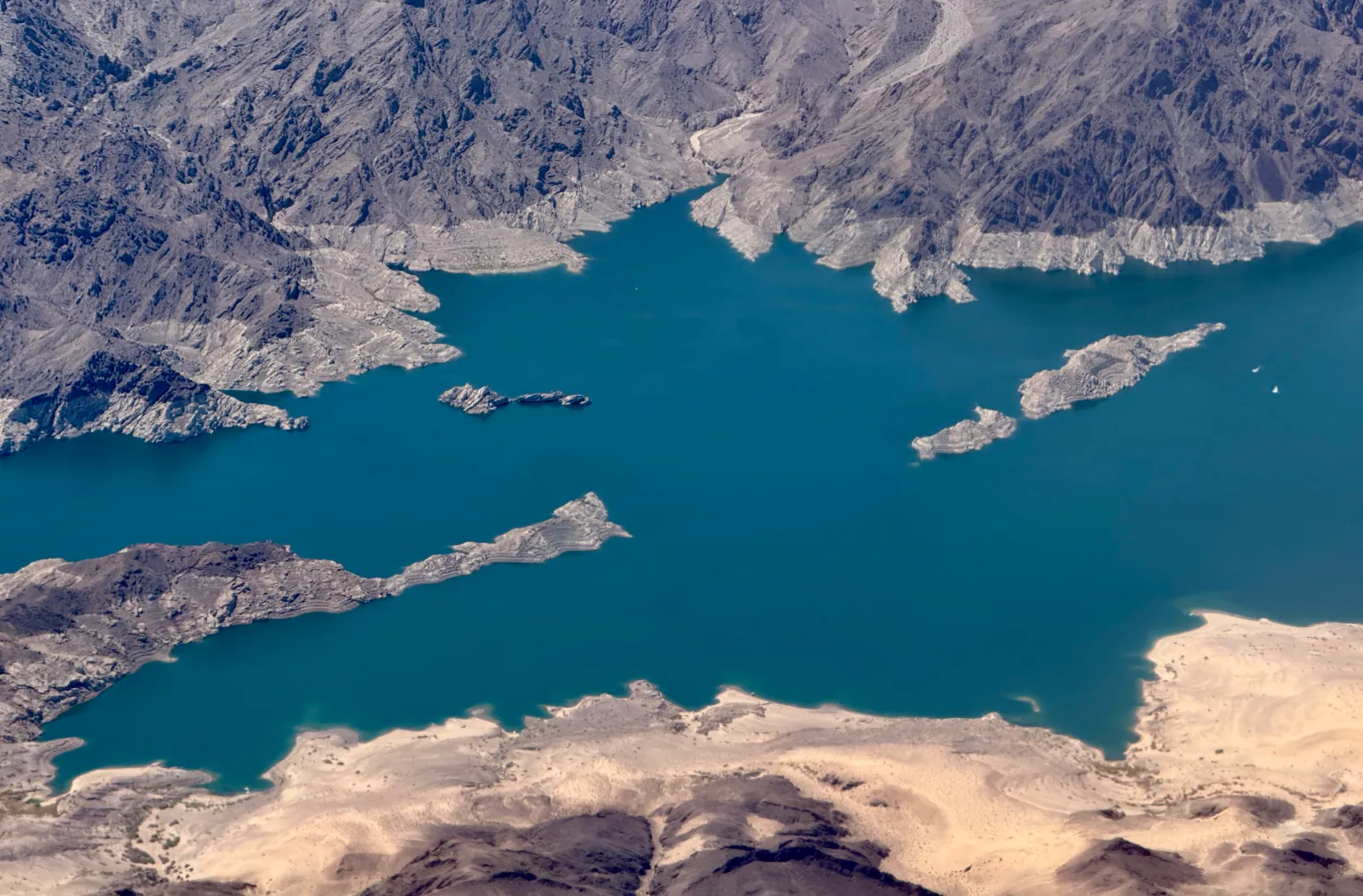
Lake Mead may fall to its lowest elevation since the vital reservoir was filled in the 1930s, according to federal projections issued Monday.
According to the U.S. Bureau of Reclamation’s (USBR) latest “most probable” projection for the nation’s largest reservoir, Lake Mead's elevation is expected to fall to 1,015.77 feet by the end of July 2027.
"Recent projections highlight the ongoing vulnerability of the Colorado River system and emphasize the urgent need to develop new guidelines and establish updated procedures," a USBR spokesperson told Newsweek.
Read More on U.S.
Why It Matters
The newest figures arrive as the Colorado River system—which supplies water to roughly 40 million people across the Western United States and irrigates more than 5 million acres of farmland—continues to confront persistent long-term drought conditions, intensifying water and power concerns at some of the nation’s most critical reservoirs.
As of Saturday, Lake Mead was just 29 percent full, with 7,487,010 acre-feet in storage, a level 48 percent of average for the date, according to USBR data.
What To Know
The USBR’s 24-month study reports present hydrological descriptions and projected operations for the Colorado River system reservoirs for the next two years. The latest forecast also projected that by September next year, the reservoir’s elevation could reach 1,014.93, and in November, it could fall to 1,013.73.
...
USBR notes that its 24-month studies “are only projections and are subject to change as the year progresses and actual hydrology, operations and forecasts diverge from those used to produce specific 24-Month Study projections.”
Concerns about power generation continue to be highlighted amid the poor forecasts for the Colorado River system.
In a Monday social media post, the USBR cautioned that Lake Powell, the second-largest reservoir in the U.S., could drop to elevations that may jeopardize hydropower.
“The study continues to rely on operational assumptions using the soon-expiring operating guidelines, and as a result, projects Lake Powell reaching minimum power pool in spring 2027,” it said. “This outcome is not a reflection of recent drought response actions, but rather a clear reminder that the Colorado River remains vulnerable and that updated operational tools are essential for long-term stability.”
The states that draw water from the river—Colorado, New Mexico, Utah and Wyoming in the Upper Basin and Arizona, California and Nevada in the Lower Basin—have been working to negotiate new water-sharing agreements as current operational guidelines are set to expire this year, though a consensus among them is yet to be reached.
Update, 6/17/26, 12:30 p.m. ET: This article was updated with comment from the USBR.
View 0 Comments
Submit Correction
View Editorial & AI Guidelines