10
Loading video...

By Anna Skinner
Associate News Editor
0
Share
Newsweek is a Trust Project member
See more of our trusted coverage when you search.Prefer Newsweek on Googleto see more of our trusted coverage when you search.
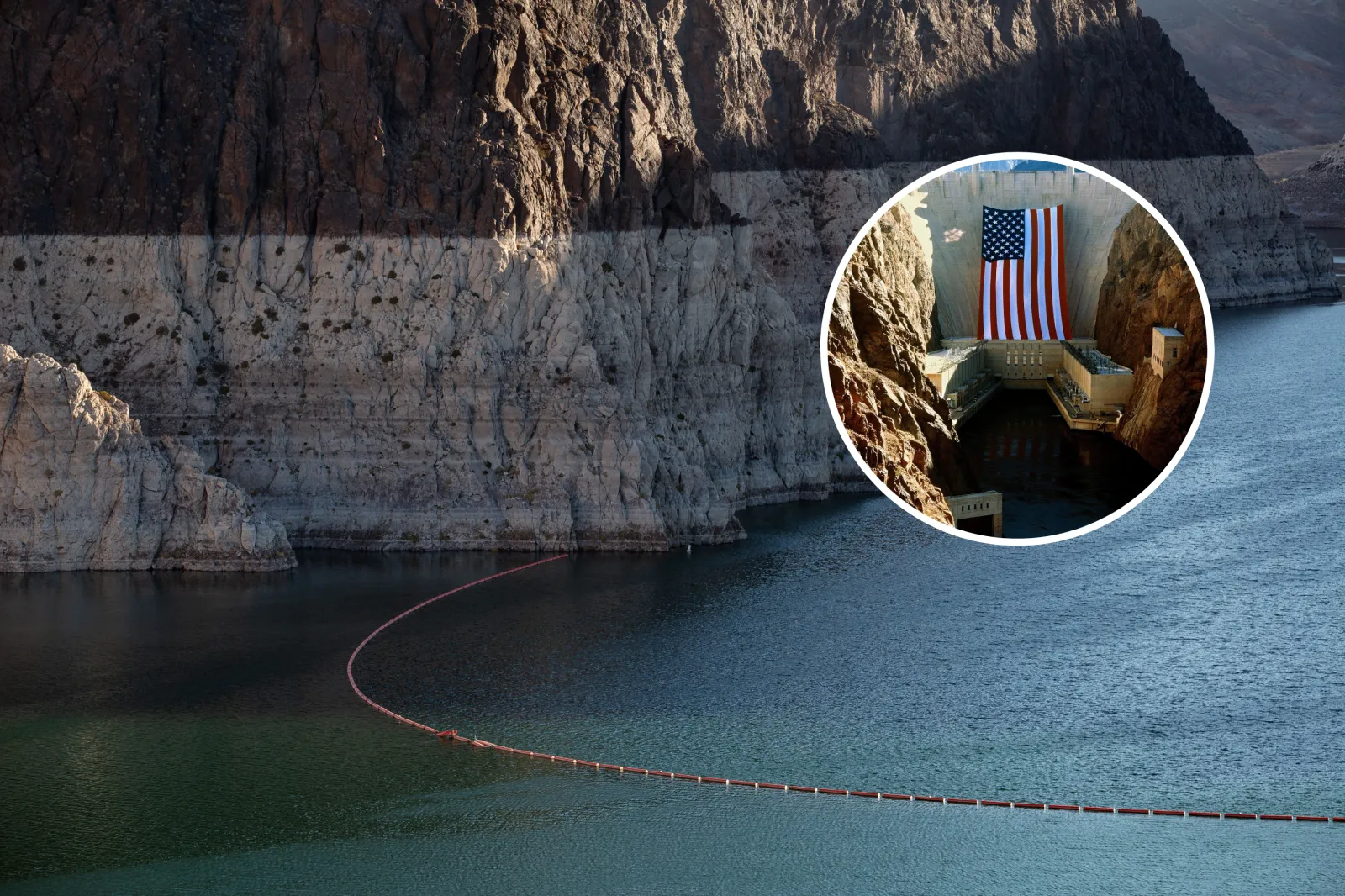
A dramatic red, white and blue light display now washing across Hoover Dam has become a striking symbol of national pride, but it is also unfolding against a growing backdrop of concern over the dam’s ability to generate power as water levels at Lake Mead continue to fall.
The installation, unveiled during Memorial Day weekend as part of the America250 celebrations marking the 250th anniversary of the signing of the Declaration of Independence, features a massive American flag draped across the dam and more than 550 automated LED lights illuminating the structure each night through early July. The LED system, while visually expansive, represents only a tiny fraction of Hoover Dam’s generating capacity, which at full reservoir levels can reach more than 2,000 megawatts.
Newsweek reached out to the U.S. Bureau of Reclamation, which manages the dam, by email for comment.
Read More on News
The display comes as Lake Mead continues to drop toward dire levels, deepening uncertainty surrounding Hoover Dam's long-term electricity generation. Lake Mead, the massive reservoir in Nevada and Arizona formed by Hoover Dam, has become a barometer for water security and energy reliability across the Southwest. Federal projections indicate that the lake could approach or fall below critical elevations in the coming months, driven by a combination of long-term drought, reduced snowpack and ongoing disputes over Colorado River water management.
Recent forecasts suggest levels could drop near or below 1,035 feet above sea level by next spring, a key threshold for hydropower operations. At that point, only a subset of the dam’s turbines can operate efficiently, sharply reducing electricity generation.
The implications could be severe. A significant reduction in output could ripple through the grid, increasing costs for consumers and complicating efforts to integrate renewable energy sources like solar and wind. Hoover Dam generates, on average, about 4 billion kilowatt-hours of hydroelectric power each year for use in Nevada, Arizona and California, enough to serve 1.3 million people, the Bureau of Reclamation said.
If hydropower declines, utilities are expected to purchase replacement energy from other sources, often at higher prices, which could ultimately be passed on to customers.
...
Lake Mead Water Levels
Lake Mead is currently at 1,051 feet elevation, which is 177 feet below its full level. Levels have been plunging since March and are around 7 feet below where they were this time last year and 17 feet below where they were in late May of 2024. The lake is at roughly 30 percent of its capacity.
The challenges at Hoover Dam are closely tied to conditions across the broader Colorado River Basin, particularly upstream at Lake Powell. Water releases from Powell have been reduced in recent years to prevent that reservoir from dropping below minimum power pool, the point at which its own turbines can no longer operate.
While those measures help stabilize Lake Powell, they also reduce inflows into Lake Mead, accelerating its decline and compounding the power risk at Hoover Dam.
Both reservoirs, which together store the majority of the Colorado River system’s water, face projections of record or near-record lows because of what experts describe as a snow drought, increased water demands and persistently warm conditions across the West.
What Happens Next: Lake Mead Levels Likely to Decline
It is unlikely that Lake Mead’s water levels will rise over the summer months. In most years, the reservoir typically peaks in late spring before gradually declining as water demand increases and inflow slows.
Over the past five years, the only significant rise between April and September came in 2023, when an unusually wet winter in the Colorado River Basin drove a surge in runoff.
With snowpack this year well below average and ongoing drought pressures across the West, water managers are expected to send less runoff into the system. At the same time, demand for water and electricity will remain high during the hotter months.
Together, those factors point toward a familiar pattern: gradually falling lake levels through the summer, underscoring how dependent Lake Mead remains on rare wet years for any meaningful recovery.
View 0 Comments
Submit Correction
View Editorial & AI Guidelines