
Newsweek/Getty

By Khaleda Rahman
National Correspondent
0
Share
Newsweek is a Trust Project member
See more of our trusted coverage when you search.Prefer Newsweek on Googleto see more of our trusted coverage when you search.
The 2028 Los Angeles Olympics were hailed as the “no build, zero cost to the city” Games, the first in 80 years not to need the construction of new venues. However, the city and its Democrat leaders are facing mounting criticism over whether it can host a successful Olympics, as the bill to host it keeps rising.
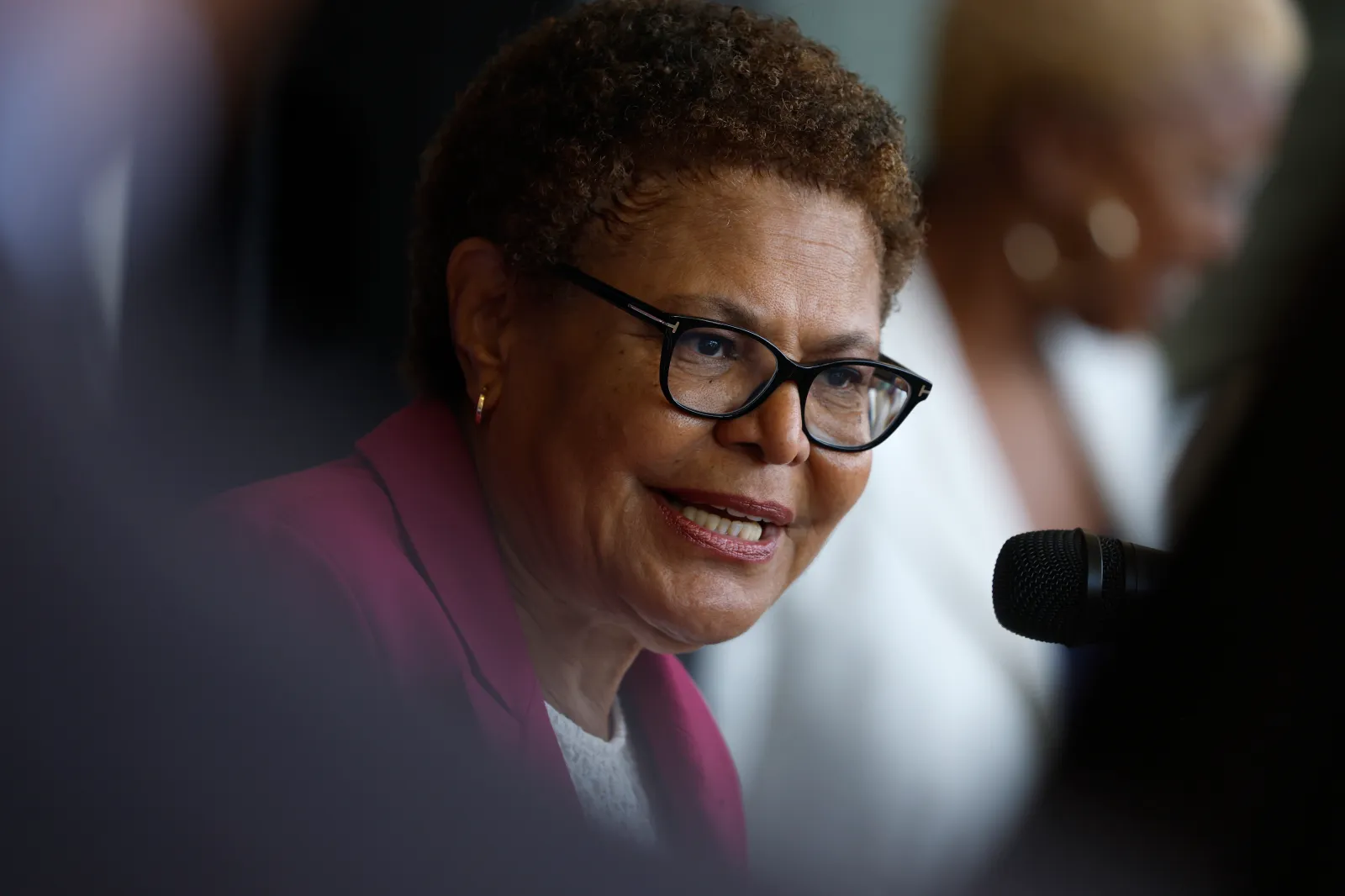
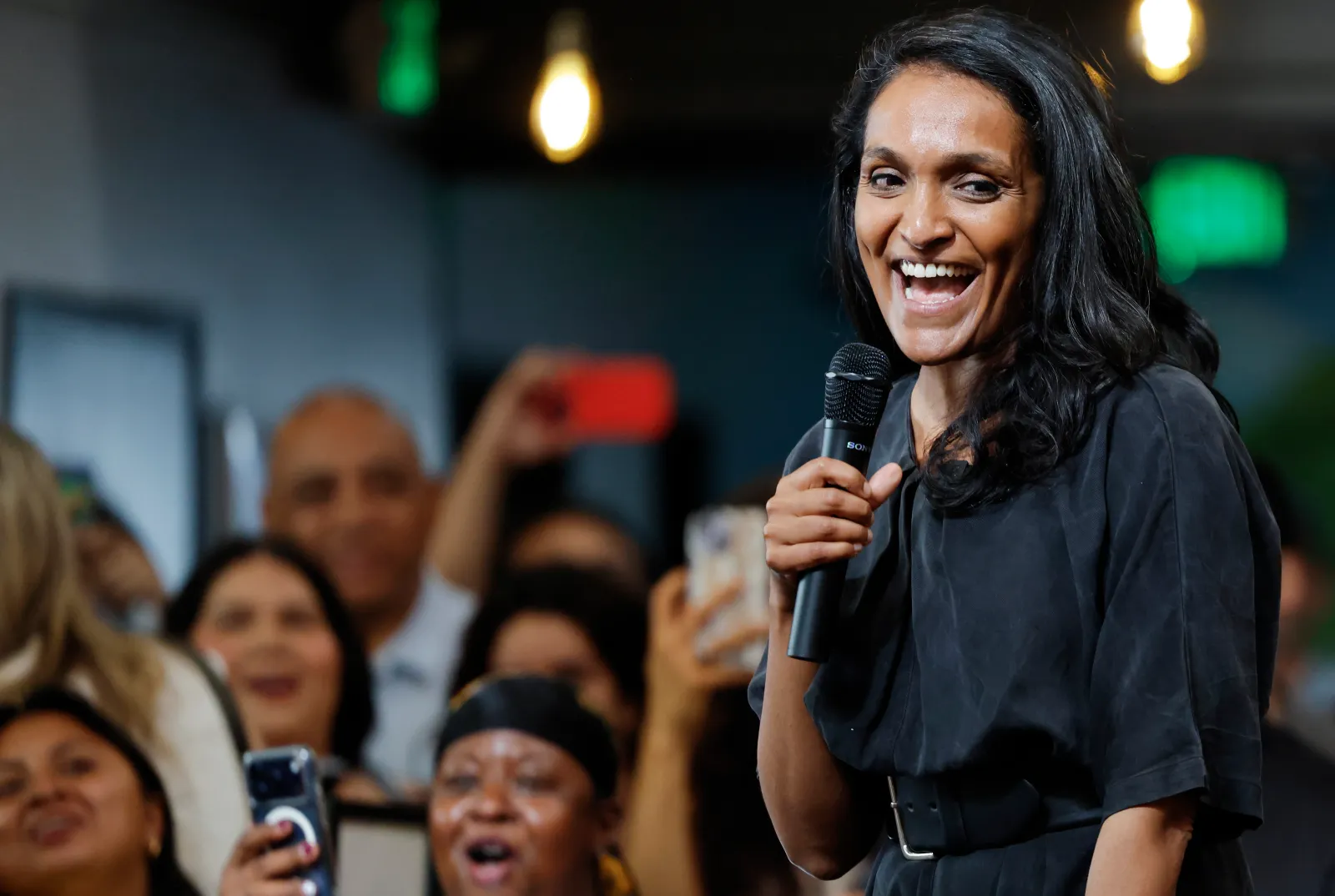
Questions have also been raised over the viability of Democrat L.A. Mayor Karen Bass’ pledge to make them the “no-car Games,” while tackling homelessness and other public safety concerns ahead of the biggest global sporting event the United States will have hosted since the FIFA World Cup. Bass, already reeling from severe criticism of her handling of the L.A. wildfires in January 2025, when 31 people were killed and more than 18,000 properties were destroyed, now faces a mayoral runoff against City Councilmember and fellow Democrat Nithya Raman in November. Whoever wins will be under immediate scrutiny over whether the City of Angels can deliver on its third Olympics.
Starting on July 14, 2028, just months before the nation elects its next president, the Games offers Democrats the opportunity to showcase effective governance in one of the party’s prominent strongholds. Failure in front of the world’s eyes means the Olympics will become a symbol of dysfunction for Republican rivals to seize on.
Read More on News

...
“If Los Angeles fails to deliver on the promises made for the Olympics, whether it’s cleaning up homelessness, improving public safety, fixing transit, or keeping the Games from going massively over budget, it will reinforce what millions of Americans already believe; that one-party Democratic rule has been an abject failure in Los Angeles and too many big cities across the country,” Brian Seitchik, national political strategist at RDP Strategies, told Newsweek.
Two years out, the Games have already faced controversy. Local officials, including Bass and Los Angeles City Councilmember Monica Rodriguez, have called on LA28 Organizing Committee Chairman Casey Wasserman to step down after his name appeared in Epstein-related files released by the Justice Department. Wasserman has not been accused of any wrongdoing. Wasserman said in a statement in February: “I deeply regret my correspondence with Ghislaine Maxwell,” which he said occurred “long before her horrific crimes came to light.” He added he “never had a personal or business relationship with Jeffrey Epstein.”
It was another unwanted distraction from an Olympics preparation campaign already feeling strain.
A Transit-First Games
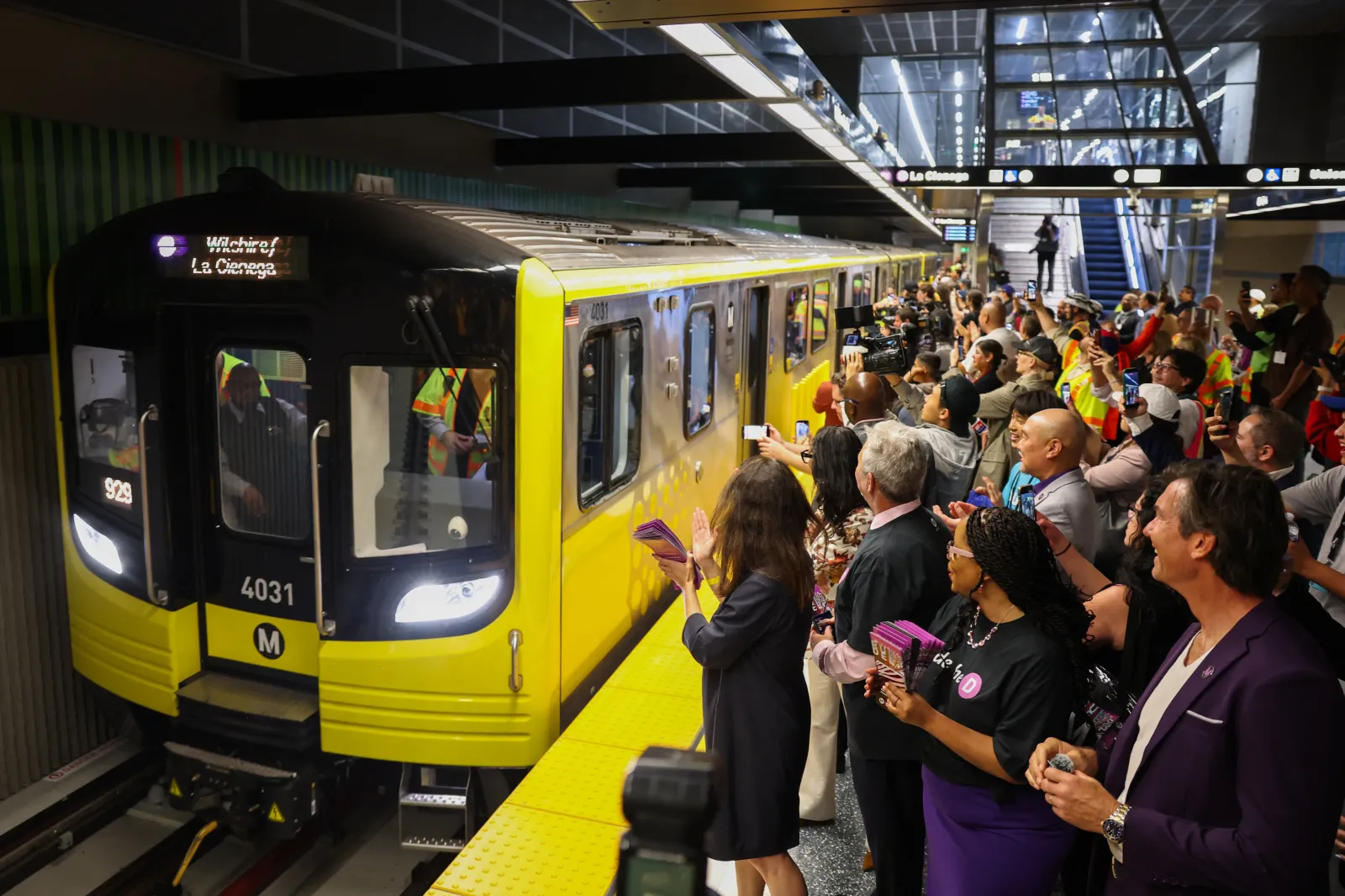
For a city notorious for gridlocked traffic, how some 15 million visitors and 15,000 athletes move about will be a key test. Bass initially pledged a no-car Olympics, but that pledge has since softened, with officials now describing the Games as “transit-first,” pointing to expanded public transport. Bass’ office last year said the Games “are an opportunity not only to move millions of spectators efficiently via transit, but also to accelerate lasting improvements that will make mobility in Los Angeles safer, faster and more reliable.”
...
The plan relies heavily on a temporary bus network of up to nearly 3,000 leased vehicles, but funding remains a challenge. LA Metro has sought about $2 billion in federal support for Games‑related transit, but the money was not included in President Donald Trump’s 2027 budget proposal. Lawmakers have since moved to bridge part of the gap, with the House Appropriations Committee advancing legislation that includes $875 million tied to the Olympics.
At the same time, the city has been racing to deliver an ambitious slate of 28 transit projects ahead of 2028, including a long‑planned rail link to Los Angeles International Airport. Some have already been delayed or scaled back, raising doubts about how much will be ready in time. Even if completed, Los Angeles’ system remains less extensive than those in London, Paris and Tokyo.
This could be a problem as the 2028 Games are unusually spread out, spanning roughly 70 miles across Southern California—from the Sepulveda Basin in the San Fernando Valley to San Clemente. The athletes will be based at the Olympic Village hosted by the University of California, Los Angeles, in Westwood. Venues are clustered into zones in areas such as downtown Los Angeles, Inglewood, Pasadena and Venice Beach, with many around 10 to 30 miles from the village. Some are much further afield, however, with the surfing contest at Trestles Beach in Orange County, around 70 miles from the base. Traveling by bus between the furthest sites could require multiple connections and significantly longer travel times.
Paris was able to run “a model green games because they already had a fulsome rail infrastructure,” Daniel Durbin, a professor of communication and the director of the Institute of Sports, Media and Society at the USC Annenberg School for Communication and Journalism, told Newsweek. “This is a freeway culture, has a freeway infrastructure second to none, and a successful Los Angeles Olympics will employ those freeways well by spreading events across the region,” he said.
...
L.A. County Supervisor Janice Hahn similarly suggested that convincing locals will be a bigger challenge. “All of our international visitors, they know how to ride public transportation like it’s second nature,” Hahn said at a UCLA Institute of Transportation Studies meeting last year. “It’s the Angelenos that we’re still trying to attract.” Yet almost 40 percent of Angelenos said L.A.’s public transit is “not at all prepared” for the 2028 Games, a USC Dornsife LABarometer survey found in June 2025.
Completing rail projects, however, “is not going to be critical to the success of the Olympics,” Brian Taylor, a professor of urban planning and public policy at UCLA, told Newsweek. “Instead, having sort of a temporary event management system together to deal with security and manage the crowds is going to be more important.” Both Durbin and Taylor cited the success of the city’s 1984 Olympics to argue “carmageddon” fears may be overblown, pointing to the use of buses and park-and-ride systems.
No-Build Olympics
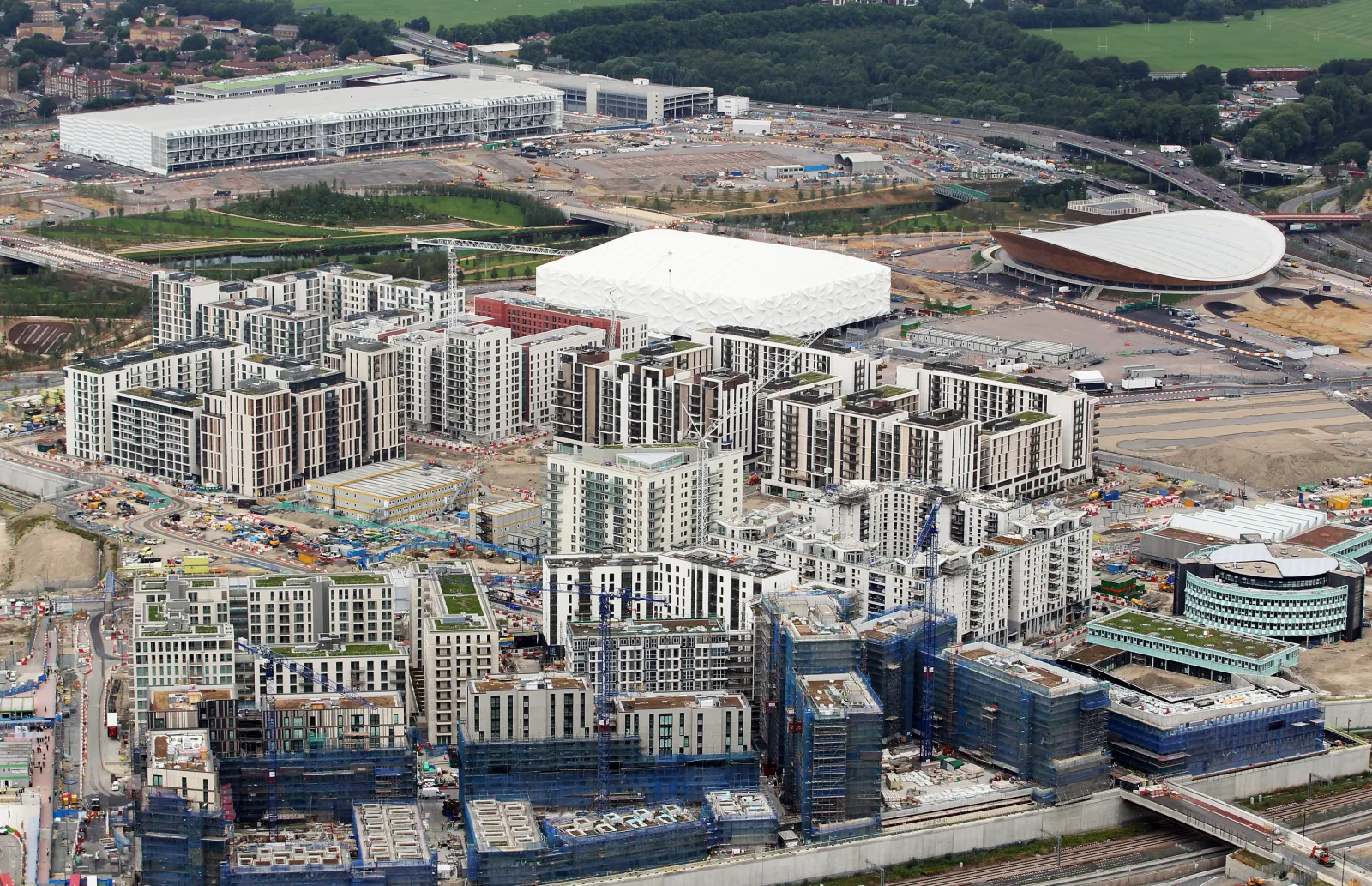
With no new permanent venues planned, the event saves billions of dollars. London spent roughly £6.5 billion (roughly $8.6 billion) building Olympic venues and the athletes’ village for the 2012 Games, while Paris spent around 3.63 billion euros (around $4.2 billion) for 2024’s event. “Using existing venues, these Games will leave a lasting, sustainable legacy for generations to come,” Bass has said. Athletes will be housed in UCLA dormitories, a model that keeps costs down but does little to expand permanent affordable housing, unlike London’s Olympic Village. However, the NOlympics LA coalition—a grassroots campaign group that opposes the Games over public spending and displacement concerns—argues that development often fails to serve existing residents, noting the legacy of the 2012 London Olympics was ultimately very little affordable housing.
Elsewhere, Bass pointed to two consecutive years of declining homelessness, but wildfire rebuilding has been criticized as slow. “The continuing challenges in bureaucratic red tape for rebuilding have exposed the city’s lack of foresight, planning, infrastructure, leaving many to question if the current administration has the ability to house a successful Olympics,” Durbin said.
...
The City’s Homelessness Crisis
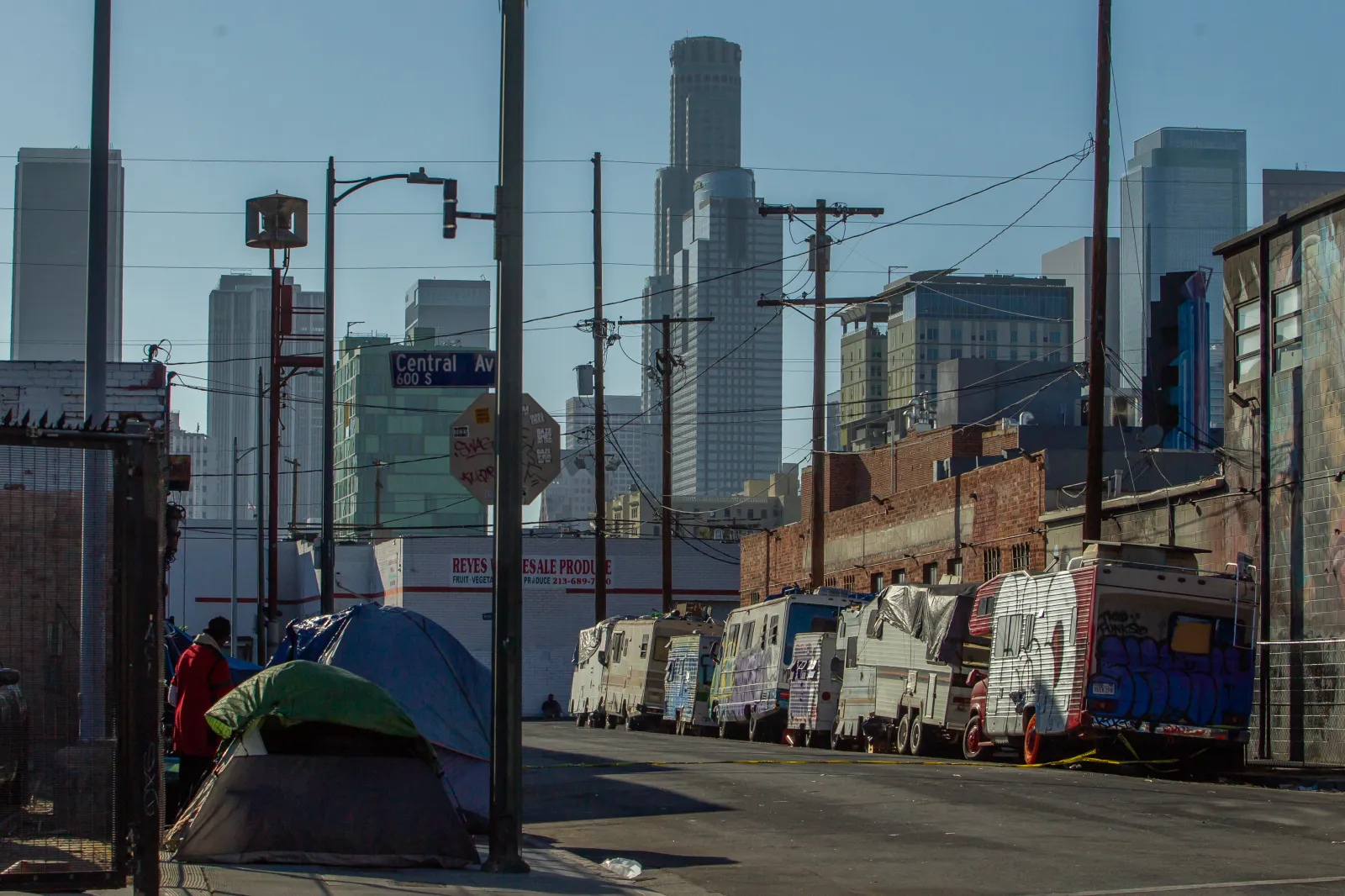
Homelessness presents one of the most visible and politically sensitive challenges facing Los Angeles before the Games. Bass has faced criticism for not making enough progress on the issue, though she has pointed to reductions in homelessness during her tenure. Raman, in a campaign video, pledged to “cut tents and encampments in half by the Olympics.” Estimates suggest some 44,000 people remain unhoused within the city limits.
In 1984, Los Angeles deployed mounted police patrols in Skid Row to disperse homeless residents from areas used by Olympic visitors, reflecting a longstanding criticism that host cities push unhoused populations out of sight—a tactic Bass has vowed to avoid. But Raman said the city’s primary strategy for homelessness “has been to move encampments from one block to another, from your block to your neighbor’s block and back again.”
Erin Maguire, a political analyst and GOP strategist, told Newsweek she “would not be shocked” to see Democratic leaders “try to clean up their streets just for the optics of the Olympics, where they ship all the homeless people out of town but they haven’t actually addressed anything.” She continued: “Karen Bass said when she ran for mayor the first time that she was going to eradicate homelessness in Los Angeles. Not only is that a fallacy and a flat-out lie to the people of Los Angeles, but I bet you she will not waste a taxpayer dollar or moment to move those people off of the streets just so she doesn’t get hit with the optics of the reality of her failed position.”
She said this wouldn’t be done for residents’ sake, “and that’s the reality of electing a leader like Karen Bass or Nithya Raman. Nithya Raman is not going to be any better at solving these problems.”
...
A Referendum on Democrats
The 2028 Games will be seen as a referendum on Democratic governance. Several California Democrats have been touted as contenders for their party’s presidential nomination, including Governor Gavin Newsom, who has framed the Games as a showcase for California, saying: “These Games are an opportunity to show the best of our state, and our nation.”
The Olympics presents “a reset opportunity on California Democrats’ national image,” Christian Grose, professor of political science and public policy at the University of Southern California, told Newsweek. Democrats “are the influential power brokers and govern Los Angeles and California; the upcoming Olympics—if run well—can show off the state to a huge audience.”
But Los Angeles City Councilmember Rodriguez made it clear that the Games are not being planned with national implications in mind. “I’m focused on ensuring the Games are successful so Angelenos aren’t left on the hook financially—not so Democrats can win elections,” she said in a statement to Newsweek.
It came amid concern about how much taxpayer money the city is spending on hosting World Cup games. The city of Los Angeles has agreed to cover the first $270 million in cost overruns, but LA28 officials said they had surpassed $2 billion in domestic sponsorship revenue, and were on track to deliver one of the most commercially successful Games. L.A. City Council President Marqueece Harris-Dawson has said such overruns are unlikely but acknowledged to LAist that hosting is “a risky proposition.” When contacted for comment, Bass’ team referred Newsweek to preparation details on the mayor’s website. Raman and the LA28 Organizing Committee did not respond to requests for comment.
...
The Trump Factor
Trump has long maligned Los Angeles and other Democrat-run cities. Last year, he defended the decision to deploy National Guard troops to quash protests after his administration stepped up immigration raids in the city by saying Los Angeles had been “invaded and occupied by illegal aliens and criminals.”
NOlympics LA told Newsweek: “Whether under Bass or Raman, the LA Olympics will feature a federal policing presence unlike any we have ever seen, hasty and violent displacement of poor people and members of informal economies, further environmental degradation, and diversion of resources away from where we need them.”
Referencing Immigration and Customs Enforcement raids in the city, the statement continued: “Bass and Raman have both supported the Olympics, vocally endorsed the hiring of more LAPD officers, have provided no real resistance to ICE incursions, and continue to walk a similar line across the board. We see a few differences but not much meaningful distinction.”
...
Four decades on from its last Summer Olympics, and nearly a century since its first in 1932, the city could face boycotts or protests against the Trump administration. Ahead of the World Cup, European Union sports commissioner Glenn Micallef raised safety concerns about travel to the U.S. linked to immigration enforcement. “This conversation around FIFA, that’s just a forewarning of what potentially could be coming and affecting us,” Rodriguez said at the time, per Politico.
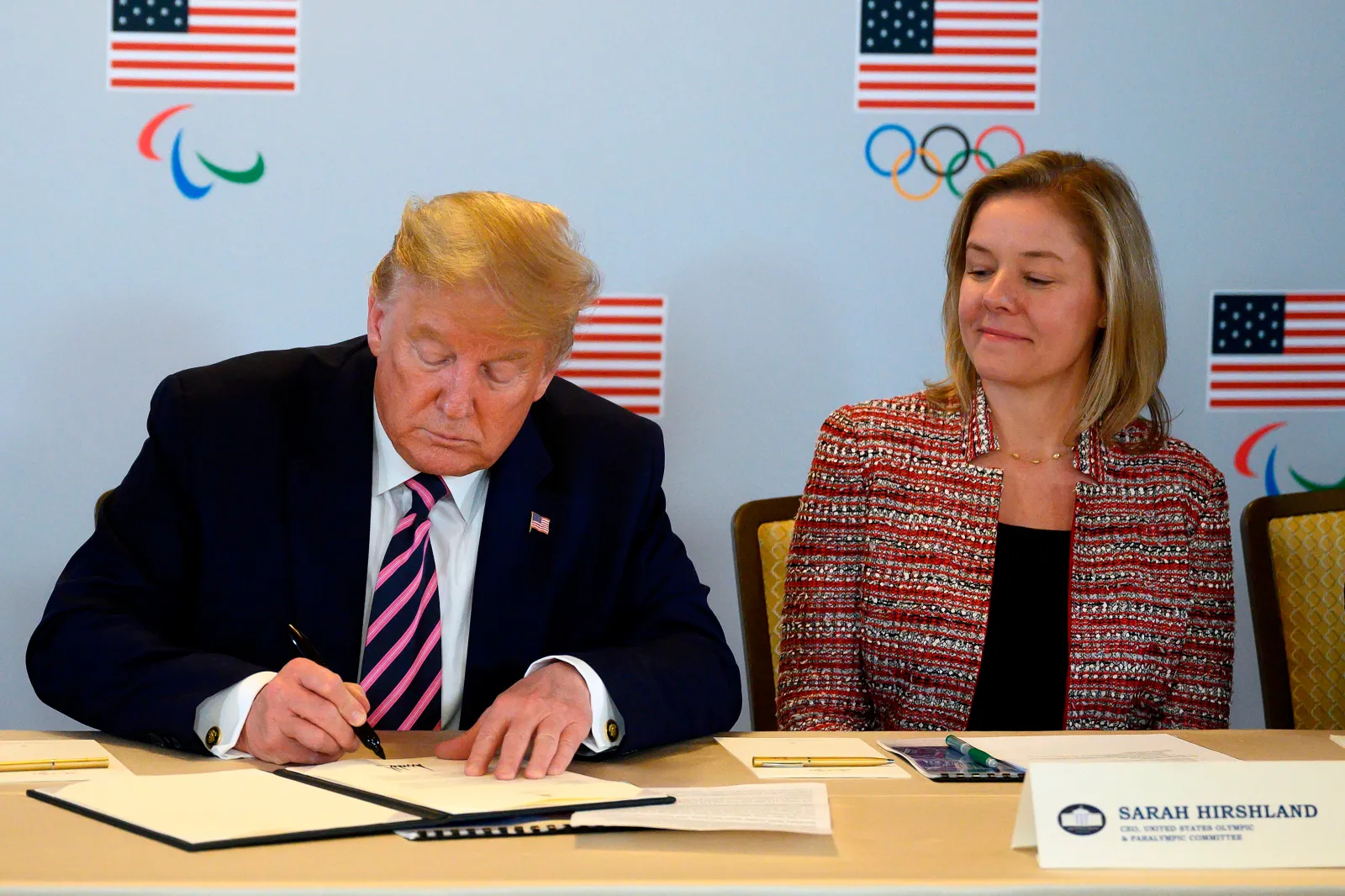
“When you see the escalating rhetoric and policy of the president, let’s just say there have been boycotts over less,” Harris-Dawson told the outlet. But Trump sees the 2028 Olympics as one of the marquee events of his second term. “The LA Olympics is shaping up to be a wonderful moment for America. It’s going to be incredible. It’s so exciting,” he said last year.
So it’s unlikely Trump will want to end his presidency on a failed Olympics, Durbin said. Trump established a task force to ensure the event is “safe, seamless and historically successful,” so he could step in late if the city seems unprepared. “If Trump does offer support and the Olympics turn out well, the Republicans can claim that Democrats can’t run anything and they (the Republican Party) were needed to sweep in and save the day,” Durbin said.
And with a politicized Games, “The risk exists that partisans who see everything through a red state versus blue state lens, or an us versus them political and cultural battle, will try to exploit that in a big election year,” Kevin Madden, senior partner at public affairs company Penta Group, told Newsweek. Though he added, “The political winner from the 2028 cycle will be whoever sees past the partisanship and uses the Olympics as an opportunity to elevate and unite the country.”
View 0 Comments
Submit Correction
View Editorial & AI Guidelines