...

By Khaleda Rahman
National Correspondent
0
Share
Newsweek is a Trust Project member
See more of our trusted coverage when you search.Prefer Newsweek on Googleto see more of our trusted coverage when you search.
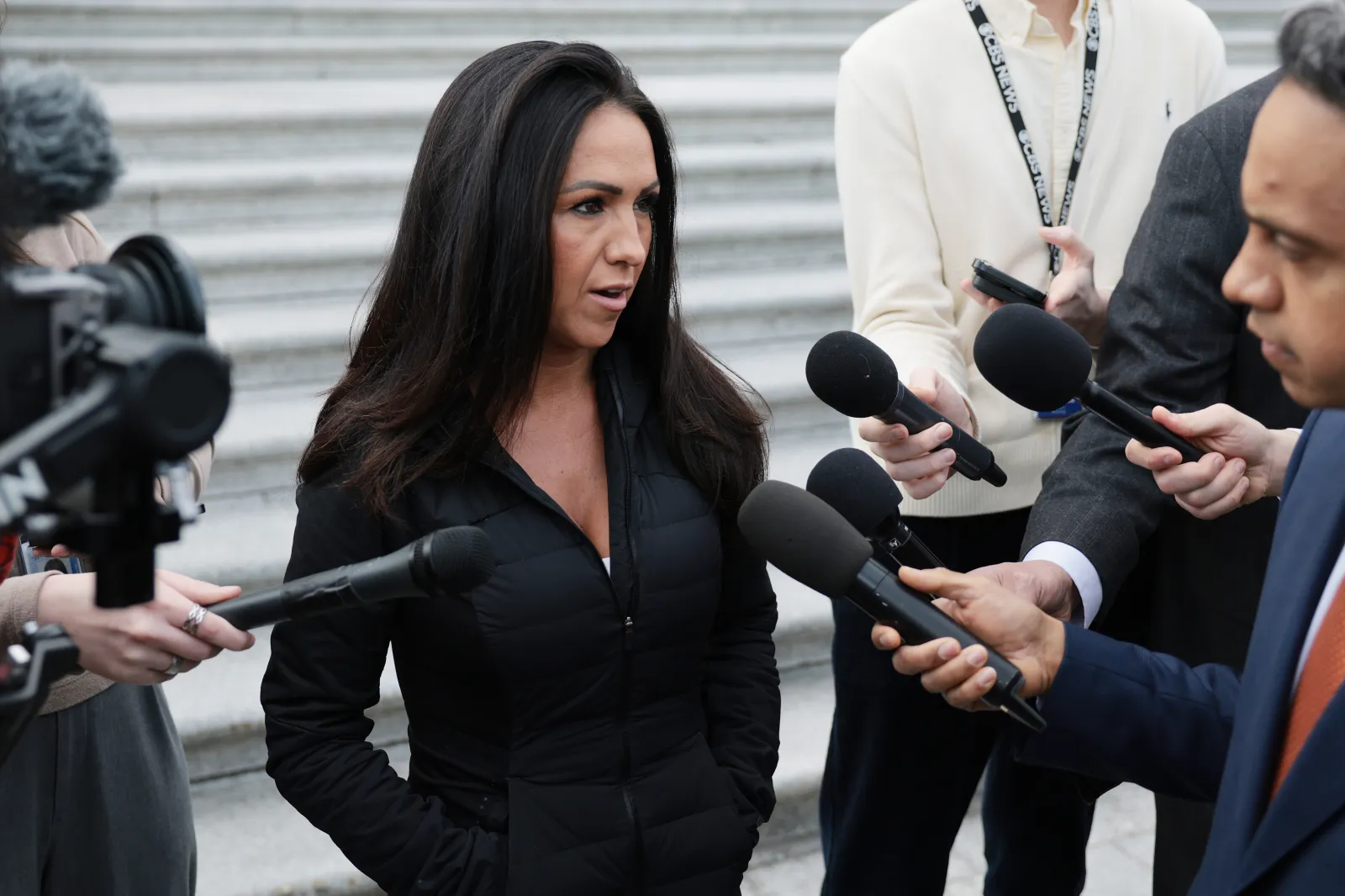
Republican Representative Lauren Boebert of Colorado has responded furiously to reports that the Pentagon is seeking $200 billion in additional funds for the Iran war.
The department has asked the White House to approve the request to Congress, the Associated Press reported, citing a senior administration official who spoke on the condition of anonymity. The new funding request was first reported by The Washington Post on Wednesday.
Boebert told CNN's Manu Raju on Thursday that she would not support any supplemental funding for the war.
Read More on News
"I will not vote for a war supplemental," she said. "No. I am a no. I've already told leadership. I am a no on any war supplementals. I am so tired of spending money elsewhere."
She continued: "I am tired of the industrial-war complex getting all of our hard-earned tax dollars. I have folks in Colorado who can't afford to live. We need America First policies right now, and that? I'm not doing that."
...
When asked about the proposal on Thursday, Defense Secretary Pete Hegseth did not directly confirm the amount, saying it could change.
"It takes money to kill bad guys," Hegseth said. "We're going back to Congress and our folks there to ensure that we're properly funded."
When contacted for comment about the figure on Thursday, the White House referred Newsweek to Hegseth's comments.
Why It Matters
Congress would have to approve the funding request, and it is likely to face resistance from lawmakers who oppose the war. Lawmakers have not authorized the war against Iran, and Congress is showing growing unease with the military operation's scope and strategy, as well as its costs to Americans in lives and dollars.
The request comes on top of extra funding the Department of Defense received last year in President Donald Trump's big tax cuts bill. It is unclear whether further spending would have enough political support. Most Democrats are likely to reject such a request, and while some Republicans have welcomed new military spending, many of the more conservative lawmakers are fiscal hawks with little political appetite for big spending—especially as the nation's debt has surged past a record $39 trillion—and others will certainly point to health care and other domestic needs they view as more important priorities.
What To Know
On Thursday, Trump told reporters that the administration was asking for the money for "a lot of reasons" besides the war in Iran.
"This is a very volatile world," Trump said. The president said the emergency spending would be a "very small price to pay" to ensure the nation's military stays in top shape.
Representative Ken Calvert of California, the Republican chair of the House subcommittee with oversight over defense spending, said he was already advocating for a supplemental spending bill to allow the Pentagon to replenish munitions.
"That was going to happen, and now we have this conflict with some additional costs. So that's where we're at," Calvert said on Thursday.
"I know there are peripheral issues out there that people are concerned about, but right now, this is about our national security, and it's important that we get this done," he added.
However, Representative Betty McCollum of Minnesota, the ranking Democrat on the House subcommittee with oversight over defense spending, said the president took the United States into a war without consulting Congress, and that she was demanding more details.
"This is not going to be a rubber stamp for the president of the United States," McCollum said.
She said Congress was still waiting for the administration to explain where it would be spending the additional $150 billion funding that went to the Pentagon through Trump's tax and spending cut bill. It's also waiting on the president's budget request for this year.
"I'm not writing blank checks to the Department of Defense," McCollum said.
House Speaker Mike Johnson has said it is a "dangerous time," adding that "we have to adequately fund defense."
When asked whether he supported the amount, Johnson said he had not seen the details, but added, "I support what's needed to ensure that the American people remain safe."
What People Are Saying
President Donald Trump told reporters in the Oval Office on Thursday: "We want to be sure, and it's a small price to pay to make sure that we stay tippy top."
Defense Secretary Pete Hegseth said during a news conference on Thursday: "We're going back to Congress and our folks there to ensure that we're properly funded for what's been done, for what we may have to do in the future, ensure that our ammunition is, everything's refilled and not just refilled, but above and beyond."
Republican House Majority Leader Steve Scalise said: "Ultimately we're going to have negotiations with the White House on an exact amount. We're not at that point yet."
Democratic Senator Richard Blumenthal of Connecticut said on CNN on Wednesday: "At this point, I would oppose that supplemental of $200 billion, and I think its chances of passing Congress are slim, maybe slim to none. The reason is, very simply, it could be misinterpreted as approval of the war. The administration has yet to come to the Congress for approval, as required by the Constitution."
Democratic Senator Ruben Gallego of Arizona wrote on X: "At the height of combat the Iraq War cost around $140 Billion per year. If the Pentagon is asking for $200 billion they are asking for a long war. The answer is a simple no."
Former Representative Marjorie Taylor Greene, a Georgia Republican, wrote on X: "The Iran War is rapidly spiraling out of control. It should have never happened. It's time to go back to America First and drill baby drill. That's what we campaigned on and the American people voted for."
What Happens Next
There is likely to be a significant battle in Congress over any new Pentagon spending, with approval almost certainly requiring bipartisan support. Republican leaders can try to pass a package alone through an arduous budget process, or they can cut deals with Democrats on other priorities that would likely balloon the overall price tag.
This article contains reporting by the Associated Press.
In a polarized era, the center is dismissed as bland. At Newsweek, ours is different: The Courageous Center—it's not "both sides," it's sharp, challenging and alive with ideas. We follow facts, not factions. If that sounds like the kind of journalism you want to see thrive, we need you.
When you become a Newsweek Member, you support a mission to keep the center strong and vibrant. Members enjoy: Ad-free browsing, exclusive content and editor conversations. Help keep the center courageous. Join today.


View 0 Comments
Submit Correction
View Editorial & AI Guidelines