...

By Hannah Millington
Health Reporter
0
Share
Newsweek is a Trust Project member
See more of our trusted coverage when you search.Prefer Newsweek on Googleto see more of our trusted coverage when you search.
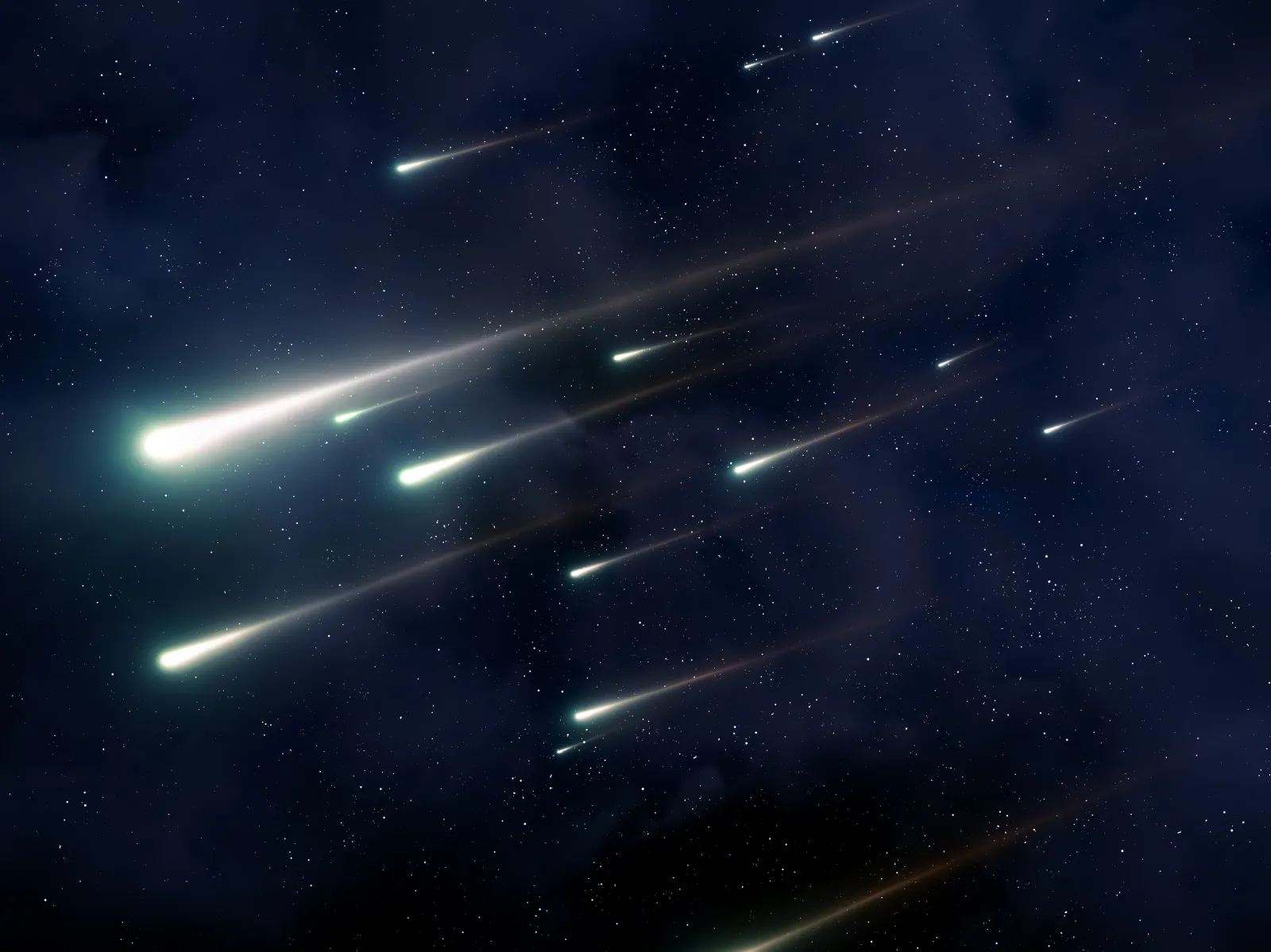
The annual Leonids Meteor Shower is due to illuminate our skies once again, with the best time for viewing the light show fast approaching.
The Leonids get their name from the constellation Leo, from which they appear to radiate, reaching their peak during mid-November.
Active between November 3 to December 2, the night of November 16–17 is when to enjoy the best glimpse of the dazzling display this year.
Read More on Science
...
The Leonids are bright meteors that can also be colorful. While there may be around only three an hour to spot, they are considered to be some of the fastest meteors, traveling at speeds of 44 miles per second.
They are also known for their fireballs—larger and brighter explosions—and Earth-grazers, which streak close to the horizon and have long and colorful tails.
This follows the recent peak of the Taurids Meteor Shower, known for their "Halloween fireballs." These could hold clues to future threats from space like airbursts and actual impacts into Earth's surface, according to researchers.
In 1966, viewers were treated to a Leonid storm rather than a shower, with thousands of meteors per minute falling through Earth’s atmosphere during just 15 minutes.
The last Leonids storm happened in 2002 and they are generally expected every 33 years, meaning you can expect a normal display this year, but still dazzling nonetheless.
The best time for viewing the Leonids shower starts at around midnight local time.
“Find an area well away from the city or street lights. Come prepared for winter temperatures with a sleeping bag, blanket, or lawn chair. Orient yourself with your feet toward the east, lie flat on your back, and look up, taking in as much of the sky as possible,” says the NASA website.
“In less than 30 minutes in the dark, your eyes will adapt and you will begin to see meteors. Be patient—the show will last until dawn, so you have plenty of time to catch a glimpse.”
While comets may be best viewed with telescopes and other skywatching can be enjoyed with binoculars, meteor showers typically require your own wide field of vision. Your naked eye should spot any lights, shooting stars and fireballs.
Other celestial events that have graced the night sky in recent weeks (or are due to) include the northern lights, comet 3I/ATLAS, comet C/2025 K1 (ATLAS) and the Beaver Moon.
For now, pack your bag of essentials and get ready for the major show of the Leonids.
Do you have a tip on a science story that Newsweek should be covering? Do you have a question about meteor showers? Let us know via health@newsweek.com.
View 0 Comments
Submit Correction
View Editorial & AI Guidelines