Courtesy Dina Aronson/Dina Aronson My Turn Essay

By Dina Aronson
0
Share
Newsweek is a Trust Project member
See more of our trusted coverage when you search.Prefer Newsweek on Googleto see more of our trusted coverage when you search.
It was the final cleanout before the sale of my mother’s home, an emotional task that my brothers and I tackled in pieces, working together on weekends as we sorted through the artifacts of her life. We were mostly finished, except for the four giant cages filled to the brim in the dark, uninviting storage room at the end of the catwalk in her condo complex. We’ll get to them eventually, I told myself at the end of every session, overwhelmed and unable to sort through even a single additional piece of history, nostalgia or whatever else might be piled high in those lockers. Letting go of her things painfully underscored the permanency of the loss, and at the age of 53, this newly-minted midlife orphan had never felt more exhausted.
When my father died in 2017, my mom and I swiftly went through his things. He had been sick for a decade and was a simple man when it came to material possessions; it took only a day to pack up what was left of his clothes for donation.

...
Read More on My Turn
My Neck Hurt After a Massage. 10 Days Later Terrifying Truth Was Revealed7 min read

I Gave My Nephews a Bow and Arrow for the Holidays—With One Condition. I Didn’t Expect Their Reaction7 min read

I Love My Husband. I’m Also Angry At His Epilepsy for What It’s Done to Our Family7 min read

It was a very different scenario when it came to my mom, the keeper of all of our family's history and memorabilia, and an enthusiastic collector of all kinds of things (vintage glass, shells, books, jewelry, etc.), who loved her weekly TJ Maxx runs and frequent Costco visits. Besides the sheer volume, I knew it would be intensely emotional, and every early attempt to get started ended with me drowning in Beanie Babies (she also collected those in the ’90s), dissolved in a puddle on the floor of her condo.
It’s a very strange thing to try to unwind a life while your own flashes before your eyes, and the spectrum of feelings can be dizzying. One minute you’re hit with a giant wave of grief, and the next you’re doubled over laughing as you tell stories about your person. And while your task is to purge and pack, you are also, in many ways, unpacking. Unpacking what it means to be alive, and how the things we choose to surround us factor in.
After close to a year of chipping away, procrastination was no longer an option with the sale of her home approaching. I unlocked the first cage stuffed with bits and pieces of my young life— my Fisher Price schoolhouse, complete with little wooden students and magnetic letters; baby shoes, and the entire Dr. Seuss collection, among many other relics. I smiled as I recalled my mom’s animated reading of Green Eggs and Ham: “I do not like them, Sam-I-Am!”
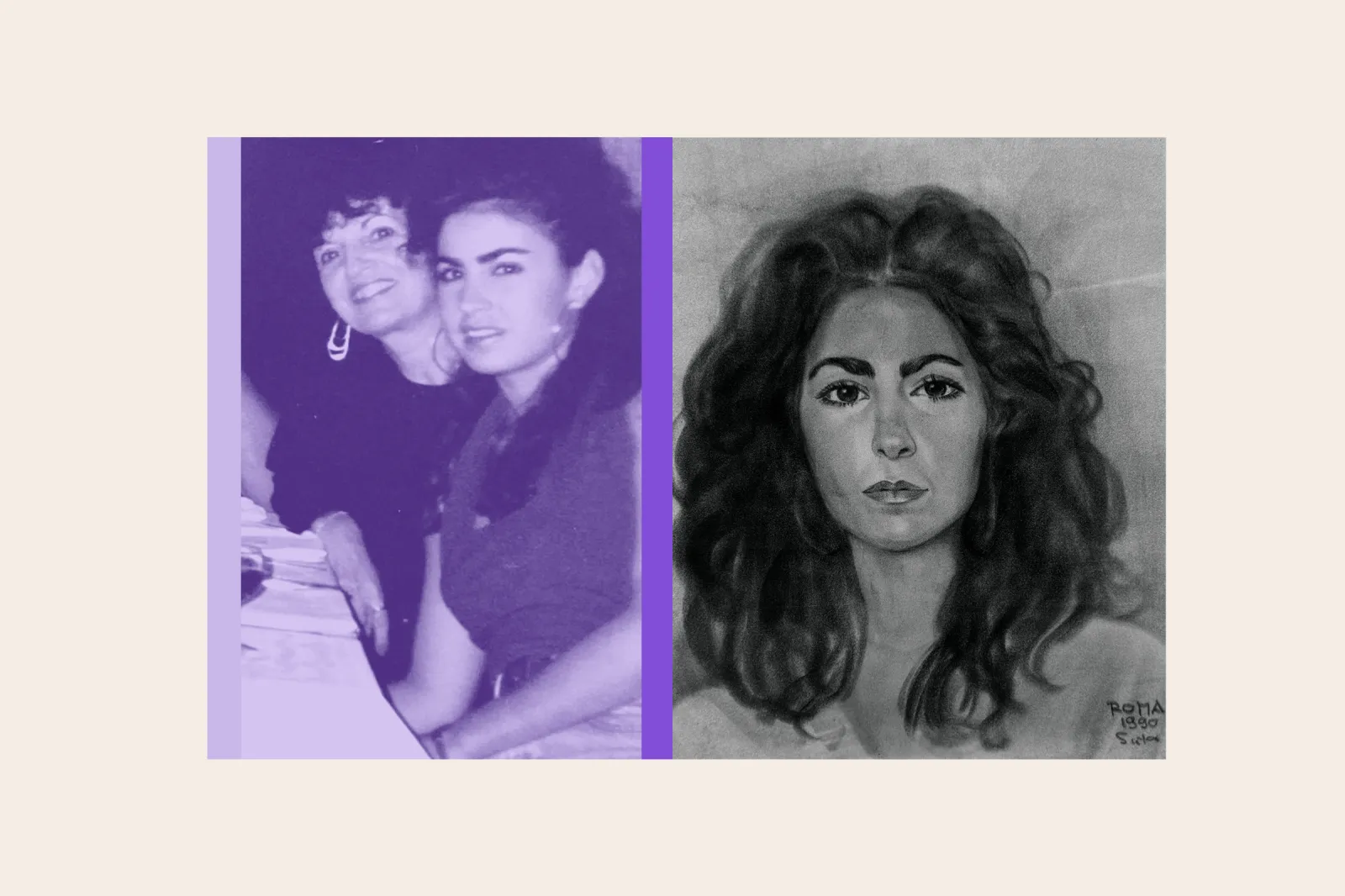
And then I saw a glint of silver, the corner of a large frame peeking out from behind all of that stuff. I reached in deep, and pulled out a long-forgotten charcoal sketch of me at age 21, drawn somewhere on the streets of Rome while on a college graduation trip I took with my mom. It was a trip that almost didn’t happen because my mom was diagnosed with breast cancer just months before, which made this find even more special. Once I got over the shock, I was transported back in time. I remembered climbing the ancient stairs of the Coliseum with her, wandering the ancient cobblestone streets, sipping cappuccinos and feeling so lucky that the surgeon was wrong when he casually remarked after her lumpectomy, classical music playing in the background, that the tumor was larger than he thought, and he wouldn’t be surprised if the cancer had spread.

...
I immediately felt such tenderness for that younger version of myself who was so afraid of facing a life without her mother. I remembered the intensity of that fear, and how I continued to feel it year after year with every mammogram and ultrasound appointment my mother had, my heart racing when I knew she was calling with the result. And when the cancer did return 22 years later, I was still afraid, but I was also determined to help her get the best care possible, so that she could spend the time she had left doing the things she loved— making jewelry, traveling, spending time with family and friends, and enjoying her life. Until she passed at the age of 83, she was able to do all of those things.
As I stared at the image of 21-year-old me, I thought about how lucky I was to have had so many bonus years with my mom. And to witness her live a life she never took for granted after that first diagnosis; one that she was thankful for every single day. In the midst of so much sorrow, that young woman in the frame reminded me of my great fortune, and lifted me when I was still in the depths of grief, questioning who I was without my mother in the world, and wondering if I’d ever feel tethered again.
I had walked into that room full of dread, but walked out full of gratitude.
Dina Aronson is the coeditor of Midlife Private Parts: Revealing Essays that Will Change the Way You Think About Age*, and a writer and pro-age advocate who focuses on midlife women and the cultural narratives around aging in her newsletter, Patina with Dina Aronson.*
Do you have a personal essay you want to share with Newsweek? Send your story to MyTurn@newsweek.com.
View 0 Comments
Submit Correction
View Editorial & AI Guidelines