...

By Suzanne Blake
Reporter
0
Share
Newsweek is a Trust Project member
See more of our trusted coverage when you search.Prefer Newsweek on Googleto see more of our trusted coverage when you search.
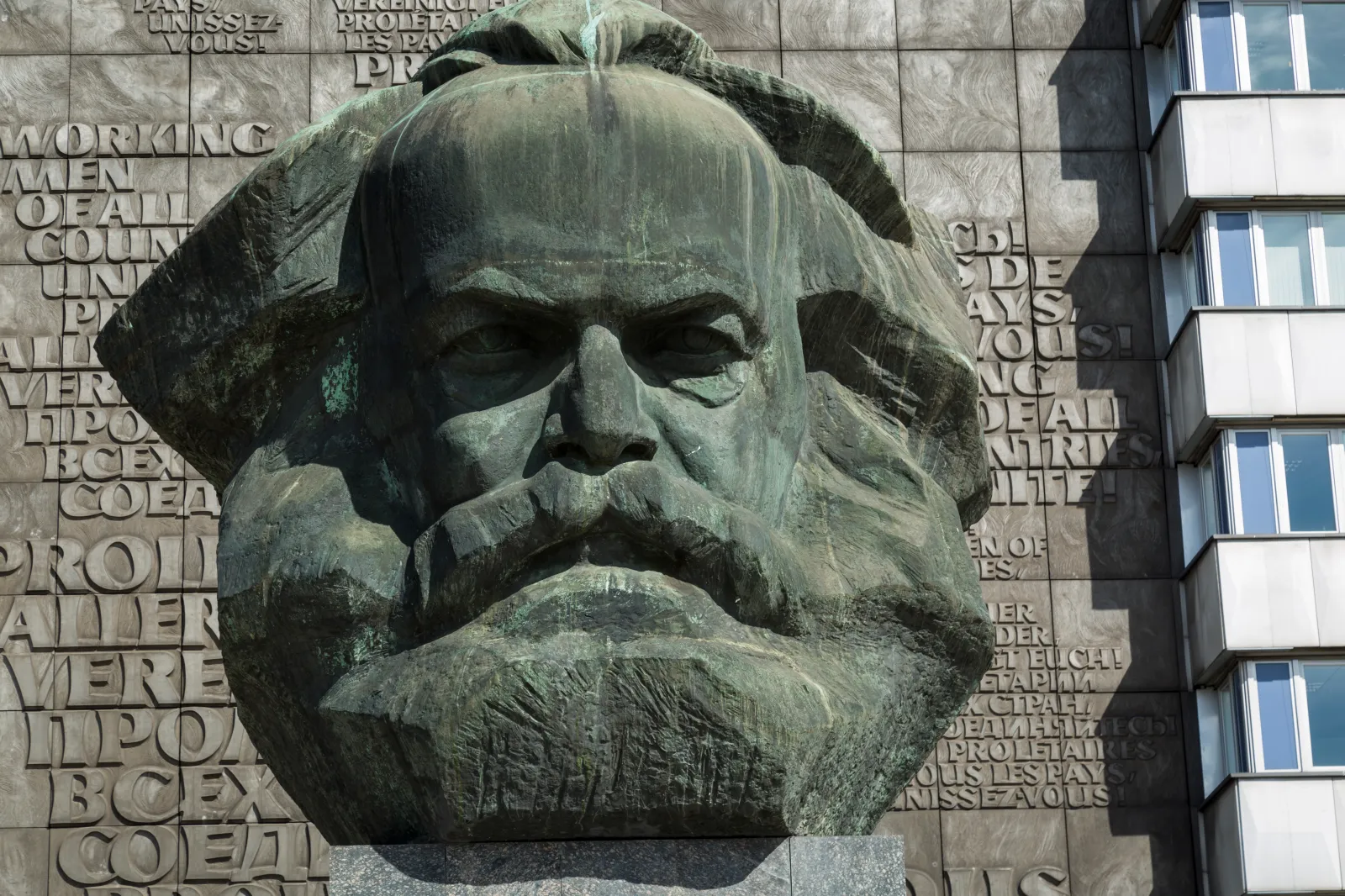
Today marks the birthday of Karl Marx, the 19th-century philosopher and economist widely regarded as the founder of communism.
His ideas, which were most famously laid out in The Communist Manifesto in 1848, have long been controversial in the United States, where communism has historically been met with deep suspicion and sometimes outright suppression.
However, despite its rarity, there are several openly affiliated Communist Party members in public office.
Read More on Politics
Newsweek compiled a list of U.S. politicians who identify as Communists today.
Why It Matters
For much of the 20th century, communism in the United States was treated not just as a political belief but as a perceived threat to national security.
During the Red Scare and Cold War, communist affiliation could lead to blacklisting or even imprisonment, and laws such as the Smith Act were used to target Communist Party leaders and members. Those pressures effectively removed the Communist Party USA from electoral politics for decades.
...
What To Know
Based on election results as of late 2025, the following U.S. politicians are openly affiliated with the Communist Party USA:
Hannah Shvets—Ithaca, New York
- Office: Ithaca Common Council, Fifth Ward
- Elected: November 2025
- Status: Serving as of 2026
Hannah Shvets, a Cornell University student and labor organizer, was elected to the Ithaca Common Council after defeating a landlord‑backed opponent in a general election.
She has openly identified as a member of the Communist Party USA and ran on a platform centered on housing affordability and labor rights. Her victory was widely covered as one of the first openly Communist wins in local office in decades.
Daniel Carson—Bangor, Maine
- Office: Bangor City Council
- Elected: November 2025
- Status: Serving as of 2026
Daniel Carson, a former bank worker and labor organizer, won a city council seat in Bangor after running on a platform focused on housing costs and public services. He has publicly identified as a Communist Party member and received endorsements from multiple labor organizations.
Luisa de Paula Santos—Cambridge, Massachusetts
- Office: Cambridge School Committee
- Elected: November 4, 2025
- Status: Serving as of 2026
Luisa de Paula Santos was elected to the Cambridge School Committee in November 2025 and is currently serving on the board, according to the City of Cambridge and Cambridge Public Schools.
The New York Post reported that she was named in communist literature as a member of the Communist Party USA. However, she did not run on a ballot line labeled “Communist Party,” as Cambridge school committee elections are nonpartisan.
Santos has focused publicly on labor organizing and education policy.
Who Was Karl Marx?
Marx was born on May 5, 1818, in Trier, in what is now Germany. Trained as a philosopher and journalist, Marx developed a critique of capitalism that argued economic systems shape social relations and political power.
Together with Friedrich Engels, Marx wrote The Communist Manifesto, calling for an end to private ownership of the means of production and defining class struggles between workers and capitalists.
Marx later expanded on these ideas in Das Kapital, analyzing capitalism as an inherently unstable system prone to inequality and crisis.
Marx died in 1883, but his ideas profoundly influenced global politics and labor movements.
What Is Communism?
Communism is a political and economic ideology that advocates for collective or public ownership of major industries and the elimination of class hierarchies.
The ideology also calls for distribution of goods based on need rather than profit. In practice, communist systems have taken many forms, from democratic socialist movements to authoritarian one‑party states.
In the U.S., the Communist Party USA has historically combined Marxist theory with participation in labor organizing and civil‑rights activism.
Why Communism Has Been So Controversial in the US
American hostility toward communism dates to the early 20th century and intensified during the Red Scare after World War I as well as during the Cold War with the Soviet Union
This sparked McCarthyism in the 1950s, when suspected Communists were blacklisted, fired or even prosecuted.
Thousands lost jobs or were imprisoned under laws like the Smith Act, and the Communist Party’s influence largely disappeared under government surveillance and public fear.
What Happens Next
As of Marx’s birthday this year, openly Communist elected officials in the U.S. can be counted on one hand, all serving in local government.
This means their immediate impact is largely limited to school board votes, city council decisions and budget negotiations rather than any national lawmaking.
View 0 Comments
Submit Correction
View Editorial & AI Guidelines