10
Loading video...

By Hollie Silverman
News Editor
0
Share
Newsweek is a Trust Project member
See more of our trusted coverage when you search.Prefer Newsweek on Googleto see more of our trusted coverage when you search.
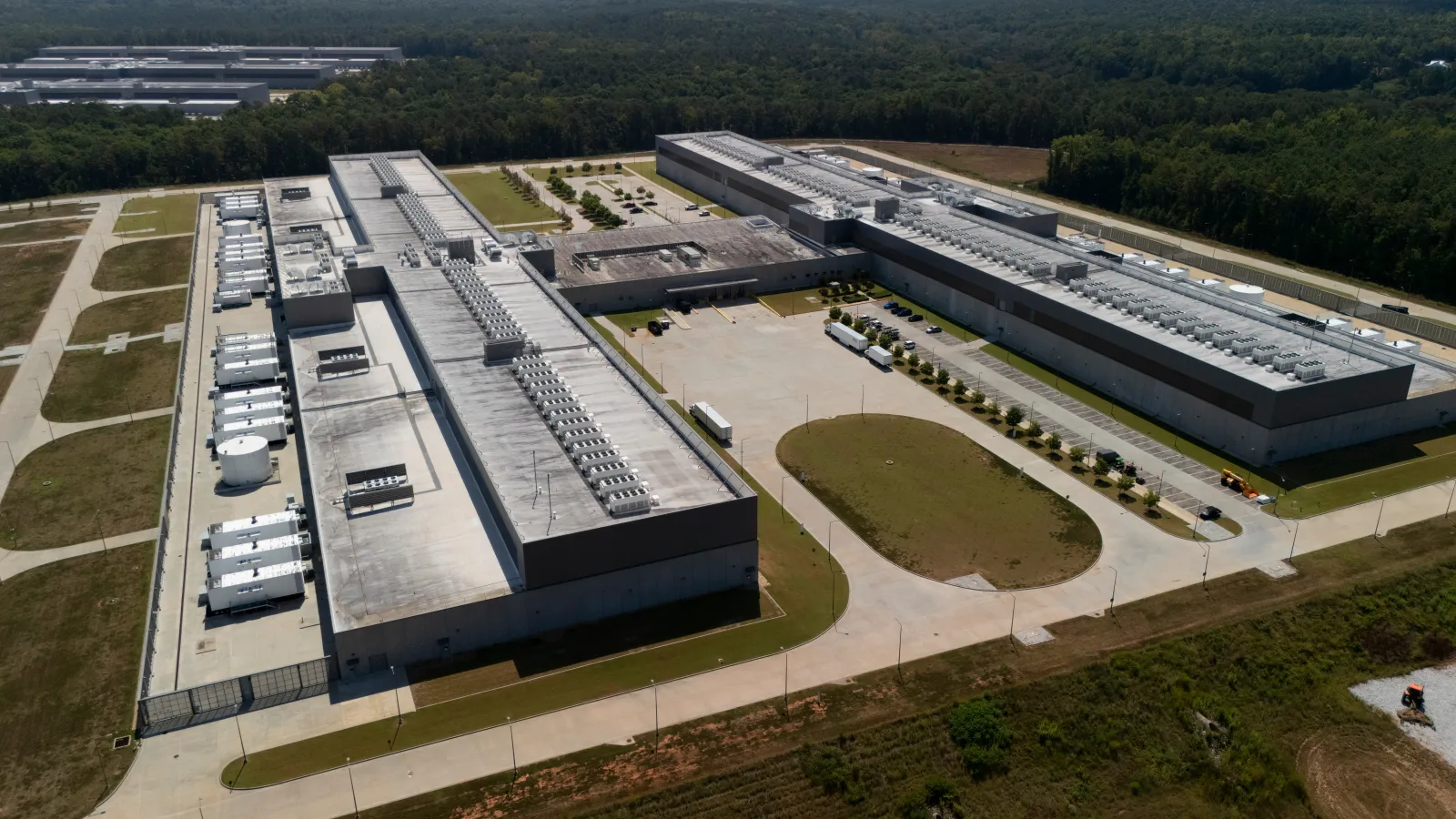
The House overwhelmingly passed legislation aimed at protecting American households and small businesses from shouldering the cost of power infrastructure needed to support the country's rapidly expanding AI data center industry.
The Ratepayer Protection Act, H.R. 9340, passed 417-3 late Wednesday, with three Democrats voting against it.
Reps. Summer Lee of Pennsylvania, Delia Ramirez of Illinois and Rashida Tlaib of Michigan voted “nay,” while 12 members did not vote.
Read More on Politics
The bill, sponsored by Representative Gabe Evans, a Colorado Republican, would require states to consider rules ensuring that large data centers pay the full cost of new electricity generation, transmission and distribution upgrades needed to serve their facilities rather than passing those costs on to utility customers.
"America can lead the world in AI without forcing families, farmers, seniors, and small businesses to foot the bill for the massive energy demands of data centers," Evans wrote on X following the vote.
The measure emerged as one of the most closely watched AI-related energy bills in Congress as electricity demand surges alongside the artificial intelligence boom.
The debate over who should pay for AI infrastructure is becoming a major political issue as utilities forecast sharp increases in electricity demand from data centers powering AI models, cloud computing platforms and other digital services.
Supporters of the legislation argue that consumers should not subsidize the energy needs of some of the world's largest technology companies.
The bill would require utilities to recover the full incremental cost of infrastructure upgrades from large-load customers, defined in the legislation as data center facilities with peak electricity demand of 100 megawatts or more.
Backers say the proposal would allow the U.S. to continue expanding AI infrastructure while protecting consumers from higher utility bills.
Critics of data center expansion have increasingly warned that the industry's growing power needs could drive up electricity costs for households if utilities spread those infrastructure expenses across their rate base.
The issue gained additional attention after a House committee unanimously approved the bill, reflecting broad bipartisan concern about the impact of AI-related electricity demand on ratepayers.
The bill still needs to pass the Senate and be signed by President Donald Trump before it can become law.
...
Lawmakers Who Backed the Bill
There are a total of 42 cosponsors, including 35 Republicans and 7 Democrats, plus sponsor Gabe Evans.
Republican Cosponsors
- Randy Weber (Texas)
- Laurel Lee (Florida)
- John Joyce (Pennsylvania)
- Thomas Kean Jr. (New Jersey)
- Morgan Griffith (Virginia)
- Buddy Carter (Georgia)
- Jeff Van Drew (New Jersey)
- Michael Baumgartner (Washington)
- Michael McCaul (Texas)
- Clay Fuller (Georgia)
- Rob Wittman (Virginia)
- Bob Onder (Missouri)
- Harriet Hageman (Wyoming)
- John McGuire (Virginia)
- Derrick Van Orden (Wisconsin)
- Ryan Mackenzie (Pennsylvania)
- Lauren Boebert (Colorado)
- Ben Cline (Virginia)
- Brian Fitzpatrick (Pennsylvania)
- Michael Lawler (New York)
- Beth Van Duyne (Texas)
- Jeff Crank (Colorado)
- Brad Finstad (Minnesota)
- Riley Moore (West Virginia)
- Jim Jordan (Ohio)
- Jennifer Kiggans (Virginia)
- John Moolenaar (Michigan)
- Chris Smith (New Jersey)
- Tom Barrett (Michigan)
- Monica De La Cruz (Texas)
- Pat Fallon (Texas)
- Mike Flood (Nebraska)
- Bill Huizenga (Michigan)
- Jeff Hurd (Colorado)
- David Valadao (California)
Democratic Cosponsors
- Kathy Castor (Florida) - Original Cosponsor
- Jennifer McClellan (Virginia)
- Sanford Bishop (Georgia)
- Josh Gottheimer (New Jersey)
- Henry Cuellar (Texas)
- Kristen McDonald Rivet (Michigan)
- Maggie Goodlander (New Hampshire)
Contact Newsweek editors on this story: Jason Lemon and Gray R. Thomas
View 0 Comments
Submit Correction
View Editorial & AI Guidelines