...

By Leonardo Feldman
White House Reporter
0
Share
Newsweek is a Trust Project member
See more of our trusted coverage when you search.Prefer Newsweek on Googleto see more of our trusted coverage when you search.
BUDAPEST — The expansion of MAGA into a worldwide, nationalist movement has always been predicated on the success of its proof-of-concept model here in Hungary, where Prime Minister Viktor Orban represents the closest ally to President Donald Trump in Europe. But now Orban is facing the toughest race of his 16-year rule, with Hungarian parliamentary elections scheduled for April 12. Orban's ruling Fidesz party is looking to stave off an upset from the opposition TISZA party, which independent polls have shown is making inroads among an electorate frustrated with Hungary's stagnant economy, cost-of-living crisis and deteriorating public services.
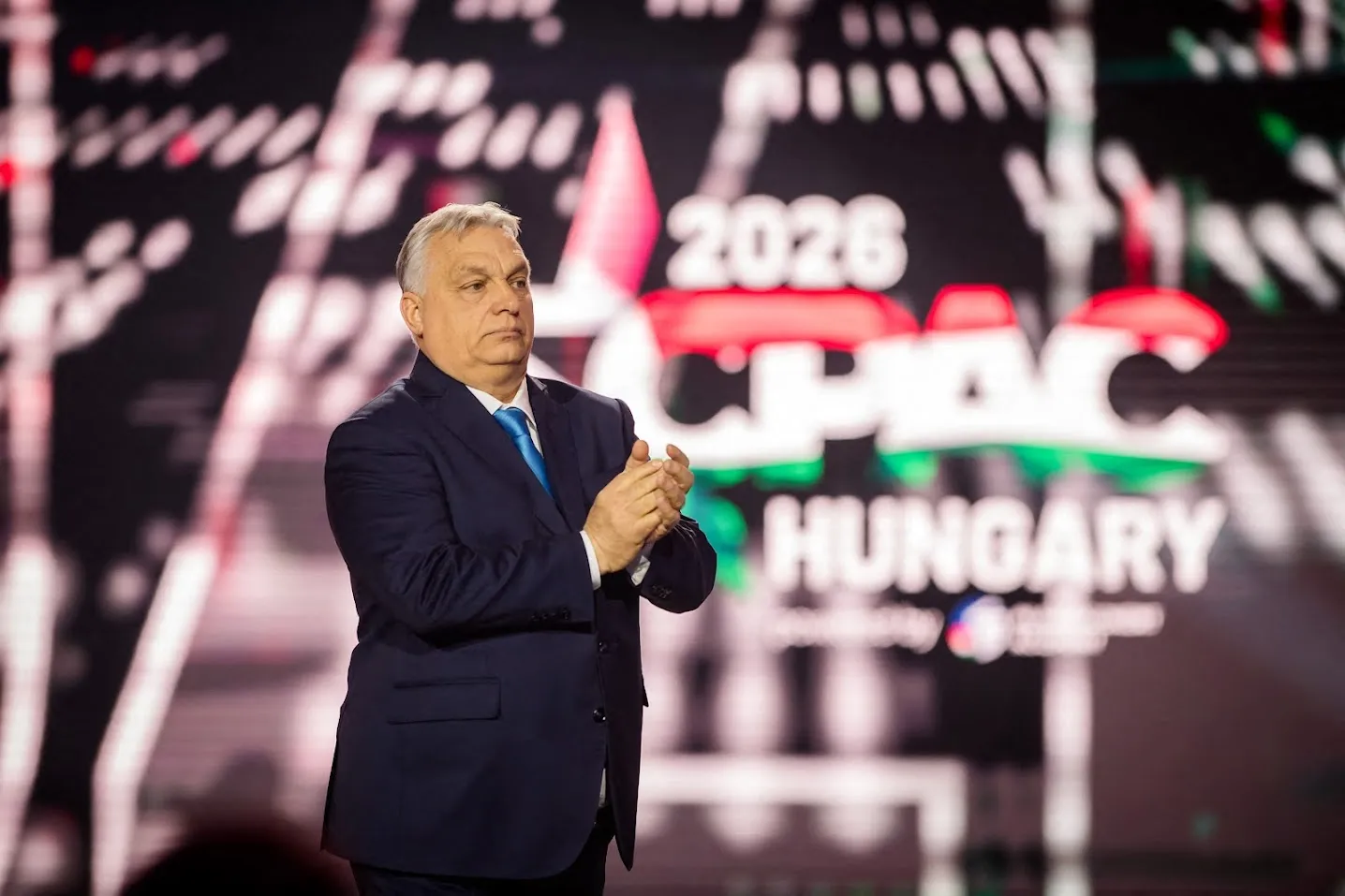
I wanted to see firsthand how Orban and his allies were faring ahead of the elections next month, so I accepted an offer from CPAC Hungary to attend its fourth annual conference here in Budapest this past weekend (CPAC Hungary paid for my flight and hotel, but there were no conditions attached to my reporting).
The spectacle was similar to conservative conferences in the U.S., though the celebratory mood came with an edge. Nobody I spoke to seemed entirely confident Orban will prevail in the coming elections.
Two early March opinion polls showed TISZA, a center-right party that has emerged as the primary opposition to Orban's hard-right Fidesz party, leading. But, another recent poll from the Nezopont Institute showed the Fidesz coalition maintaining a 6 percent lead over TISZA.
...
I asked Miklos Szantho, the organizer of CPAC Hungary and a loyal Orban supporter, what he made of the polling showing Orban's coalition at risk of losing.
"There are opinion polls, and there are 'opinion-shaping' polls," he said. “Latter ones coming from the left are showing maybe a 20 percent or even bigger lead for the leftist opposition," he acknowledged before dismissing them as “fake” because he said they assuming a "90 percent turnout.”
For reference, the last Hungarian parliamentary election in 2022 had a 69 percent turnout. Fidesz won 54 percent of the popular vote that year, in a result Reuters described as a "crushing victory."
Several popular far-right politicians attended the conference, including Orban and Argentinian President Javier Milei, both of whom delivered remarks but did not take questions from us in the media. Benjamin Netanyahu sent in a taped message of support for Orban. Vice President JD Vance is said to be planning a visit here in the coming days as well.
Former Brazilian President Jair Bolsonaro’s son, Eduardo, was in attendance. The elder Bolsonaro is serving a 27-year sentence in Brazil for his role in a coup plot — a sentence that Trump has called a "political execution" while threatening tariffs and sanctions on Brazil's government. Eduardo told me that what Trump is doing to help his father get out of prison is “fair” and “the right thing.” He also criticized former President Joe Biden for “sending the former CIA, the general director, money from USA to interfere in our elections.” In reality, Biden's CIA director, William Burns, met with Bolsonaro face-to-face in 2021 with a warning not to interfere in the upcoming elections, according to Reuters.
Notably, the war in Iran was barely mentioned at the conference — something I asked GOP Rep. Andy Harris of Maryland about. Harris, one of two U.S. lawmakers who attended the event, said Iran was not an issue for those in attendance, who were more concerned about the upcoming elections than a hot war in the Middle East, even as that war is proving beneficial to Orban's patrons in Moscow who are profiting from higher global energy prices.
I also asked Eva Vlaardingerbroek, a popular Dutch far-right activist and media personality, about the war. But she wasn’t interested in opining, either.
“I don’t think that right now is the right time to discuss all these types of foreign conflicts. I think that the most important thing that we should do is focus on our own national conflicts,” she told me.
Read More on Analysis

...
Vlaardingerbroek's advice to focus on "our own national conflicts" rather than foreign wars might be sound counsel. After all, it's essentially what the anti-war right has been saying into podcast microphones every day since the conflict began. But it's hard to square with a conference whose entire premise is that nationalism is, in fact, an international project — that Budapest and Washington and Buenos Aires are fighting the same battle, on the same side, against the same enemies. CPAC Hungary exists because the people who built it believe borders matter everywhere except in the movement itself. Whether that contradiction becomes an existential problem may depend on what happens on April 12.
After a few days in this beautiful city, I saw the inherent tension within MAGA's expansionist vision up close. The pitch has always been that Hungary proves MAGA can govern — that nationalist populism, given enough runway, builds something durable. Three weeks before an election that will test that claim, the movement's international wing gathered to discuss everything except the war their patron in Washington had just started. If Orban loses next month, the proof of concept goes with him. And the movement might well need a new model city.
View 0 Comments
Submit Correction
View Editorial & AI Guidelines