10
Loading video...

By Billal Rahman
Immigration Reporter
0
Share
Newsweek is a Trust Project member
See more of our trusted coverage when you search.Prefer Newsweek on Googleto see more of our trusted coverage when you search.
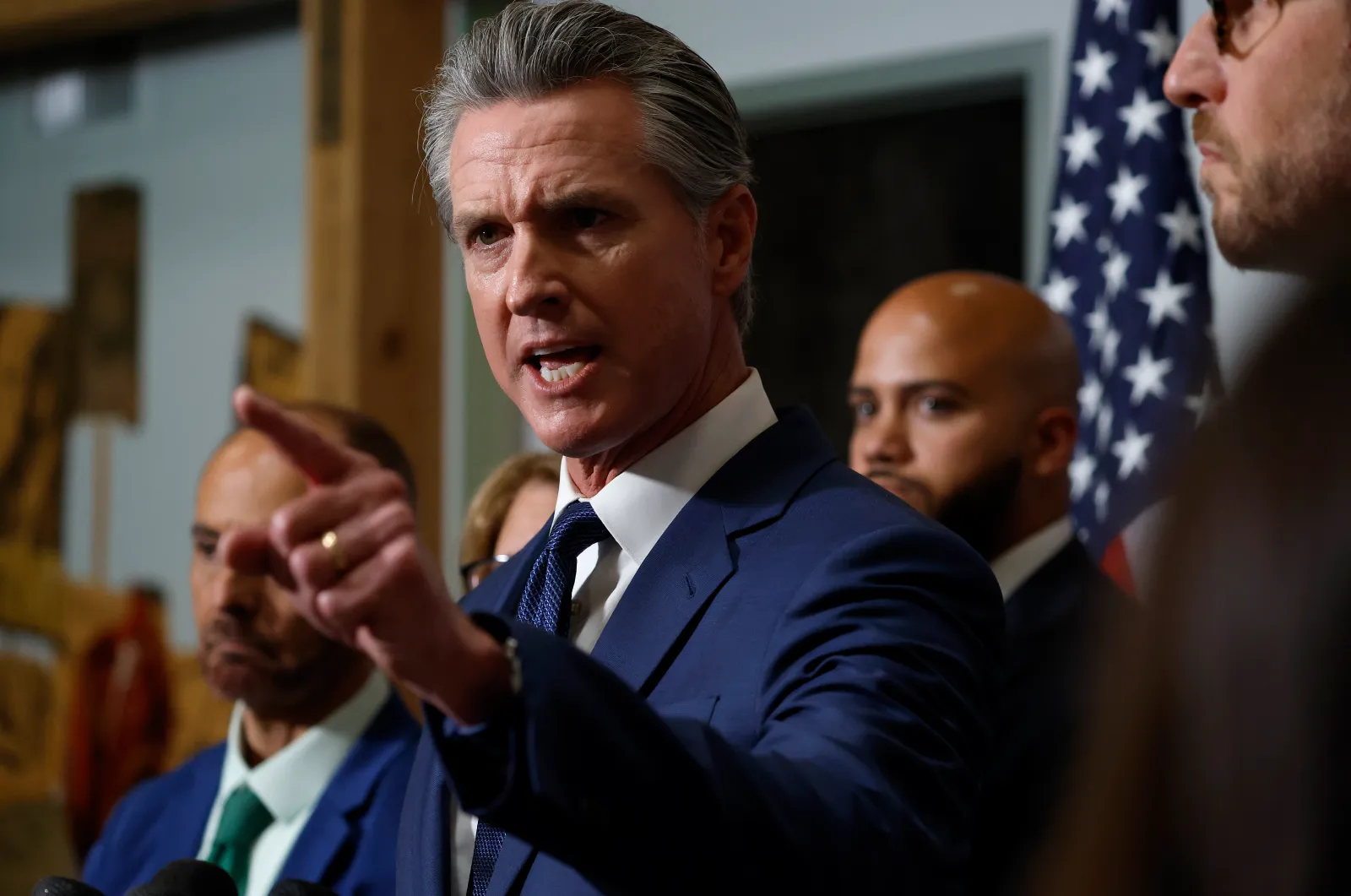
California Governor Gavin Newsom must decide whether to sign a sweeping package of State immigration bills that would significantly expand local oversight of ICE’s activities and potentially clash with the Trump administration.
The laws would increase his control of federal detention facilities, create new legal avenues for claims against government officers and impose new restrictions on the infrastructure supporting federal immigration enforcement in California.
The Department of Homeland Security pushed back against the measures, arguing that immigration enforcement is a clear federal responsibility.
Read More on News
"While California sanctuary politicians continue to release pedophiles, rapists, gang members, and murderers onto their streets, our brave law enforcement will continue to risk their lives to arrest these heinous criminals and make California safe again,” a DHS spokesperson told Newsweek Tuesday.
DHS pointed to several people it said ICE had arrested across California, including individuals with convictions for homicide, drug trafficking, assault, burglary and a child-cruelty offense.
The decisions could also carry political implications beyond Sacramento. Newsom, who is widely viewed as a potential contender in the 2028 presidential election, could face scrutiny from both sides of the aisle over how aggressively California should confront the Trump administration on immigration.
The Legislature approved the measures during the final weeks of its 2025-26 session. Collectively, they would expand oversight of immigration detention facilities, strengthen protections for civil immigration detainees, increase transparency around detention operations, impose new requirements on detention-related land-use decisions and create additional legal and financial constraints on parts of California's detention infrastructure.
Newsom signed dozens of other bills on September 14, according to the governor's office, but none of the major immigration-enforcement measures were included. They remain pending.
The package represents one of the state's most significant efforts this year to increase oversight of immigration detention and place new constraints around how federal immigration enforcement operates within California.
Newsweek has contacted Newsom's office and the Department of Homeland Security for comment.
...
What Bills Are Pending?
Among the major measures awaiting Newsom’s decision is CA SB 957, the Protecting Vulnerable Immigrant Detainees Act, which would require the California Attorney General to develop a health and safety oversight plan for people held in private civil immigration detention facilities.
SB 423, the Detention Facility Transparency Act, would require certain records involving 911 calls from privately operated immigration detention facilities to be made available, increasing public visibility into emergencies and other incidents at the facilities.
SB 942, the Civil Detainees’ Bill of Rights, would establish protections for people held in civil immigration detention, including standards covering medical and mental health care, sanitation, food, privacy, and treatment while in custody. SB 747, the No Kings Act, would create a pathway in state court for people to bring certain claims against federal, state, or local officers accused of violating constitutional rights, potentially expanding legal avenues for people who allege misconduct by immigration officers.
The Get the Feds Out Act would restrict certain state and local government employment for people who participated in specified federal immigration-enforcement activities during a defined period. AB 1896 could affect eligibility for public-sector positions, including some law-enforcement jobs.
Several other measures target the business and local-government infrastructure surrounding immigration detention. AB 1633, the Private Detention Facility Tax Act, would impose a tax on income earned by private immigration detention facility operators in California. AB 1801, the Detention Facility Permitting Act, would establish additional requirements for local governments considering land-use decisions involving private detention facilities, including public notice and hearing requirements. SB 1367, the Detention Facility Zoning Act, would restrict certain local approvals involving new detention facilities or conversions of existing properties for detention use.
SB 941, the Detention Facility Commissary Act, would place restrictions on markups of over 35 percent for goods sold through commissaries at private detention facilities, building on California's existing rules limiting certain commissary prices. SB 1399, the Detention Facility Oversight Act, would continue the state’s oversight of immigration detention facilities and prevent the existing oversight program from expiring.
What Is At Stake?
None of the measures would directly block federal immigration enforcement. Instead, they would use California's authority over detention facilities, employment, taxation, land-use regulation, public records, and state courts to create additional oversight and restrictions around enforcement-related activities.
That distinction could become important if the laws are challenged in court. Federal immigration enforcement has repeatedly produced legal disputes over the boundary between federal authority and state regulation.
For supporters, the bills would strengthen protections for immigrants and increase transparency around detention operations. Critics are likely to argue that some measures interfere with federal immigration priorities or invite legal challenges over the scope of state authority.
The governor has until September 30 to sign or veto the legislation. Newsom could take a mixed approach, signing some bills while vetoing others depending on their implications.
Taken together, the package will test how far California is willing to go in using state law to regulate the effects of federal immigration enforcement during Trump's second term and could offer one of the clearest signals yet of Newsom's approach to one of the country's most divisive political issues.
Contact Newsweek editors on this story: Matthew Cannon, Trevor Davies, Gray R. Thomas
View 0 Comments
Submit Correction
View Editorial & AI Guidelines