10
Loading video...

By Jack Beresford
Senior Reporter
0
Share
Newsweek is a Trust Project member
See more of our trusted coverage when you search.Prefer Newsweek on Googleto see more of our trusted coverage when you search.
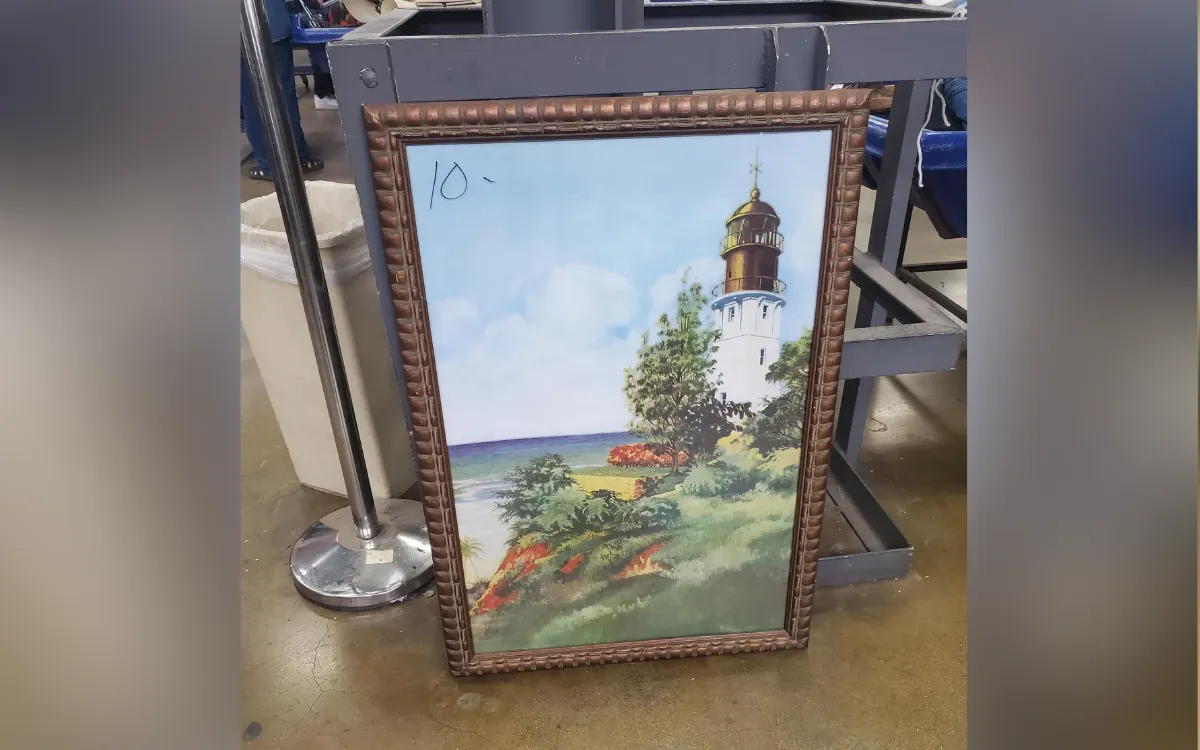
A Missouri man has shared a picture of the painting he spotted in a local thrift store and the one word in the corner that changed everything.
The thrifter, who asked that his name and social media handle be omitted from this story, took to Reddit to offer up a glimpse of the sight that greeted him while on the hunt for bargain buys. “I saw it at the Goodwill bin store in St Louis,” he told Newsweek.
He’s part of the estimated 16 to 18 percent of Americans currently shopping in thrift stores across the country, according to research from Capital One Shopping.
Read More on Shopping
He likely knows it can pay serious dividends to keep a close eye on the art work up for sale in stores like these. Back in February, a Cincinnati woman was left in “disbelief” after discovering the painting she paid $3 for was worth over $2,000.
Another woman in Texas, meanwhile, paid $8 for an oil painting only to spot a signature in the corner of the frame that confirmed it was the work of celebrated Pawnee artist Brummett Echohawk. Then, there was the thrifter whose $2 purchase of a seemingly ordinary picture led to an emotional family reunion.
The Missouri man at the heart of this story was not quite so lucky. Browsing the art section, he saw a picture of a lighthouse that caught his eye. There was just one problem: the word in the top left hand corner was “$10” and it had been written directly onto the painting itself.
...
According to the thrifter who posted the picture online, this kind of thing is far from an isolated incident. “Thrift stores often damage items with badly placed price tags,” he said.
“Like they might put a price tag clothing barb directly through a leather jacket at a noticeable spot or they put a sticker on the cover of a book and the sticker will tear the graphics off.”
He did add, in defense of this particular thrift store, that the artwork was being sold in a “bin store” rather than the standard Goodwill retail. He said these bin stores are considered a “last ditch” attempt at selling unwanted items.
“They are set out for only a few hours or perhaps days and then go to recycling or the trash,” he said. “So employees generally care less about these items than at the Goodwill retail stores.”
The upshot is that this particular thrifter decided against buying the painting that day, not because of the price but more specifically where the price was written on the piece.
Ultimately, the hope is that the post gets some attention and affects a little change when it comes to how some thrift store items are priced up.
At the very least, he’s relieved to have found he’s not alone in feeling frustration at this particular practice, even if it’s not all that commonplace.
View 0 Comments
Submit Correction
View Editorial & AI Guidelines