10
Loading video...

By Liz O'Connell
Reporter
0
Share
Newsweek is a Trust Project member
See more of our trusted coverage when you search.Prefer Newsweek on Googleto see more of our trusted coverage when you search.
A man fishing in Alberta, Canada, spotted something unusual sticking out of the water, and when he pulled it from the creek, he debated whether to keep it.
Dominic Boon, who lives near Banff, told Newsweek he frequently keeps an eye out for "bits and pieces" of interesting objects while fishing and exploring the outdoors, something he's been doing since he was a child. This discovery while fly fishing, however, was different.
Boon noticed the object and pulled out his phone to film as he approached, wanting to capture the moment he uncovered whatever was beneath the water, which he later shared on his Instagram account, @dominicboon_.
Read More on Life
The two people he went fishing with initially thought the object was a cow skull, but Boon was intrigued and decided to investigate.
"As soon as I saw horns, I believed it was a bison," he said.

...
Heavy Rain Reveals the Skull
Boon's hunch was confirmed the following day when he had the skull identified as a bison. But there was still a bigger question: How long had it been sitting in the creek?
The discovery came shortly after an unusually rainy summer. Alberta's capital city had broken its record for its wettest summer, according to The Canadian Press. Boon believes the heavy rainfall may have exposed the skull, which could have been buried for years.
"During June, [there was] unprecedented rainfall, and it washed all the banks and washed all fresh stuff down the creek," he said.
The skull was surprisingly heavy, weighing roughly a couple of kilograms. Its appearance also made Boon wonder whether it could be much older than relatively recent animal remains.
A 5,000-Year-Old Mystery
Boon began asking museum experts about the find. He shared the email reply he received from Dr. Chris Jass, the curator of Quaternary Studies at the Royal Alberta Museum, who confirmed his suspicions: "It's the cranium of a bison."
While the exact age of the skull is unclear, the curator estimated a maximum of 5,000 years.
"It could be that old," Boon said. "But we don't know."

...
The curator's estimate is based on the skull's appearance, including its shape and eye sockets, which Boon said made it appear considerably older than relatively recent animal remains. Boon said the youngest his find could be is 150 years old.
As for how the bison skull remained intact for hundreds to thousands of years, an article from the U.S. National Park Service states rapid burial can help preserve animal remains by protecting them from scavenging, decomposition and weathering.
Boon plans to take the skull to the museum, about three hours away, for further examination. Experts may measure and weigh it, potentially scan it and take photographs as they try to learn more about the unusual find.
"It's just crazy," Boon said.
Related Story
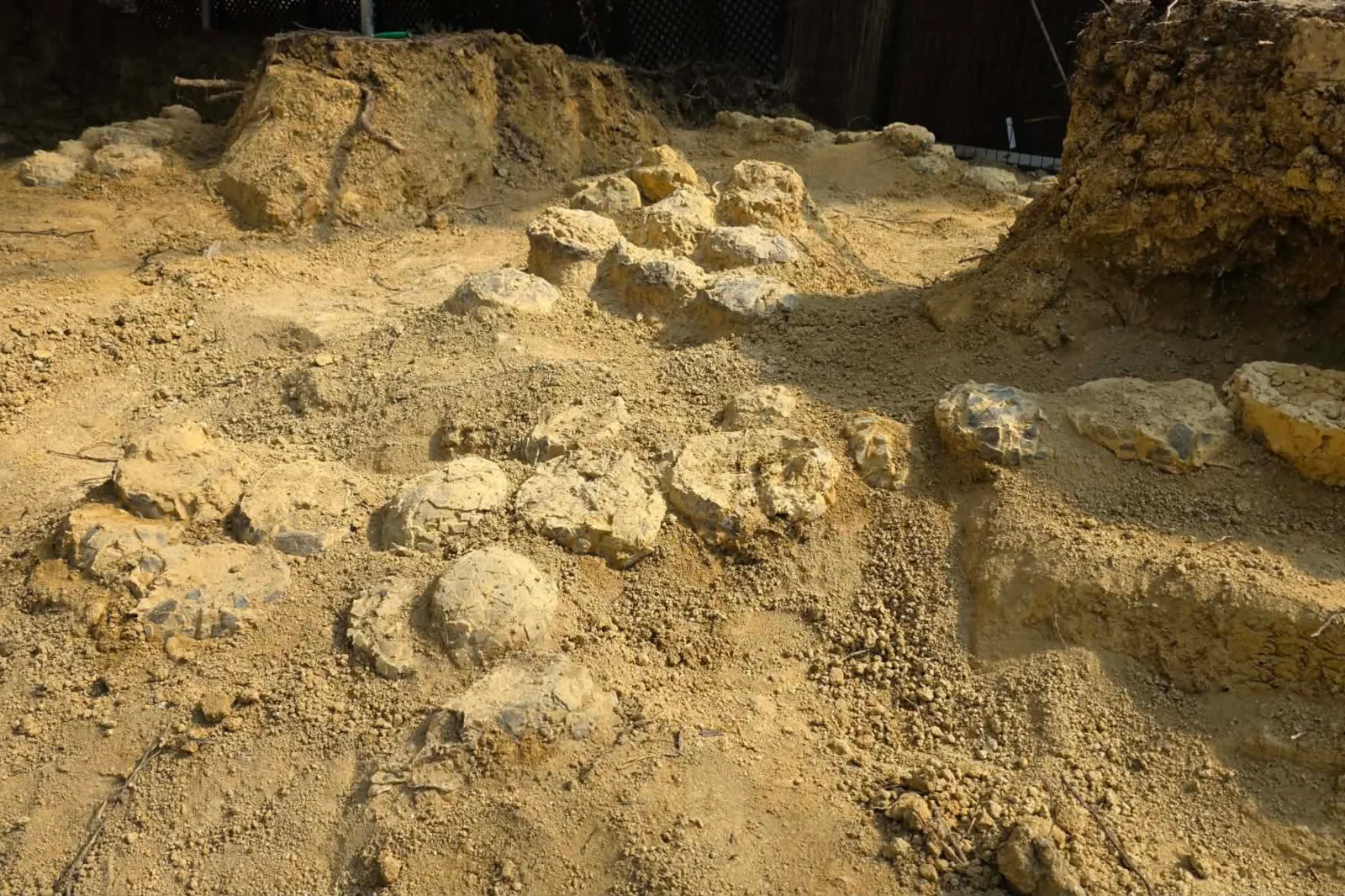
Hundreds of Dinosaur Eggs Discovered, Some Intact After 72 Million Years
A Species Nearly Lost
The discovery comes from a species that nearly went extinct in Alberta.
According to the Canadian Parks and Wilderness Society (CPAWS) Northern Alberta, plains bison once numbered more than 30 million across North America but had nearly vanished in Canada by the late 1880s because of overexploitation, habitat loss and disease. Wood bison also suffered a steep decline, with their Canadian population falling from more than 170,000 to as few as 200.
Today, Alberta has an estimated 2,800 free-ranging wild wood bison, while plains bison occupy less than 1 percent of their historic range in Canada.
That history makes the skull's discovery particularly interesting, although its age remains unknown.
Whether it turns out to be 150 years old, several hundred years old or potentially thousands of years old, Boon said the circumstances surrounding its discovery are what make it so fascinating.
Contact Newsweek editors on this story: Rebecca Flood and Sam Wilson.
View 0 Comments
Submit Correction
View Editorial & AI Guidelines