FLOURISH/Inheritance/Estate taxes

By Aliss Higham
Reporter
0
Share
Newsweek is a Trust Project member
See more of our trusted coverage when you search.Prefer Newsweek on Googleto see more of our trusted coverage when you search.
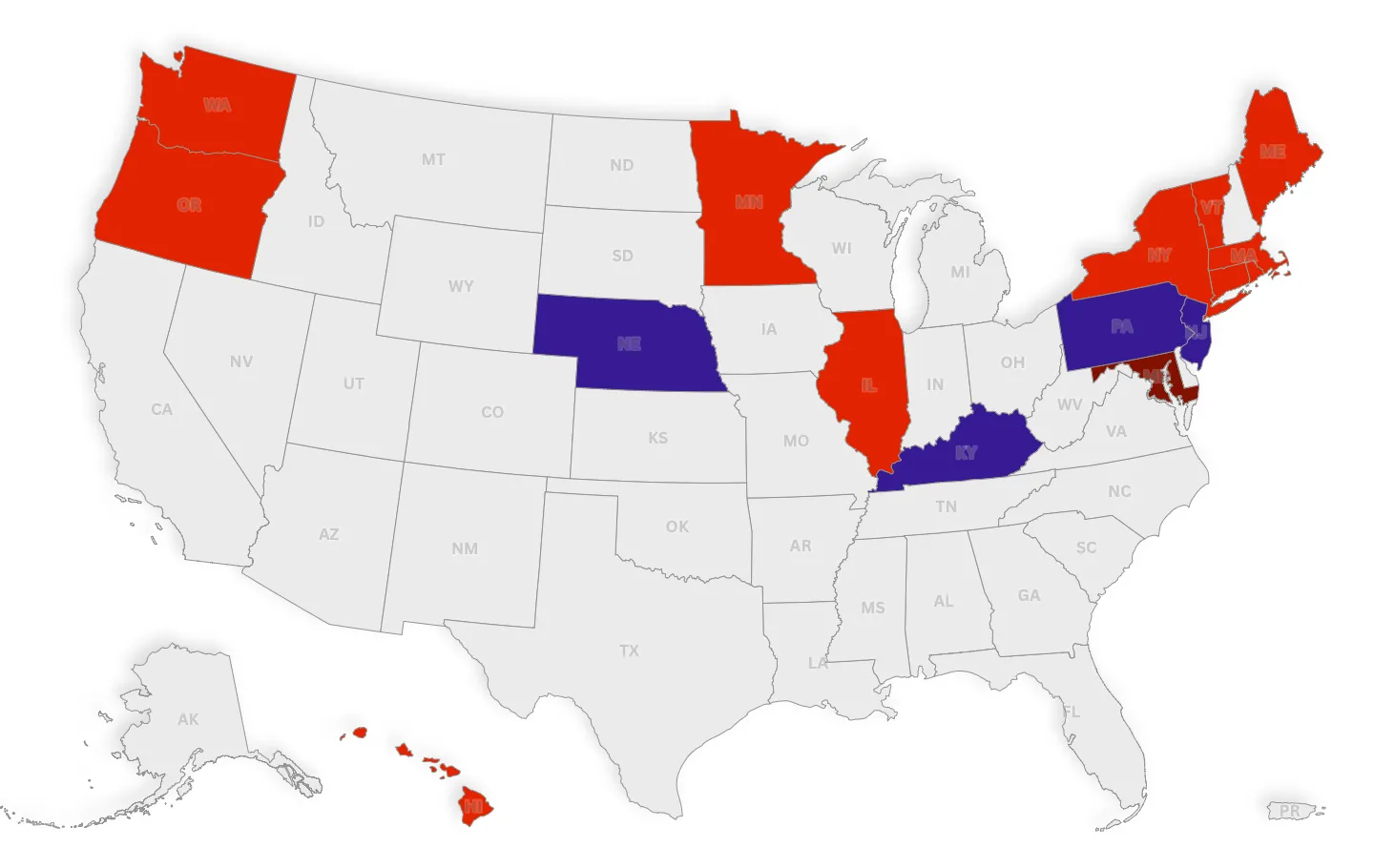
Inheritance and estate taxes, often referred to as "death taxes," vary significantly across the United States.
Federal estate taxes apply only to the wealthy, with estates exceeding $13.61 million in 2024, and most states do not impose either tax, so unless you're reading this from your inherited mega-mansion, you don't need to worry too much. However, several states impose their own taxes, affecting estates and beneficiaries, and often at much lower thresholds.
States With Inheritance Taxes
A state inheritance tax is levied on the individuals who receive assets from a deceased person's estate.
Read More on U.S.
Only six states levy inheritance taxes:
- Pennsylvania: Rates range from 4.5 percent for direct descendants to 15 percent for non-relatives. Children over 21 are taxed at 4.5 percent, siblings at 12 percent, and others at 15 percent.
- Maryland: A 10 percent inheritance tax applies to certain heirs, including domestic partners (unless they inherit a jointly-owned primary residence). Spouses, children, parents, grandparents, and siblings are exempt.
- New Jersey: Inheritance tax rates range from 11 percent to 16 percent, depending on the beneficiary's relationship to the deceased.
- Kentucky: Rates vary between 4 percent and 16 percent, based on the beneficiary's class.
- Nebraska: Inheritance tax rates range from 1 to 18 percent, with closer relatives paying lower rates.
Iowa phased out inheritance taxes in recent years, with full repeal going into effect on January 1, 2025. In Pennsylvania, a bill recently reintroduced could eliminate the state's inheritance tax.
States With Estate Taxes
Estate tax is charged on the total value of a deceased person's estate before it is distributed to heirs, and is paid by the estate itself.
Twelve states and the District of Columbia impose estate taxes, which are levied on the deceased's estate before distribution to heirs:
- Connecticut: Estate tax exemption aligns with the federal level at $13.61 million, with a flat tax rate of 12 percent.
- Hawaii: Estate tax rates range from 10 percent to 20 percent, with an exemption threshold of $5.49 million.
- Illinois: Estates over $4 million are taxed, with rates up to 16 percent.
- Maine: Estate tax applies to estates exceeding $5.87 million.
- Maryland: It's a double tax whammy for those in the Free State. In addition to the inheritance tax, Maryland imposes an estate tax on estates over $5 million, with rates up to 16 percent.
- Massachusetts: Estate tax applies to estates over $1 million, with rates up to 16 percent.
- Minnesota: Estates exceeding $3 million are subject to estate tax, with rates up to 16 percent.
- New York: Estate tax applies to estates over $6.94 million, with rates ranging from 3.06 to 16 percent. New York also enforces a "cliff" tax, where estates exceeding the exemption by more than 5 percent are taxed on the entire value, not just the excess.
- Oregon: Estate tax applies to estates over $1 million, with rates up to 16 percent.
- Rhode Island: Estates over $1.7 million are taxed, with rates up to 16 percent.
- Vermont: Estate tax applies to estates over $2.75 million, with rates up to 16 percent.
- Washington: Estate tax applies to estates over $2.193 million, with rates ranging from 10 to 20 percent.
- District of Columbia: Estate tax applies to estates over $4 million, with rates up to 16 percent.
View 0 Comments
Submit Correction
View Editorial & AI Guidelines