10
Loading video...

By Jenni Fink
Senior Editor
0
Share
Newsweek is a Trust Project member
See more of our trusted coverage when you search.Prefer Newsweek on Googleto see more of our trusted coverage when you search.
President Donald Trump's latest effort to limit birthright citizenship could have consequences for the international surrogacy industry, potentially affecting thousands of intended parents from overseas who travel to the United States to have children through surrogacy arrangements.
The administration's August 6 executive order, titled "Continuing to Protect the Meaning and Value of American Citizenship," seeks to deny federal recognition of citizenship in certain circumstances involving foreign nationals. Among the categories listed are children born through commercial surrogacy arrangements when neither parent is a U.S. citizen. An estimated 30 percent of surrogacy births in the United States involve parents who live abroad.
Trump's order comes just weeks after the U.S. Supreme Court's June ruling in Trump v. Barbara, which struck down the administration's broader attempt to restrict birthright citizenship. The order is already being challenged in court and it's possible that the court strikes down his new executive order as well.
Read More on News

...
What Does Trump's Birthright Citizenship Executive Order Mean for Surrogacy?
The White House order directs federal agencies not to issue documents recognizing U.S. citizenship to certain children when neither parent is a U.S. citizen and specified conditions apply. One of those conditions covers situations in which parents "engage in a commercial transaction with a surrogate present in the United States" to give birth.
The United States has become one of the world's leading destinations for international surrogacy, particularly after many countries have restricted or banned commercial arrangements. There's nothing in the order that bans or prevents surrogacy, but Trump is trying to ban those children from receiving U.S. citizenship.
The measure is part of a broader effort within the Trump administration to combat "birth tourism." The administration argues that the order is intended to address circumstances in which individuals travel to the United States specifically to secure citizenship benefits for a child.
It's possible that implementing Trump's order could be more difficult than it seems. Tsong Law Group, which specializes in assisted reproduction law, noted that parentage orders are usually confidential records and birth certificates don't state whether the birth is from a surrogate.
Related Story
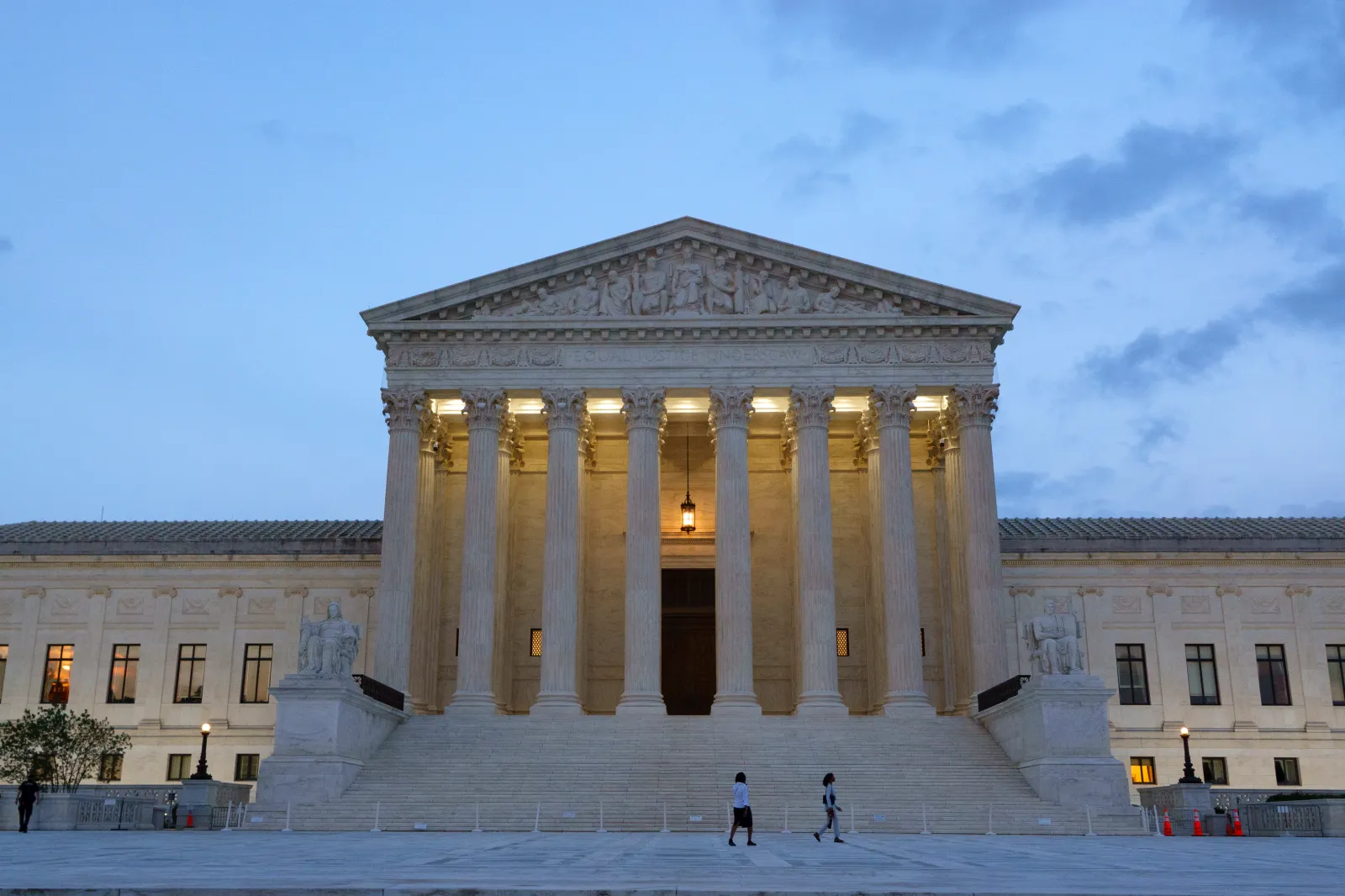
After SCOTUS Loss, Birthright Citizenship Becomes the Next Roe v. Wade
Surrogacy advocates have also argued that international intended parents typically pursue arrangements in the United States because of strong legal protections, medical expertise and established parentage laws, rather than as a pathway to immigration.
"Birthright citizenship can also be a consideration, but it would be misleading to assume that is every family’s primary intention," Dipesh Patel, a licensed clinical social worker specializing in working with LGBTQ+ couples navigating IVF and surrogacy, told Newsweek. "For many international intended parents, the more basic reality is that their home countries do not offer viable or legally secure pathways to parenthood, especially for LGBTQ+ couples and individuals."
If Trump's executive order is blocked, it's possible that states could move to just make it illegal for surrogates to work with international intended parents. Alphonse Provinziano, a California family law attorney, told Newsweek that states could find ways to restrict clinics and hospitals to serve only American citizens. It's also possible that states eliminate surrogacy as an option if they're concerned about foreign nationals using their state for surrogacy.
"For example, in states like Louisiana, Nebraska, Kentucky and Indiana, compensated surrogacy is already restricted or illegal, like in many parts of Europe, and thus effectively not permitted," Provinziano said. "If concerns over international surrogacy grow, other states could easily follow suit by explicitly voiding international contracts or banning compensation altogether."
Some states, like New York, already ban international intended parents. New York made surrogacy legal in 2021 and parents must either be a U.S. citizen or a lawful permanent resident of New York for at least six months. Florida also prohibits intended parents from being from China, Russia, Iran, North Korea, Cuba, Venezuela under President Nicolas Maduro's regime and Syria.
How Popular Is International Surrogacy in the United States?
International surrogacy represents a substantial share of the American fertility industry.
A 2024 study published in the journal Fertility and Sterility examined more than 40,000 gestational carrier embryo transfers reported to the Society for Assisted Reproductive Technology between 2014 and 2020. Researchers found that 32 percent involved international intended parents.
The study identified significant growth throughout the period. The number of international intended parents using U.S. gestational carriers rose from 2,758 cycles in 2014 to 4,905 cycles in 2019 before declining during the COVID-19 pandemic in 2020.
Researchers attributed the growth in part to increasingly restrictive surrogacy laws abroad and the comparatively favorable legal environment in parts of the United States. The study noted that international intended parents often turned to American surrogacy programs because other nations either prohibit commercial surrogacy or impose strict eligibility requirements.
The United States has long been viewed as a leading destination for cross-border surrogacy because many states provide clear legal frameworks establishing parental rights before birth. In contrast, numerous countries either ban commercial surrogacy outright or allow only altruistic arrangements.
International intended parents also differ demographically from their American counterparts. According to the study, they were more likely to be male, older than 42 and identify as Asian. International cases were also more likely to involve donor eggs and preimplantation genetic testing.
Map Shows Countries With Most Surrogates in the United States
The Fertility and Sterility study provides one of the most comprehensive looks at where international intended parents come from.
China accounted for the largest share of international surrogacy arrangements in the United States by a considerable margin. Researchers found that 41.7 percent of international intended parents were from China. France ranked second at 9.2 percent, followed by Spain at 8.5 percent.
The prominence of China is particularly notable. Over the past decade, changes in surrogacy laws around the world have pushed many prospective parents to seek arrangements in jurisdictions perceived as offering greater legal certainty. In China, commercial and medical surrogacy is illegal and doctors and hospitals are banned from engaging in surrogacy. Surrogacy contracts are also not enforceable. So, wealthy Chinese citizens will travel to the United States for surrogacy.
"The U.S. is actually one of the most expensive places to pursue surrogacy," Patel said. "While every journey is going to look differently, it’s not uncommon for journeys to cost somewhere in the ballpark of $150,000-$250,000+."
For intended parents from these countries, the executive order could introduce significant uncertainty. If federal agencies interpret the order broadly, some children born through compensated surrogacy arrangements involving noncitizen parents could face complications obtaining U.S. citizenship documents, passports or other federal recognition.
Eloise Drane, CEO of Family Inceptions, noted that intended parents have to stay in the United States for weeks or even months while they wait for a child's birth certificate and passport to be issued so they can leave the country. If babies born on U.S. soil to noncitizen parents are not American citizens, that process could get more complicated.
For now, the available data indicates that any disruption to international surrogacy would be felt most acutely by families from countries that have increasingly relied on the United States as a destination for assisted reproduction. Chief among them are China, France and Spain, whose citizens make up a substantial portion of the international intended parents participating in U.S. surrogacy programs.
It's possible that the executive order could slow international surrogacy in the United States on its own with families feeling uncertain about the situation in the United States. Tsong Law Group advised parents who matched with a surrogate that they would likely still be able to bring their child home, although the law group warned that it could be more complicated in some countries. However, some families may choose to wait to see if an injunction is put in place blocking Trump's executive order.
Contact Newsweek editors on this story: Jenni Fink and Dave Siminoff.
View 0 Comments
Submit Correction
View Editorial & AI Guidelines